

Applying Porter's Five Forces to New Market Entry Strategies
In today's increasingly competitive business landscape, entering new markets can be a daunting task for even the most seasoned leaders. With the rise of global trade and digital platforms, companies must navigate complex market dynamics, regulatory environments, and shifting consumer preferences. To make informed decisions about new market entry strategies, businesses need a robust framework for analysis. This is where Michael Porter's Five Forces come in – a powerful tool for assessing industry competition and identifying opportunities for growth.
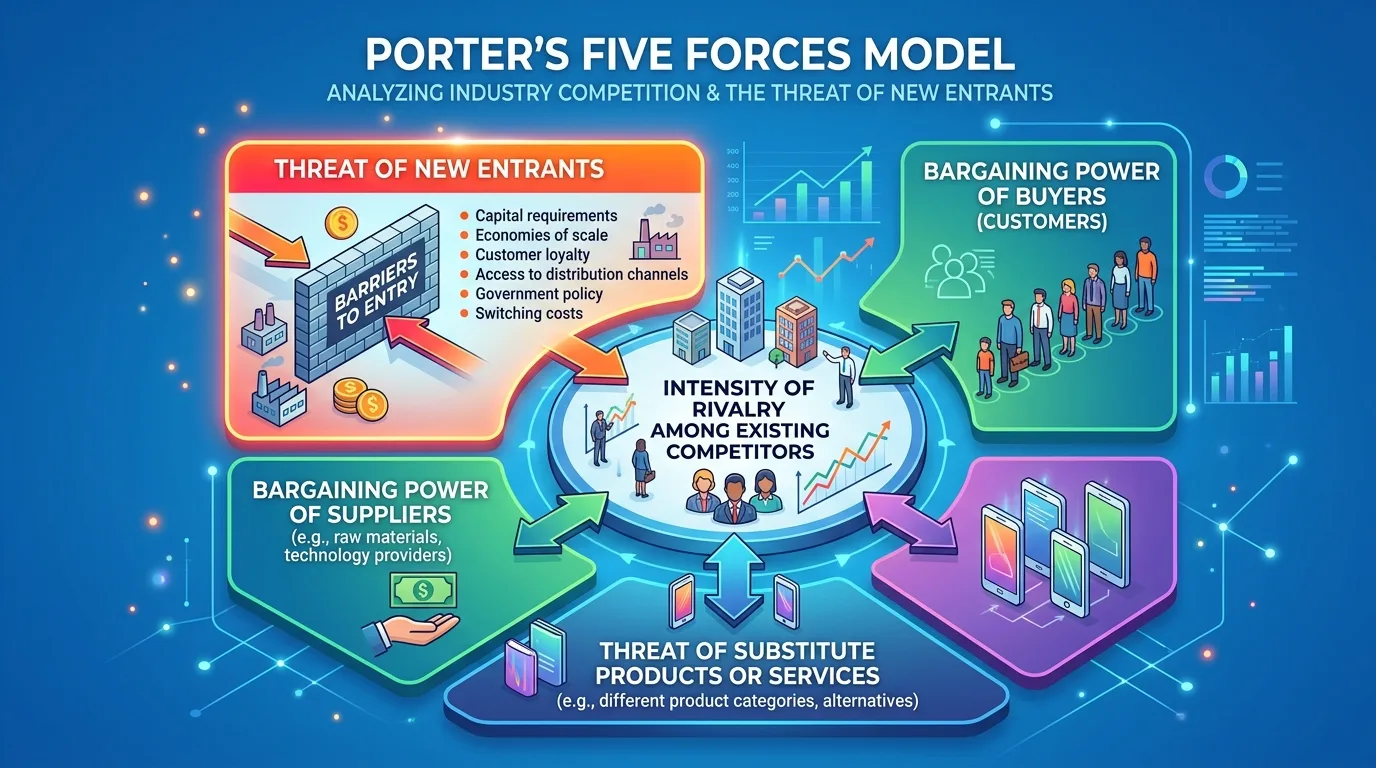
Developed by Harvard Business School Professor Michael E. Porter, the Five Forces model provides a framework for analyzing the competitive dynamics of an industry. By applying this framework to new market entry strategies, businesses can gain valuable insights into the threats and opportunities that lie ahead. In this article, we will explore how to apply Porter's Five Forces in business strategy, using real-world examples and case studies to illustrate key concepts.
H2: Threat of New Entrants
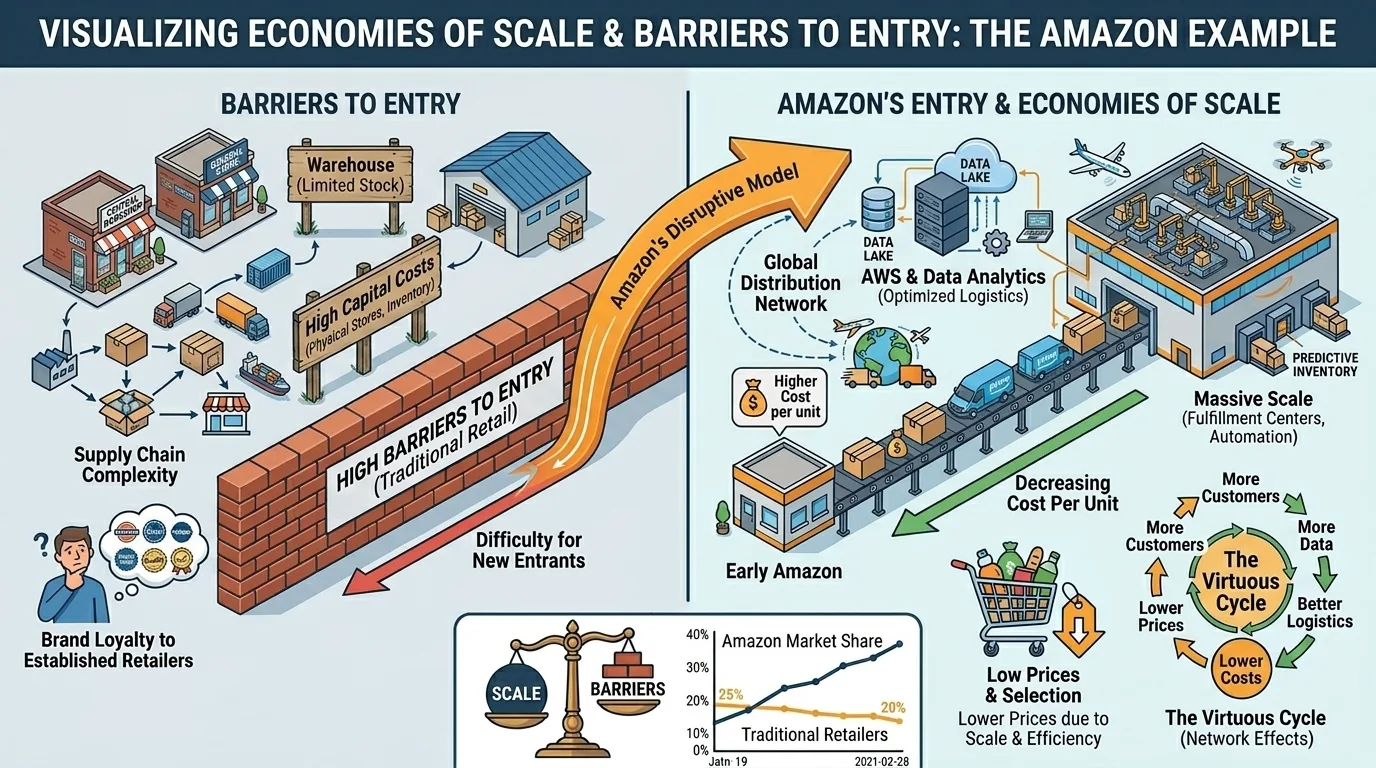
One of the most significant factors influencing market competition is the threat of new entrants. This force refers to the potential for new companies or startups to enter an industry, disrupting existing market dynamics. To assess this threat, businesses must consider several key factors:
Barriers to entry: How difficult is it for new companies to enter the market? Are there significant regulatory hurdles, high start-up costs, or other obstacles that deter new entrants?
Economies of scale: Can established players in the industry take advantage of economies of scale to maintain their competitive edge?
Product substitutability: To what extent can products from different companies be substituted for one another?
Using the example of Amazon's entry into the retail market, we can see how Porter's Five Forces can be applied:
Barriers to entry: Amazon faced significant barriers to entry in the early days, including high start-up costs and regulatory hurdles. However, its innovative business model and focus on customer convenience eventually disrupted traditional retail.
Economies of scale: As Amazon grew, it was able to leverage economies of scale to maintain its competitive edge, offering customers a wide range of products at discounted prices.
H2: Threat of Substitute Products or Services


Another critical factor influencing market competition is the threat of substitute products or services. This force refers to the potential for consumers to switch to alternative offerings from other companies or industries. To assess this threat, businesses must consider:
Substitutability: Can products or services from different companies be substituted for one another?
Switching costs: How easy or difficult is it for customers to switch between different companies or products?
Using the example of Uber's entry into the taxi market, we can see how Porter's Five Forces can be applied:
Substitutability: Ride-hailing apps like Uber and Lyft have made traditional taxis more substitutable, offering consumers a convenient alternative.
Switching costs: With the rise of mobile payments and digital platforms, switching between different companies or products has become increasingly easier.
H2: Bargaining Power of Suppliers
The bargaining power of suppliers is another key factor influencing market competition. This force refers to the ability of suppliers to negotiate better prices, terms, and conditions with buyers. To assess this threat, businesses must consider:
Concentration: Is the industry characterized by a few large suppliers or many small ones?
Dependence on specific inputs: How dependent are companies in the industry on specific raw materials or components?
Using the example of the automotive industry, we can see how Porter's Five Forces can be applied:
Concentration: The automotive industry is dominated by a few large manufacturers.
Dependence on specific inputs: Companies in this industry rely heavily on suppliers for critical components such as engines and transmissions.
H2: Bargaining Power of Buyers
The bargaining power of buyers is another key factor influencing market competition. This force refers to the ability of customers to negotiate better prices, terms, and conditions with sellers. To assess this threat, businesses must consider:
Industry growth rate: Is the industry growing or declining?
Buyer concentration: Are there a few large customers or many small ones?
Using the example of the technology sector, we can see how Porter's Five Forces can be applied:
Industry growth rate: The technology sector is experiencing rapid growth.
Buyer concentration: Large companies such as Amazon and Google are major buyers in this industry.
H2: Threat of Substitutes
The threat of substitutes is another key factor influencing market competition. This force refers to the potential for new products or services to replace existing ones. To assess this threat, businesses must consider:
Availability of substitutes: Are there alternative products or services available?
Switching costs: How easy or difficult is it for customers to switch between different products or services?
Using the example of the music industry, we can see how Porter's Five Forces can be applied:
Availability of substitutes: The rise of streaming services such as Spotify and Apple Music has made traditional music formats more substitutable.
Switching costs: With the rise of digital platforms, switching between different music services has become increasingly easier.
H2: Competitive Rivalry
The competitive rivalry among existing competitors is another key factor influencing market competition. This force refers to the intensity of competition among established players in an industry. To assess this threat, businesses must consider:
Number of competitors: How many companies are competing in the industry?
Industry growth rate: Is the industry growing or declining?
Using the example of the airline industry, we can see how Porter's Five Forces can be applied:
Number of competitors: The airline industry has many established players.
Industry growth rate: However, the industry is experiencing intense competition and consolidation.
Conclusion: Porter's Five Forces provides a framework for analyzing the competitive dynamics of an industry. By applying this framework to new market entry strategies, businesses can gain valuable insights into the threats and opportunities that lie ahead. To make strategic decisions, it is essential to consider all five forces and their interplay. Businesses should also be aware of the limitations of Porter's model and consider other factors such as technological advancements, regulatory changes, and shifts in consumer preferences.
This Article was made with AI assistance and human editing.


