

Calculating Customer Lifetime Value: A Step-by-Step Guide
In today's fast-paced business landscape, understanding the value of each customer is crucial for companies looking to boost revenue and stay ahead of the competition. But how do you measure this elusive metric? Welcome to the world of customer lifetime value (CLV), a concept that can help entrepreneurs and professionals like you make informed decisions about resource allocation, marketing strategies, and customer retention.
Understanding Customer Lifetime Value
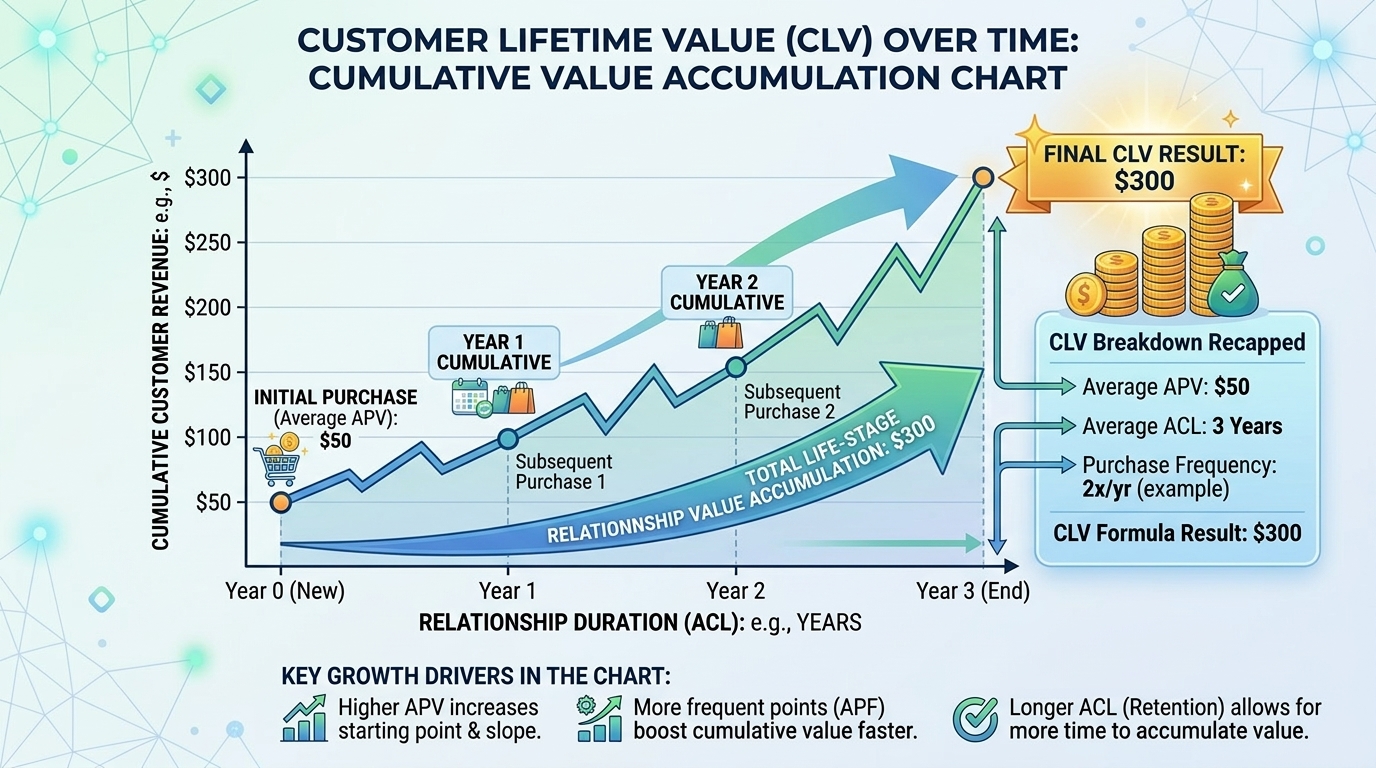
Before diving into the calculation process, let's define CLV: it represents the total revenue a company can expect from a single customer over their lifetime. This metric considers not only the initial purchase but also subsequent interactions, repeat business, and potential upselling or cross-selling opportunities.
To calculate CLV, you'll need to consider several factors:
Average Order Value (AOV): This represents the average amount spent by a customer in a single transaction. You can calculate AOV by dividing total revenue by the number of orders.
Purchase Frequency: This measures how often a customer makes a purchase from your business. You can estimate this by analyzing customer behavior data or conducting surveys.
Customer Retention Rate: This indicates the percentage of customers who continue to do business with you over time. Aim for a retention rate above 75% to maximize CLV.
Lifespan: This represents the average length of time a customer remains engaged with your brand.
Calculating Customer Lifetime Value: The Formula
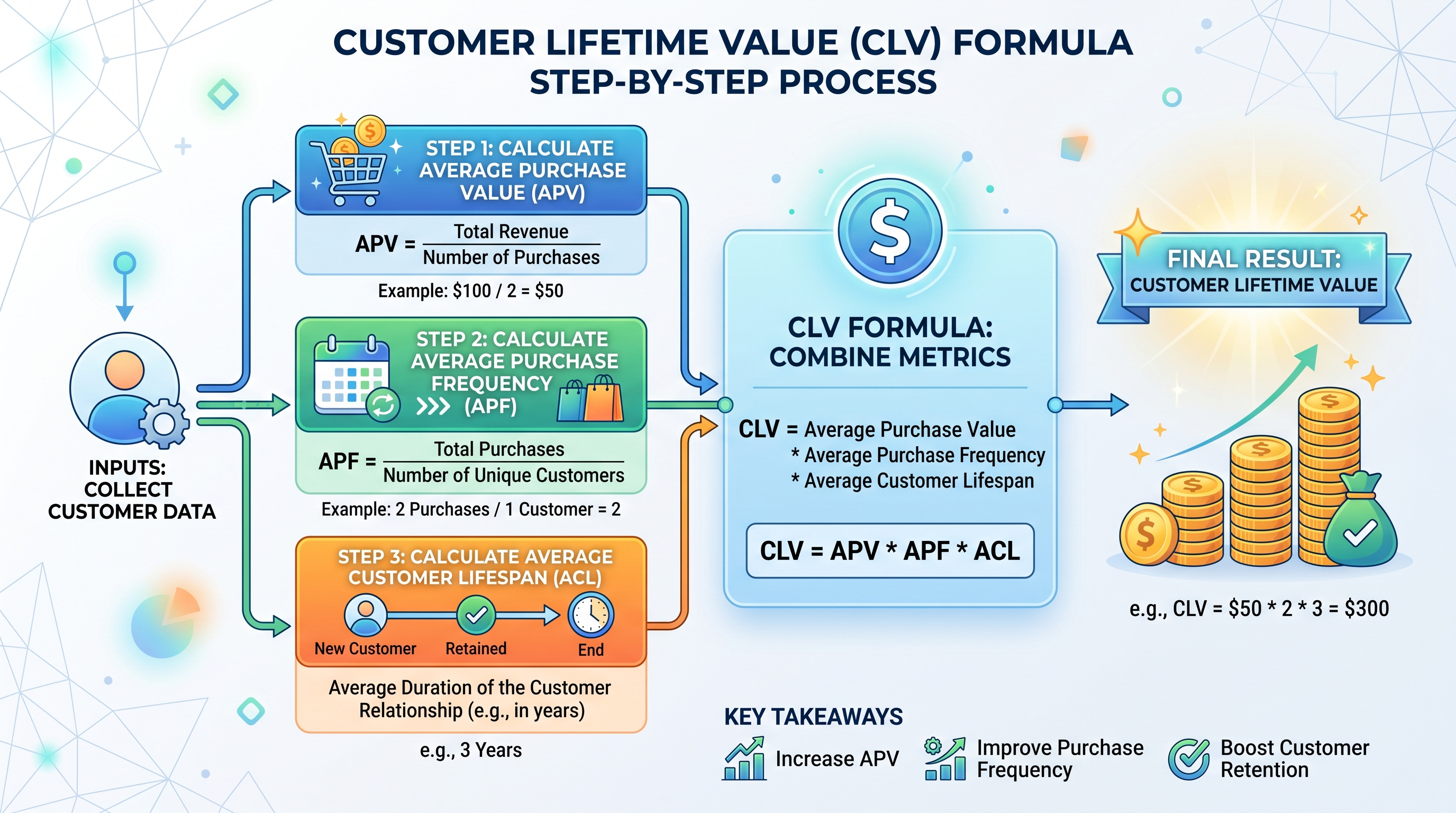
The formula for calculating CLV is as follows:
CLV = ((Average Order Value x Purchase Frequency) / Customer Retention Rate) x Lifespan
Let's break down each component to better understand the calculation process. Average Order Value (AOV) is a crucial factor in determining the overall value of a customer. To calculate AOV, you can use the following formula:
AOV = Total Revenue ÷ Number of Orders
For example, if your e-commerce store generated $100,000 in revenue last quarter and processed 1,000 orders, your AOV would be:
AOV = $100,000 ÷ 1,000 = $100 per order
Purchase Frequency, on the other hand, measures how often a customer makes a purchase from your business. This can be influenced by various factors such as marketing campaigns, product offerings, and customer service.
To calculate Purchase Frequency, you can use the following formula:
Purchase Frequency = Number of Purchases ÷ Time Period
For example, if a customer made 5 purchases in the last year, your Purchase Frequency would be:
Purchase Frequency = 5 purchases ÷ 1 year = 0.83 purchases per month (approximately)
Customer Retention Rate, as mentioned earlier, indicates the percentage of customers who continue to do business with you over time. This can be influenced by various factors such as customer satisfaction, loyalty programs, and retention strategies.
To calculate Customer Retention Rate, you can use the following formula:
Customer Retention Rate = (Number of Retained Customers ÷ Number of New Customers) x 100
For example, if your e-commerce store had 1,000 new customers last quarter and retained 75% of them, your Customer Retention Rate would be:
Customer Retention Rate = (750 ÷ 1,000) x 100 = 75%
Step-by-Step Calculation Example
Let's say you're an e-commerce store selling outdoor gear, and you've gathered the following data:
Average Order Value (AOV): $100
Purchase Frequency: 2 orders per year
Customer Retention Rate: 85%
Lifespan: 5 years
Using the formula above, we can calculate CLV as follows:
CLV = (($100 x 2) / 0.85) x 5 = ($200 / 0.85) x 5 = $235.29 x 5 = $1,176.45
This means that, on average, each customer is worth approximately $1,176.45 to your business over their lifetime.
Strategies for Maximizing Customer Lifetime Value
While calculating CLV provides a baseline understanding of customer value, it's essential to implement strategies that maximize its potential. Here are some actionable tips:
Personalize the shopping experience: Tailor marketing efforts and product recommendations to individual customers based on purchase history and preferences.
Implement loyalty programs: Reward repeat business with exclusive discounts, early access to new products, or special perks to foster customer retention.
Upsell and cross-sell strategically: Offer relevant products or services that complement a customer's existing purchases, increasing average order value and purchase frequency.
Invest in customer relationship management (CRM): Leverage CRM tools to track interactions, preferences, and purchase history, enabling you to make informed decisions about resource allocation and marketing strategies.
Benefits of Implementing Customer Lifetime Value Strategies
Implementing CLV strategies can have numerous benefits for your business, including:
Increased revenue through repeat purchases and referrals
Improved customer satisfaction and loyalty
Enhanced decision-making through data-driven insights
Competitive advantage in the market
By understanding and implementing CLV strategies, you can unlock the full potential of each customer and drive long-term growth for your business.
Conclusion
Calculating Customer Lifetime Value (CLV) is a crucial step in understanding the value of each customer to your business. By considering factors such as Average Order Value (AOV), Purchase Frequency, Customer Retention Rate, and Lifespan, you can use the CLV formula to determine the overall value of a customer.
To maximize CLV, it's essential to implement strategies that foster customer retention, loyalty, and satisfaction. This includes personalizing the shopping experience, implementing loyalty programs, upselling and cross-selling strategically, and investing in CRM tools.
By understanding and implementing CLV strategies, you can unlock the full potential of each customer and drive long-term growth for your business.
This Article was made with AI assistance and human editing.


