

Contribute to Kubernetes: Boost Your DevOps Expertise
As a developer looking to build in public and advance your career, contributing to open-source projects is an excellent way to gain expertise, network with professionals, and demonstrate your skills to potential employers. One of the most prominent and influential open-source projects in the container orchestration space is Kubernetes. With its massive community, extensive documentation, and widespread adoption, contributing to Kubernetes can be a game-changer for your DevOps career.
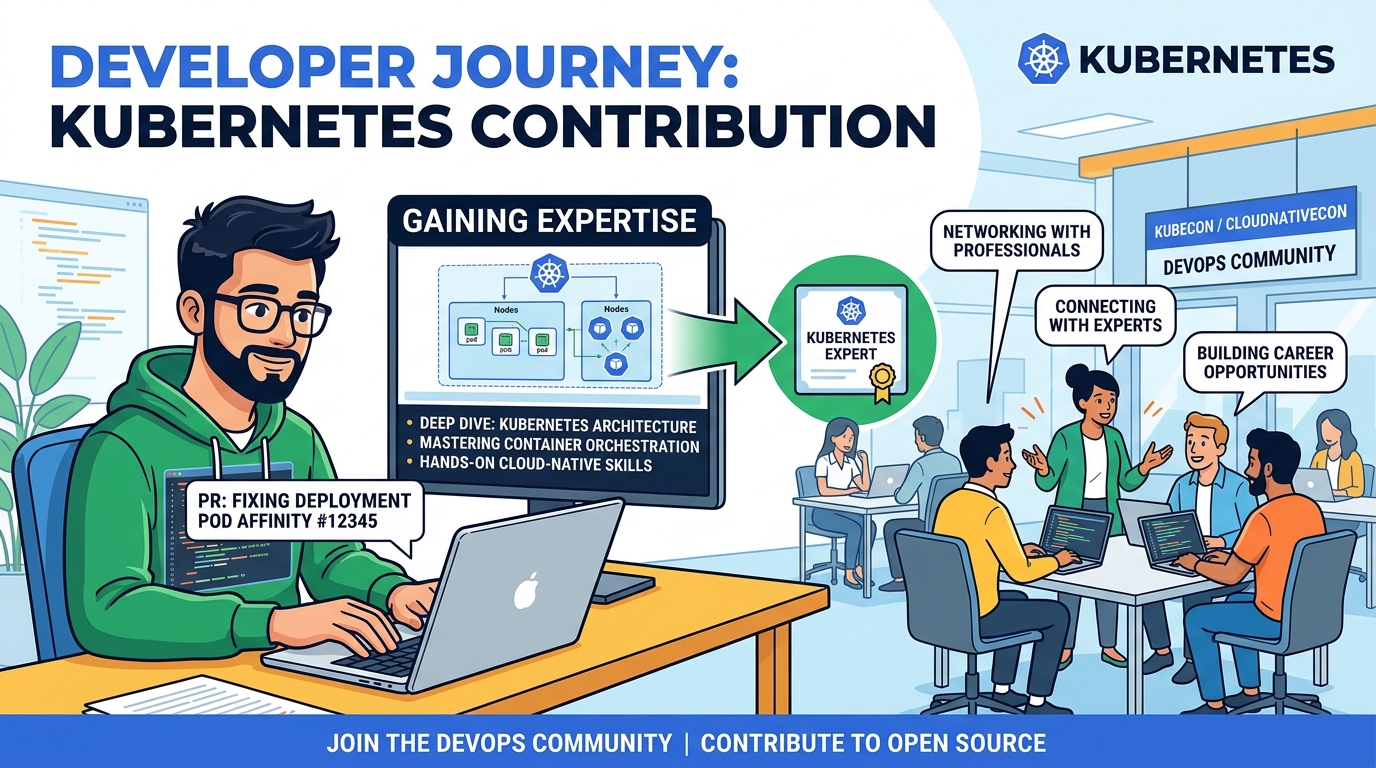
In this article, we'll explore the benefits of contributing to Kubernetes, guide you through the contribution process, and provide insights into the skills required to become proficient in DevOps. By the end of this article, you'll have a clear understanding of how to contribute to Kubernetes and why it's an excellent way to boost your DevOps expertise.
What are the Benefits of Contributing to Kubernetes?
Contributing to Kubernetes offers numerous benefits for developers looking to advance their careers:
• Gain expertise: By working on real-world projects, you'll gain hands-on experience with Kubernetes, its ecosystem, and best practices. This is especially true when it comes to understanding how Kubernetes manages containerized applications, orchestration techniques, and network policies.
• Network with professionals: The Kubernetes community is vast and active. Contributing to the project provides opportunities to collaborate with experienced developers, learn from them, and build relationships that can lead to new career opportunities.
• Build your personal brand: By contributing to a prominent open-source project, you'll demonstrate your skills, commitment, and passion for DevOps, making it easier to stand out in a competitive job market. Your involvement will also give you the chance to participate in discussions related to industry trends and share your knowledge with others.
• Enhance your resume: Contributing to Kubernetes shows potential employers that you're proactive, willing to learn, and capable of working on complex projects.
How Can I Contribute to a Large Open-Source Project like Kubernetes?
Contributing to a large open-source project like Kubernetes can seem daunting, but with the right guidance, it's achievable. Here are the steps to contribute:
1. Familiarize yourself with the project: Start by exploring the Kubernetes documentation, reading about its architecture, and understanding its components. This includes learning about the control plane, worker nodes, and how they interact.
2. Choose an issue or feature: Browse through the project's issues list (e.g., [Kubernetes GitHub Issues](https://github.com/kubernetes/kubernetes/issues)) and select one that interests you. Make sure to read the description carefully and understand what's expected from the contribution. It's also a good idea to join the relevant discussions on the issue, so you can get more context.
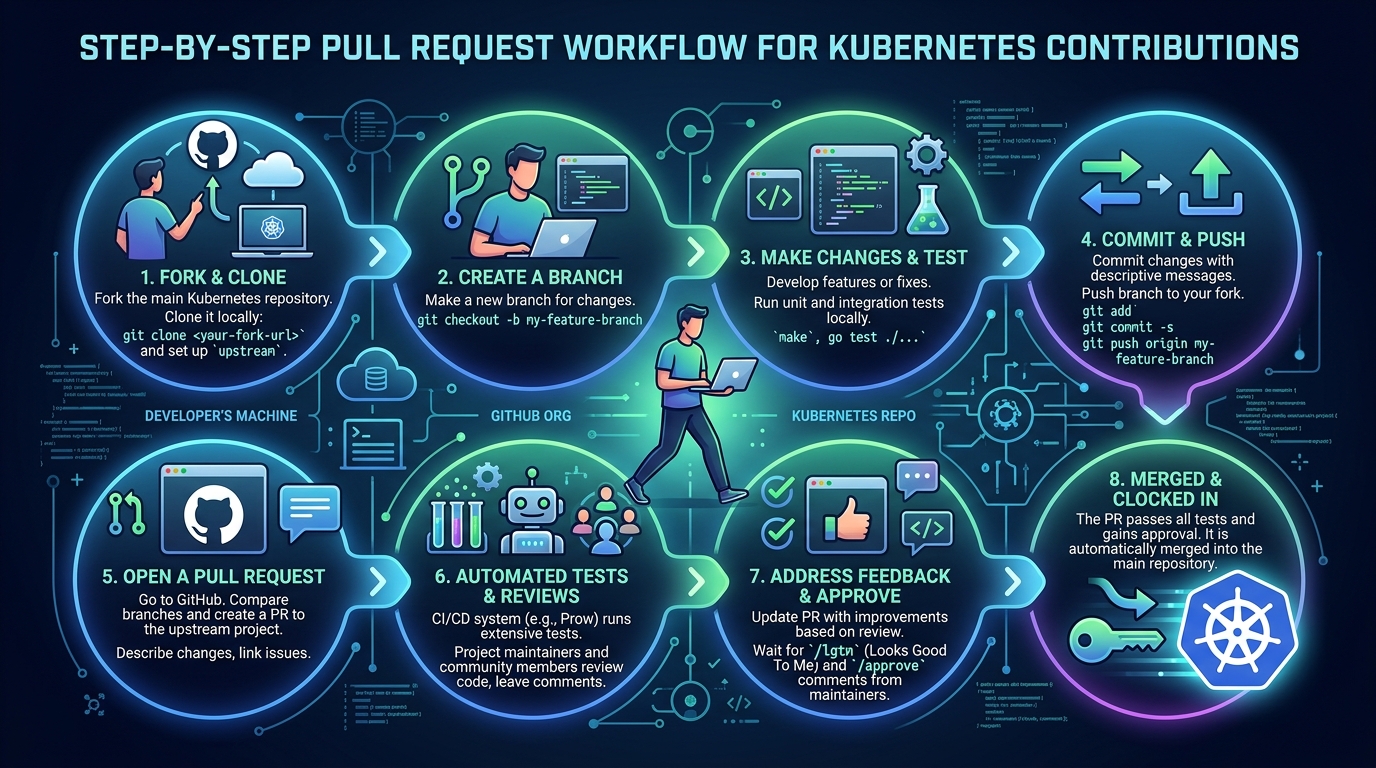
3. Create a pull request: Once you've completed your contribution, create a pull request on the project's GitHub repository. This is where other developers will review your work and provide feedback.
4. Engage with the community: Participate in discussions related to your issue or feature. Respond to comments, ask questions, and learn from others.
What Skills Do I Need to Develop to Become More Proficient in DevOps?
To become proficient in DevOps, you'll need to develop a combination of technical and soft skills:
• Programming languages: Familiarity with languages like Go, Python, or Java is essential for working on Kubernetes. This includes understanding how these languages interact with the Kubernetes API.
• Cloud platforms: Knowledge of cloud providers like AWS, GCP, or Azure will help you understand how to deploy and manage applications in a cloud environment. You should also know about containerization tools, orchestration techniques, and network policies.
• Containerization: Experience with containerization tools like Docker is crucial for building and deploying microservices-based applications. This includes understanding how containers interact with the Kubernetes ecosystem.
• CI/CD pipelines: Understanding Continuous Integration and Continuous Deployment (CI/CD) pipelines will enable you to automate testing and deployment processes.
Working with Kubernetes: Key Features and Best Practices
Here are some key features and best practices to keep in mind when working with Kubernetes:
Use the `kubectl` command-line tool for managing clusters and resources. This includes using commands like 'get', `describe`, and `delete`.
Understand the different types of Persistent Volumes (PVs) and StatefulSets. This is crucial for managing storage and state in your application.
Learn about Deployment strategies, such as Rolling Updates and Blue-Green Deployments. These strategies help you manage deployment rollouts and minimize downtime.
Familiarize yourself with Network Policies and Service Meshes. These tools help you manage network traffic and communication between services.
Common Challenges When Contributing to Kubernetes
When contributing to Kubernetes, you may encounter some challenges:
• Steep learning curve: Kubernetes is a complex system that requires knowledge of containerization, orchestration, and networking.
• Large codebase: The Kubernetes codebase is massive, which can make it difficult to find the relevant code or understand how different components interact.
• Active community: While the Kubernetes community is active, it's also vast. This means you may need to be patient when waiting for feedback on your contributions.
Conclusion
Contributing to Kubernetes is a great way to gain expertise in DevOps and advance your career. By following the steps outlined above, you'll be able to contribute effectively and take advantage of the benefits that come with participating in an open-source project like Kubernetes. Remember to stay patient, persistent, and willing to learn, as contributing to Kubernetes requires dedication and effort.
Final Tips
Here are some final tips for contributing to Kubernetes:
• Start small: Begin by contributing to smaller issues or features to gain experience.
• Ask questions: Don't be afraid to ask questions in the community. This is a great way to learn from others and get feedback on your contributions.
• Join discussions: Participate in discussions related to your issue or feature to understand more about the project.
By following these tips, you'll be well on your way to contributing effectively to Kubernetes and becoming proficient in DevOps. Happy contributing!
This Article was made with AI assistance and human editing.