

Are you ready to add a touch of bohemian charm to your home decor? Look no further than macrame plant hangers! With their intricate knots and delicate cordwork, these handmade plant holders are not only visually stunning but also provide a unique way to showcase your green thumb. In this comprehensive guide, we'll walk you through the basics of macrame plant hangers, covering everything from materials to techniques.
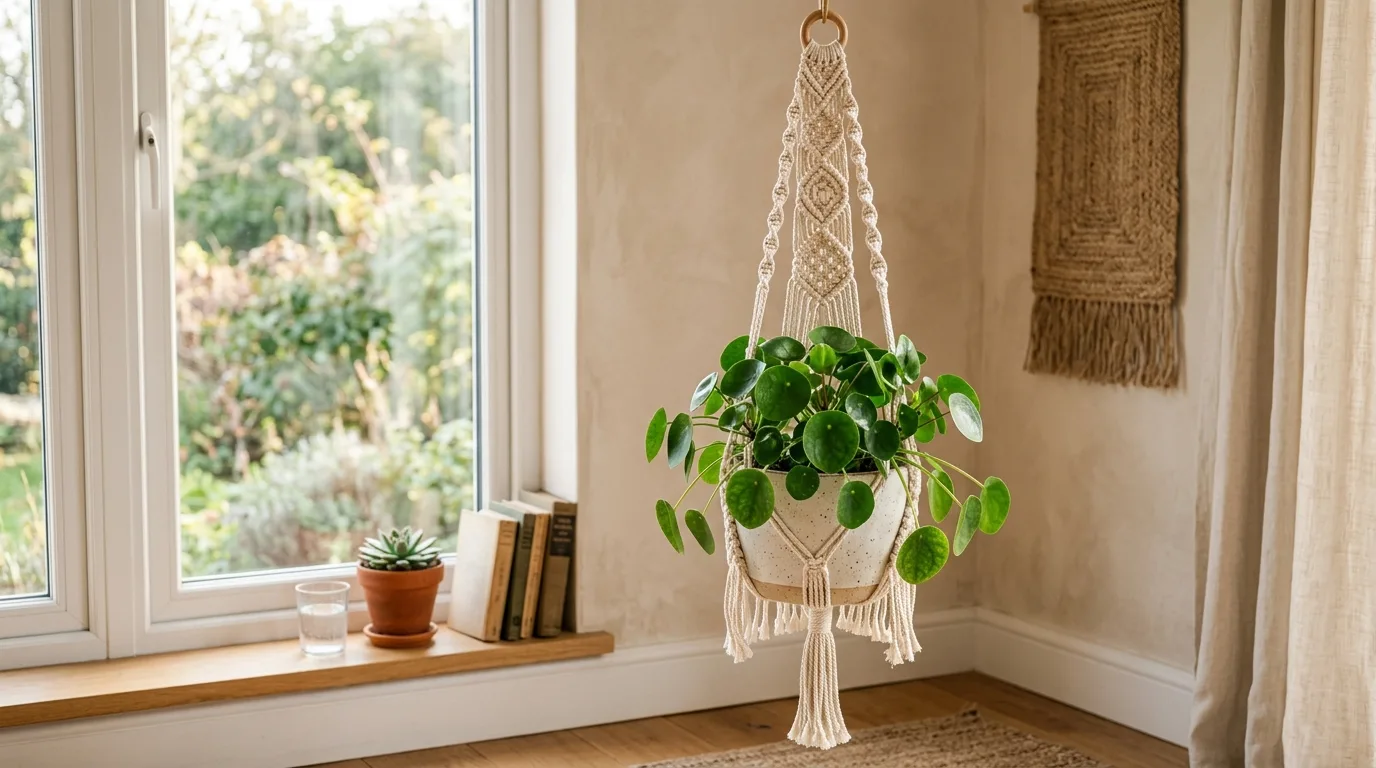
What is Macrame?
Macrame is a form of textile produced using knotting techniques. It involves creating intricate patterns and designs by manipulating cord or yarn with knots, twists, and folds. The word "macrame" comes from the Arabic word "makrama," meaning "ornamented fringe." This technique has been used for centuries in various cultures to create decorative items such as wall hangings, plant holders, and jewelry.
Macrame is often associated with bohemian or hippie decor, but its versatility allows it to fit into any style. From minimalist to maximalist, macrame can add a touch of elegance and sophistication to any room.
Materials Needed
Before you start your macrame journey, make sure you have the following materials:
• Cord or yarn: Choose a sturdy cord that can support the weight of your plant. Cotton rope or twine works well for beginners.
+ When selecting a cord, consider its texture, thickness, and color. Thicker cords are better suited for heavier plants, while thinner cords work well for smaller plants.
• Scissors
• Board or surface to work on
• Measuring tape or ruler
• Plant pot (choose one with a wide mouth for easy access)
+ When choosing a plant pot, consider the size and shape of your cord. A wider-mouthed pot will make it easier to wrap the cord around the neck.
• Optional: beads, shells, or other decorative items
Basic Knots and Techniques
To create a macrame plant hanger, you'll need to learn some basic knots and techniques. Here are the essential ones:
Lark's Head Knot: A simple knot used to attach cord to a hook or ring.
+ To tie a Lark's Head Knot, pass the end of the cord through the loop on the hook or ring, then bring it back over the top and pull tight.
Sheet Bend Knot: A knot that joins two cords together.
+ To tie a Sheet Bend Knot, overlap one cord on top of the other and wrap them around each other. Pull tight to secure the knot.
Spiral Knot: A decorative knot used to add texture and interest.
Step-by-Step Instructions for a Simple Macrame Plant Hanger
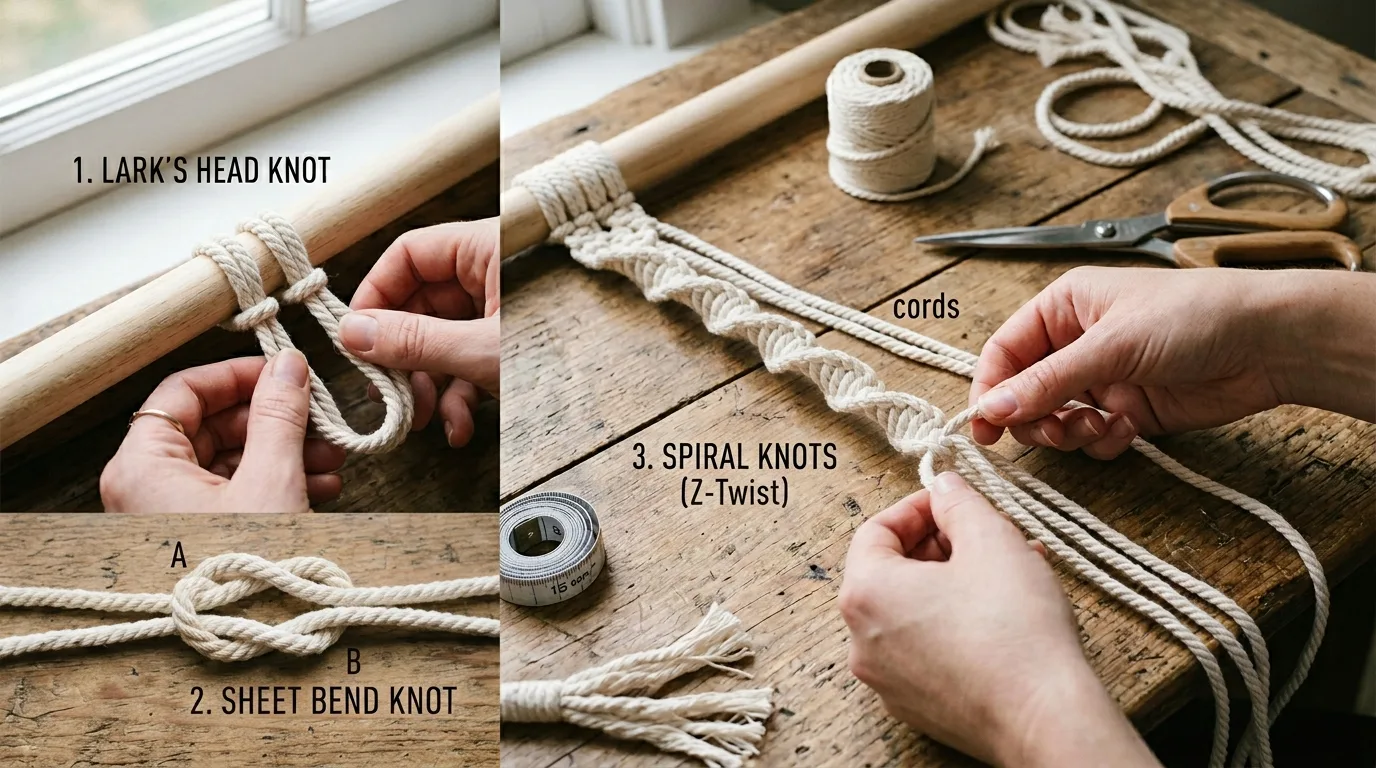
Now that you've learned the basic knots and techniques, it's time to put them into practice. Follow these steps to create a simple macrame plant hanger:
1. Measure and Cut Your Cord: Measure out 3-4 meters of cord, depending on how long you want your plant hanger to be. + When cutting the cord, leave a little extra room for adjusting the length as needed.
2. Create the Lark's Head Knot: Attach one end of the cord to a hook or ring using the lark's head knot.
3. Begin the Macrame Pattern: Fold the cord in half and tie a sheet bend knot to join the two ends together.
4. Add Decorative Knots: Continue adding spiral knots along the length of the cord, spacing them out evenly.
+ Experiment with different knot patterns and spacings to create unique designs.
5. Finish with a Tassel: Tie a final lark's head knot at the end of the cord and attach a tassel or bead.
Tips for Beginners
Start with a simple design and gradually move on to more complex patterns.
Practice your knots until you feel comfortable tying them.
+ It may take some time to get the hang of macrame, but with patience and practice, you'll become proficient in no time.
Use a measuring tape or ruler to ensure your hanger is even and symmetrical.
Don't be afraid to experiment and try new things – macrame is all about creativity!
Common Mistakes and Solutions
Are you worried that you'll mess up the design? Don't worry, it's easy to fix common mistakes:
Knots are uneven: Try re-tightening the knots or adjusting the spacing.
+ Uneven knots can be a result of incorrect tension or knot placement. Adjusting the tension or retying the knots should solve the issue.
Cord is too long/short: Measure out new cord or adjust the length of your existing hanger.
+ If you've made a mistake with the cord length, it's easy to fix by measuring and cutting new cord.
Knots are loose: Tighten the knots by pulling on the ends of the cord.
Troubleshooting Tips
Cord is too thin: Use thicker cord or double up the strands for added stability.
Knots are too tight: Loosen the knots by gently tugging on the cord.
Hanger is uneven: Adjust the tension of the knots or re-tie them to achieve even spacing.
Tips and Variations
Experiment with different materials, such as yarn, twine, or embroidery floss.
Add embellishments like beads, shells, or sequins for extra flair.
Create a macrame planter box by wrapping cord around the sides of a wooden or plastic container.
Use macrame to create wall hangings, mobiles, or other decorative items.
By following these tips and techniques, you'll be well on your way to creating beautiful macrame plant hangers. Remember to practice patience and experiment with different designs – it's all about having fun and getting creative.
This Article was made with AI assistance and human editing.