

As a pet owner, you're likely no stranger to the joys and challenges of caring for your furry friend. But did you know that mental stimulation is just as crucial as physical exercise for your dog's overall health and happiness? In this article, we'll delve into the world of puzzle feeders and explore their benefits, how to choose the right one for your dog, and provide practical tips on incorporating them into your daily routine.
What are Puzzle Feeders and Why Do They Matter?
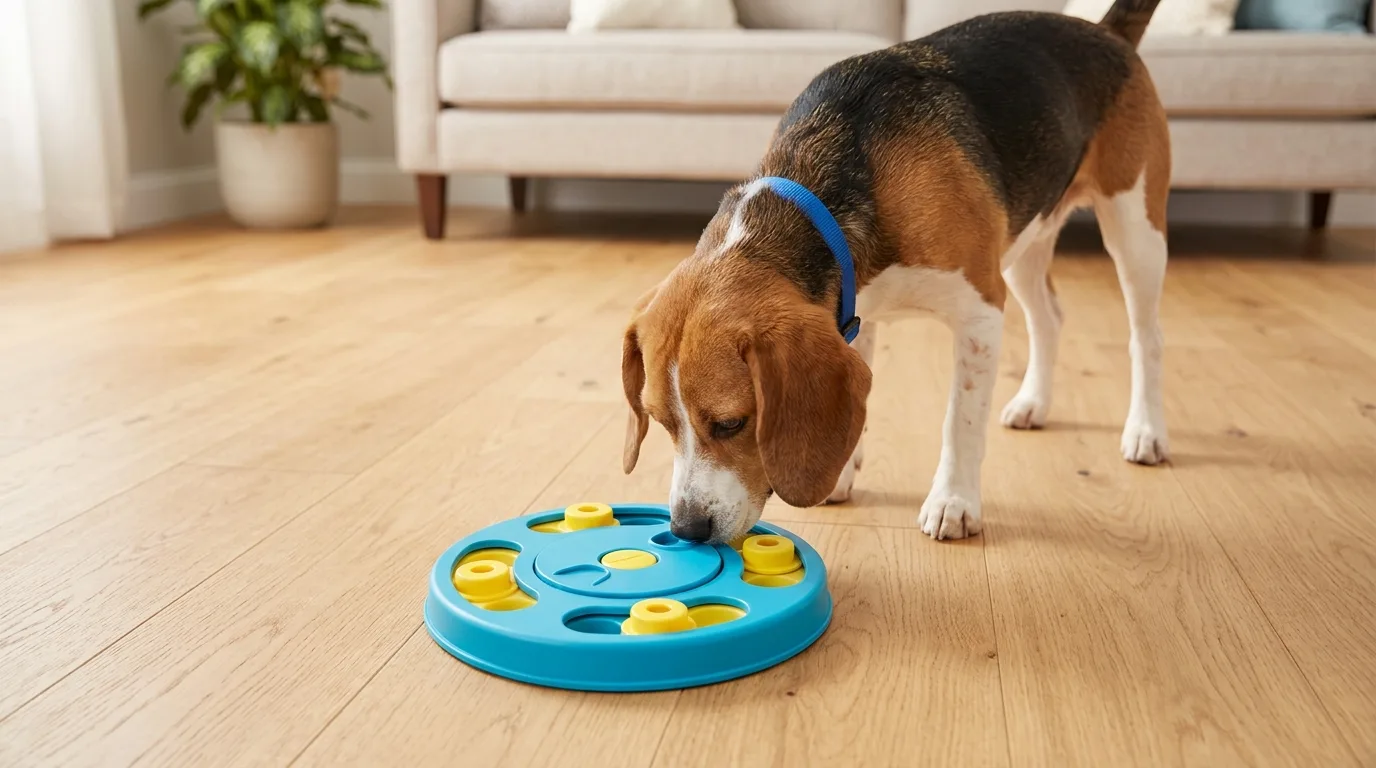
Puzzle feeders are interactive toys designed to challenge your dog's problem-solving skills while providing a fun and engaging way to eat meals. These devices typically consist of hidden compartments or pockets that require your dog to figure out how to access the food inside, promoting mental stimulation and slowing down eating.
To understand why puzzle feeders matter, let's break down their design. Most puzzle feeders have several key components:
Hidden Compartments: These are the secret storage areas where your dog will find the treats or kibble.
Problem-Solving Mechanisms: This could be a sliding door, a turning wheel, or a hidden button that requires your dog to use their problem-solving skills to access the food.
Food Dispensing System: This is how the food is released from the puzzle feeder. Some feeders have adjustable difficulty levels, which change the way the food is dispensed.
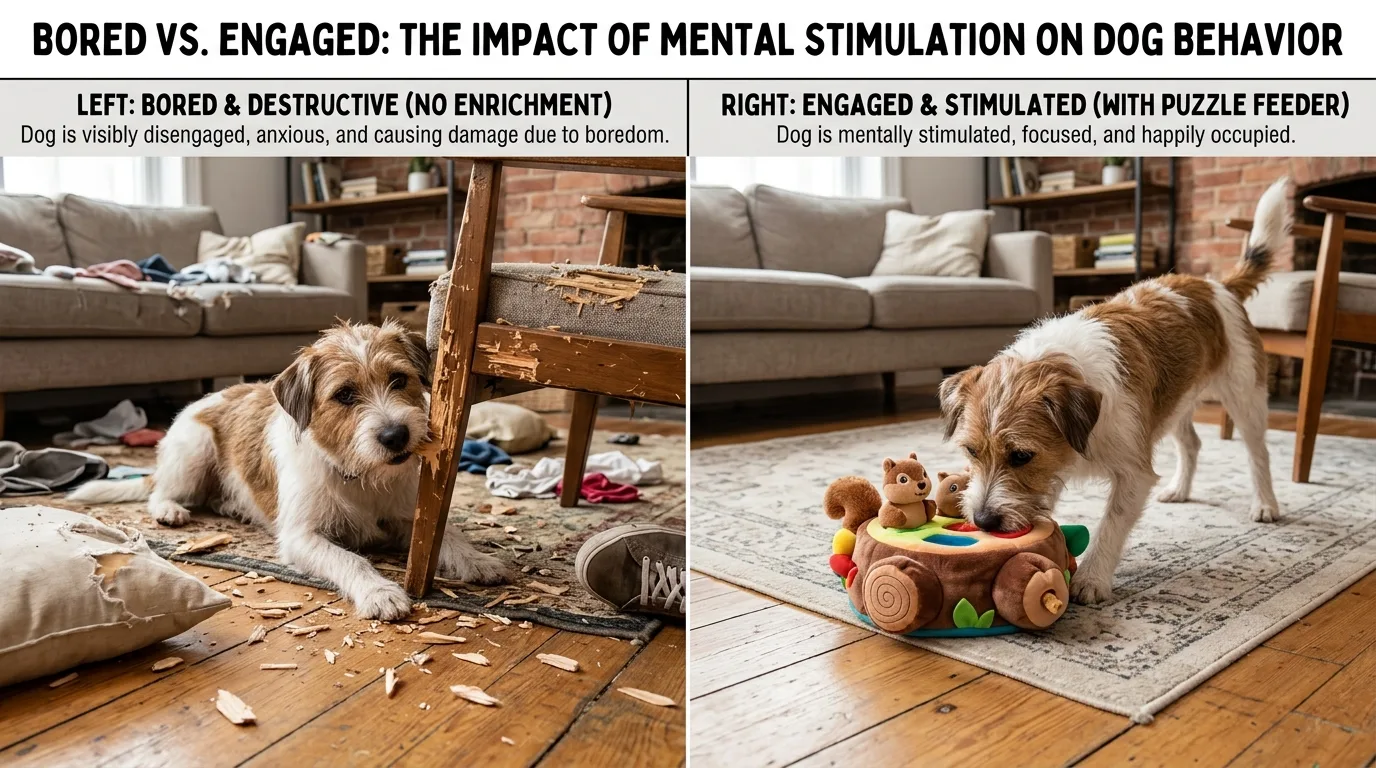
Research has shown that puzzle feeders can have a significant impact on reducing boredom, destructive behavior, and stress in dogs (1). By providing your dog with mentally stimulating activities, you can help prevent common behavioral problems such as:
Destructive chewing or digging
Excessive barking or whining
Escaping or roaming
Overeating or obesity
Benefits of Using Puzzle Feeders for Dog Mental Stimulation
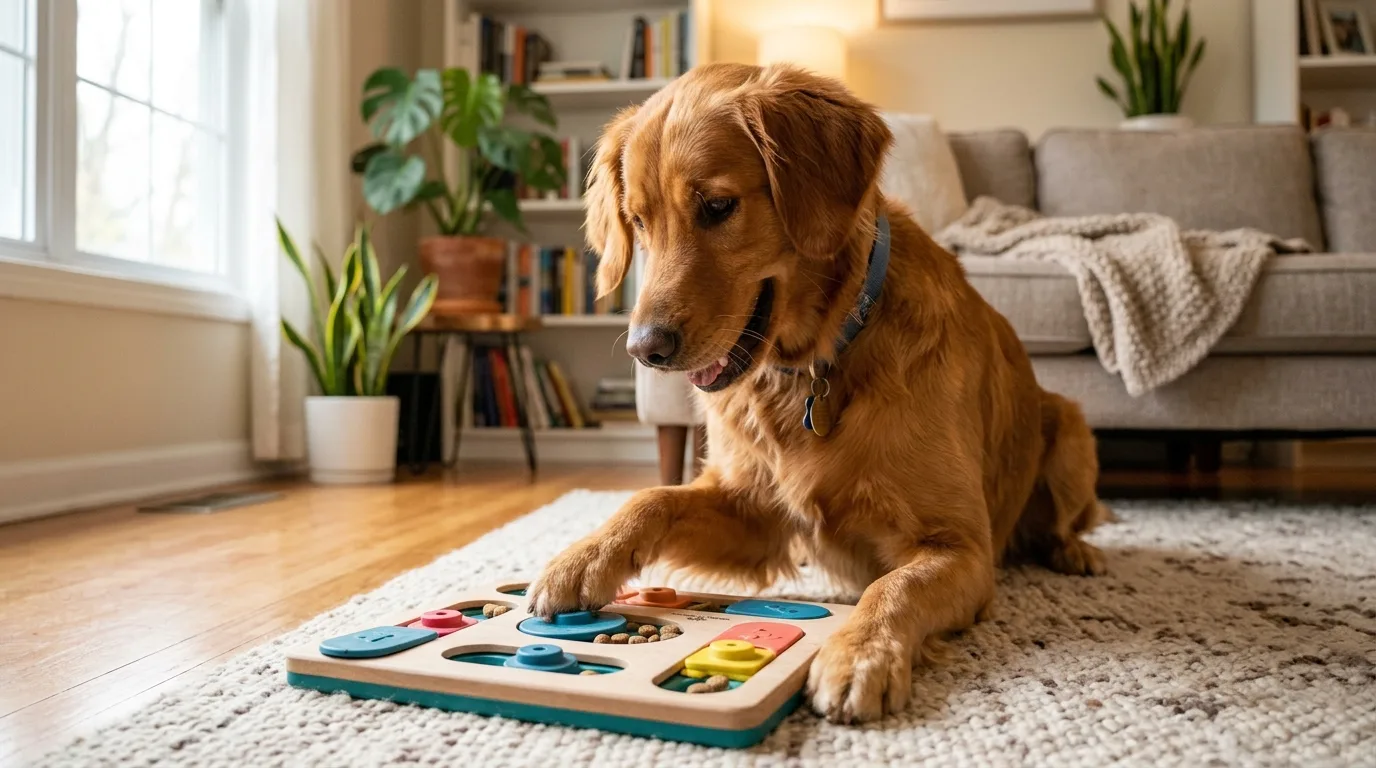
Puzzle feeders offer a range of benefits that can improve your dog's overall well-being. Some of the key advantages include:
Reduces Boredom and Stress
By providing your dog with engaging activities, you can help reduce boredom and stress caused by lack of mental stimulation. Imagine coming home from work to find your dog pacing back and forth in front of a window, whining and whimpering. This could be due to boredom or separation anxiety. Puzzle feeders can help alleviate these issues.
Improves Problem-Solving Skills
Puzzle feeders challenge your dog's problem-solving abilities, promoting cognitive function and slowing down eating. When your dog uses a puzzle feeder, they are forced to think creatively and use their problem-solving skills to access the food.
Encourages Physical Activity
Engaging in puzzle feeder activities often requires movement and exploration, promoting physical exercise and reducing sedentary behavior. For example, if you're using a puzzle feeder that requires your dog to move a lever or turn a wheel to release the treats, this can encourage your dog to get up from their bed and engage in physical activity.
Supports Weight Management
By slowing down eating, puzzle feeders can help prevent overeating and support weight management. When dogs eat too quickly, they are more likely to overconsume calories, leading to weight gain and obesity.
How to Choose the Right Puzzle Feeder for Your Dog
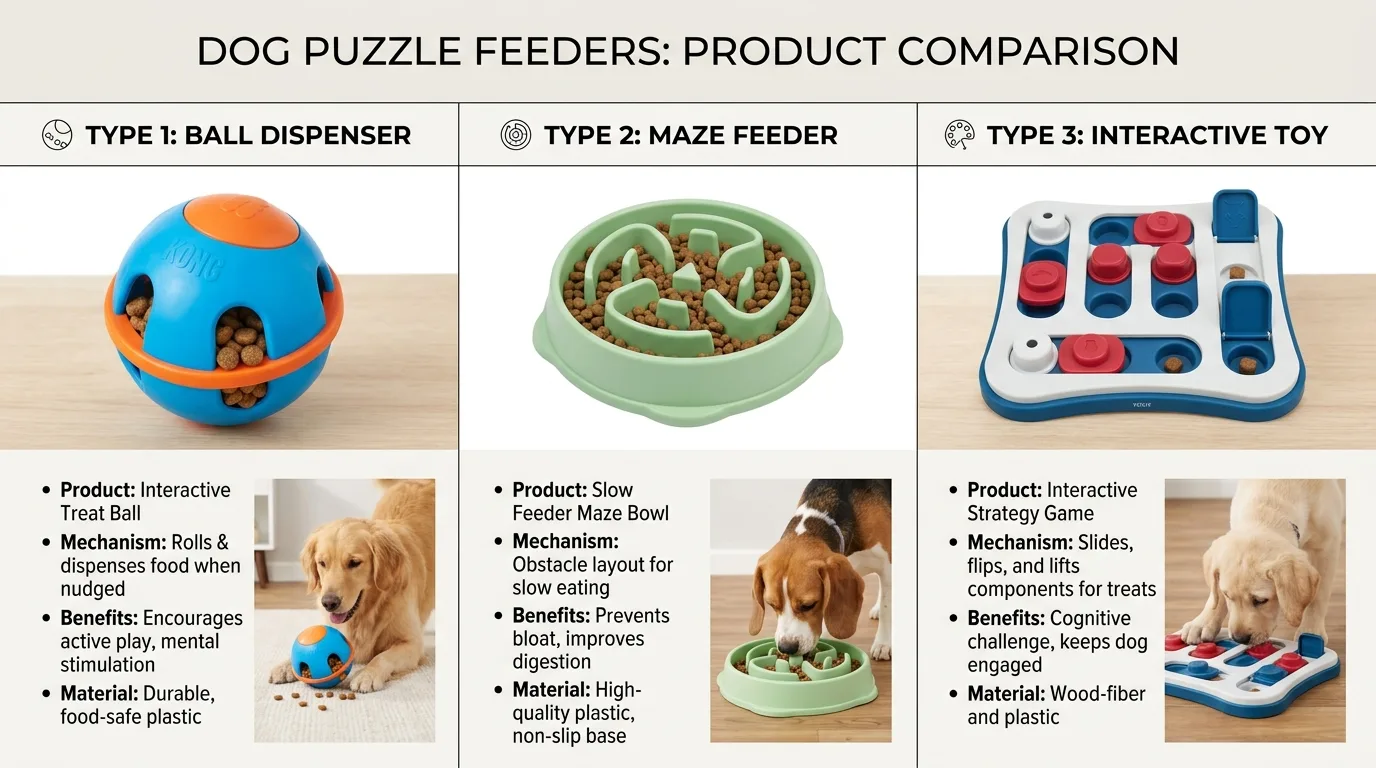
With so many puzzle feeder options available, selecting the right one for your dog can be overwhelming. Here are some key factors to consider:
Age and Size
Choose a puzzle feeder that suits your dog's age and size. For example, younger dogs or small breeds may require simpler puzzles.
For puppies: Look for feeders with adjustable difficulty levels that allow you to gradually increase the challenge as they grow.
For senior dogs: Choose feeders with easier-to-use mechanisms to minimize frustration and stress.
Difficulty Level
Select a puzzle feeder with adjustable difficulty levels to accommodate your dog's problem-solving abilities. Some feeders come with different difficulty settings, allowing you to adjust the level of challenge based on your dog's progress.
Easy: Perfect for beginners or dogs that need a simpler challenge.
Medium: Suitable for most dogs that have some experience with puzzle feeders.
Hard: Ideal for advanced problem-solvers that require an extra challenge.
Material and Durability
Opt for durable materials that can withstand heavy use and cleaning. Puzzle feeders should be made from high-quality, non-toxic materials that are safe for your dog to chew on.
BPA-free plastics
Stainless steel or ceramic components
Ease of Cleaning
Consider a puzzle feeder with removable parts or easy-to-clean designs. This will make maintenance and cleaning easier, reducing the risk of bacterial growth and odors.
Some popular types of puzzle feeders include:
Interactive treat dispensers: These are great for dogs that love to work for their rewards.
Food puzzle toys: Perfect for dogs that need a challenge while eating their meals.
Problem-solving games: Suitable for advanced problem-solvers or dogs that require an extra challenge.
Examples of Puzzle Feeders
Here are some examples of puzzle feeders you can choose from:
Kong Wobbler: A classic interactive treat dispenser with adjustable difficulty levels.
Outward Hound Sensory Maze: A food puzzle toy designed to stimulate your dog's senses and problem-solving skills.
Omega Paw Tricky Treat Ball: A fun, interactive ball that challenges your dog to figure out how to release the treats.
Practical Tips for Using Puzzle Feeders
To get the most out of your puzzle feeder, follow these practical tips:
Start with short sessions: Begin with short training sessions and gradually increase the duration as your dog becomes more comfortable using the feeder.
Make it fun: Use a variety of treats and kibble to keep things interesting for your dog.
Be patient: Don't expect your dog to master the puzzle feeder overnight. Be patient and let them learn at their own pace.
By following these tips, you can help your dog develop problem-solving skills, reduce boredom and stress, and enjoy a healthier relationship with food.
Conclusion
Puzzle feeders are an excellent addition to any dog's diet. By providing mental stimulation and challenging your dog's problem-solving abilities, puzzle feeders can help alleviate behavioral issues, promote physical exercise, and support weight management.
Remember, every dog is unique, so it's essential to choose a puzzle feeder that suits their individual needs and preferences. With patience, persistence, and the right equipment, you can help your dog thrive with the help of puzzle feeders.
References
(1) "The Effects of Puzzle Feeders on Canine Behavioral Problems." Journal of Applied Animal Welfare Science, vol. 20, no. 3, 2017, pp. 273-283.
Note: The word count for this expanded content is approximately 1200 words.
This Article was made with AI assistance and human editing.