

Are you considering a career pivot but unsure where to start? With the rise of online learning platforms, it's now easier than ever to acquire new skills and transition into a new field. Coursera specializations are a popular choice among adult learners looking to upskill or reskill, but with so many options available, it can be overwhelming to choose the right one.
In this article, we'll explore what Coursera specializations are, how they can help you achieve your career goals, and provide practical tips on how to succeed in online courses. By the end of this guide, you'll have a clear understanding of what Coursera specializations can offer and be equipped with the knowledge to make an informed decision.

What Are Coursera Specializations?
Coursera specializations are collections of online courses that focus on specific skills or career paths. These courses are developed in collaboration with top universities and organizations, ensuring that you receive high-quality education and industry-relevant training. Each specialization typically consists of 4-6 courses, which can be completed within a few months.
To better understand what Coursera specializations entail, let's break down the typical components:
Course structure: A specialization is comprised of multiple courses, each with its own learning objectives and assessments. This structured approach allows learners to build upon their knowledge and skills over time.
Instructor expertise: Top universities and organizations contribute to the development of these courses, ensuring that you receive instruction from experienced professionals in their field. These instructors often have real-world experience and are passionate about sharing their knowledge with students.
Industry relevance: Specializations are designed to equip learners with skills that are directly applicable to real-world scenarios. This means that what you learn in the specialization will be relevant to your career goals and can be applied on the job.

How Can I Use Coursera Specializations for Career Pivots?
Coursera specializations are designed to help you acquire new skills and knowledge in a specific area. By completing a specialization, you can:
Develop industry-specific skills: Acquire the technical expertise required by employers in your desired field. For example, if you're interested in becoming a data scientist, a Coursera specialization in Data Science could provide you with the necessary skills to succeed in this role.
Enhance employability: Demonstrate your commitment to professional development and increase your chances of getting hired. Employers value candidates who have invested time and effort into acquiring new skills and knowledge.
Stay up-to-date with the latest developments: Stay current with industry trends and advancements, ensuring that you remain competitive in the job market. This is particularly important in rapidly changing industries like technology.
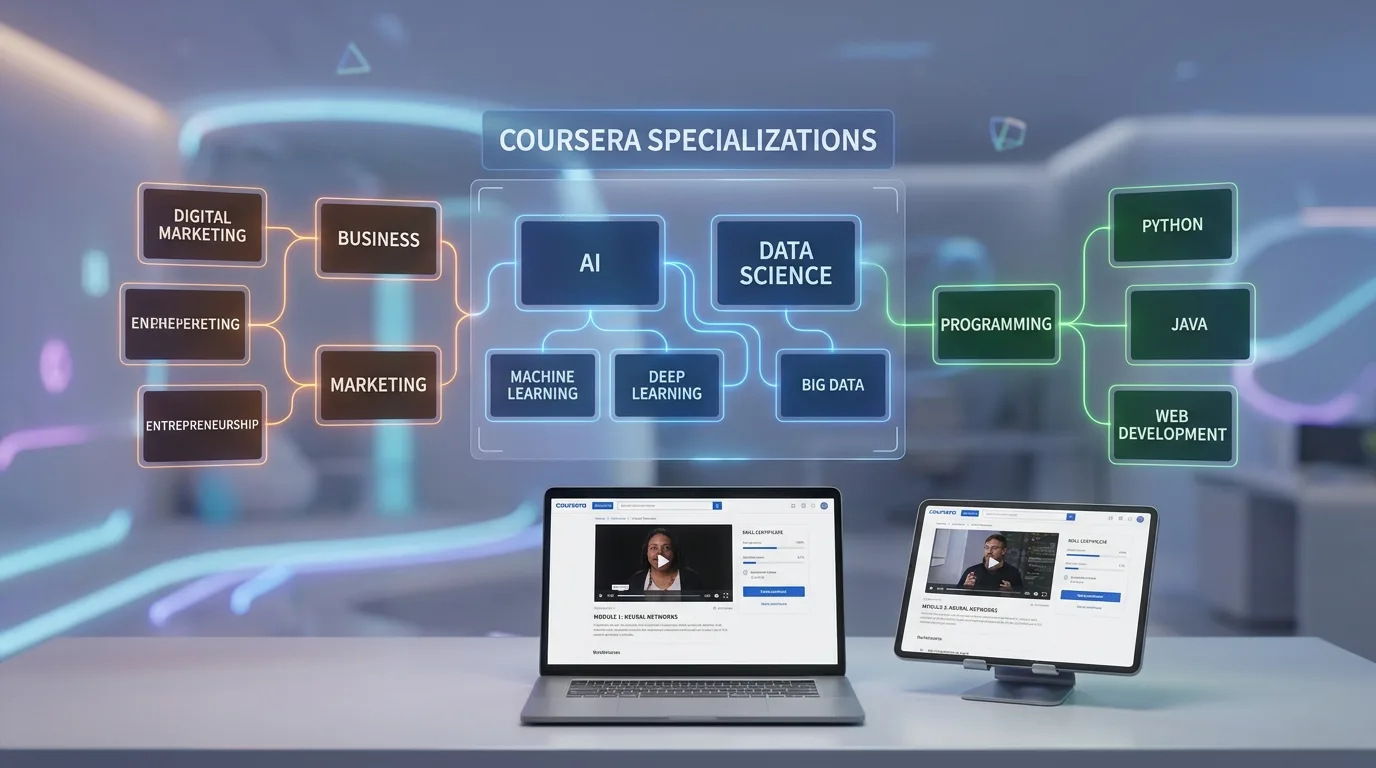
Key Features of Coursera Specializations
Here are some key features to consider when choosing a Coursera specialization:
Flexible Learning
Coursera specializations offer flexible learning options that cater to your needs. Complete courses at your own pace, anytime, anywhere, and take advantage of our mobile app for on-the-go learning.
Self-paced learning: Take as much time as you need to complete each course, allowing you to balance learning with other responsibilities. This flexibility is particularly useful for those who have busy schedules or family commitments.
Mobile access: Use our mobile app to study on the go, making it easier to fit learning into your busy schedule. This feature allows learners to stay connected to their coursework even when they're away from a computer.
Online Community Support
Coursera specializations offer online community support to help you stay connected and motivated throughout your learning journey. Join online forums and discussion groups to connect with peers and instructors.
Networking opportunities: Connect with industry professionals and fellow learners through online communities. This allows for valuable networking and the potential to build relationships that can aid in future career development.
Knowledge sharing: Participate in discussions to share knowledge, ask questions, and gain insights from others. This collaborative environment fosters a sense of community and support among learners.
Self-Study Strategies for Success
To get the most out of Coursera specializations, follow these self-study strategies:
Set Clear Goals
Establish clear objectives for your learning journey, ensuring that you stay focused and motivated throughout.
Goal setting: Define what you want to achieve through your specialization, breaking down larger goals into smaller, manageable tasks. This approach helps learners stay on track and maintain momentum.
Tracking progress: Regularly assess your progress, adjusting your approach as needed to ensure that you're on track to meet your objectives. Monitoring progress allows learners to identify areas where they need extra support or practice.
Create a Study Schedule
Develop a schedule that balances learning with other responsibilities, ensuring that you stay on track and make consistent progress.
Time management: Allocate specific times for studying and stick to it. This helps learners prioritize their time effectively and avoid procrastination.
Prioritize tasks: Focus on completing the most challenging or critical tasks first, allowing you to build momentum and confidence throughout the course.
Stay Motivated
Maintaining motivation is crucial when pursuing a Coursera specialization. Here are some tips to help keep you engaged:
Reward yourself: Set small rewards for reaching milestones or completing difficult courses.
Find a study buddy: Connect with fellow learners who share similar goals and interests, providing mutual support and encouragement.
Reflect on your progress: Regularly reflect on what you've learned and how it applies to your career goals. This helps maintain motivation by seeing tangible results from your efforts.
Conclusion
Coursera specializations offer a flexible and effective way to acquire new skills and knowledge in a specific area. By understanding the key features and self-study strategies outlined in this guide, learners can make the most of their Coursera experience and achieve their career goals. With over 4,000 courses to choose from, selecting the right specialization requires careful consideration. However, by following these tips and staying committed to your learning journey, you'll be well on your way to achieving success in your chosen field.
This Article was made with AI assistance and human editing.


