

As a parent or caregiver, you're likely familiar with the importance of creating a nurturing environment that fosters learning and growth in young children. The Montessori method, developed by Italian physician and educator Maria Montessori, offers a holistic approach to early childhood education that emphasizes self-directed activity and hands-on learning. While traditional Montessori schools can be expensive and inaccessible for many families, it's possible to create a learning environment at home that caters to your preschooler's unique needs and interests.
In this article, we'll explore the world of Montessori at-home setups, discussing what makes them effective, how to set one up, and providing practical tips for creating a structured learning environment. Whether you're an experienced educator or just starting out, this guide aims to empower you with the knowledge and confidence to create a supportive learning environment for your child.
What is a Montessori at-Home Setup?
A Montessori at-home setup is an educational environment designed for preschoolers (typically aged 3-6) that incorporates the principles of the traditional Montessori method. The core idea behind this approach is to create a space where children can learn, explore, and develop at their own pace.
At its heart, a Montessori at-home setup should prioritize:
Self-directed activity: Encouraging children to take ownership of their learning journey through hands-on exploration.
+ This means providing opportunities for children to make choices about what they want to learn and how they want to learn it. For example, you can set up different work stations or activities that cater to different interests and abilities.
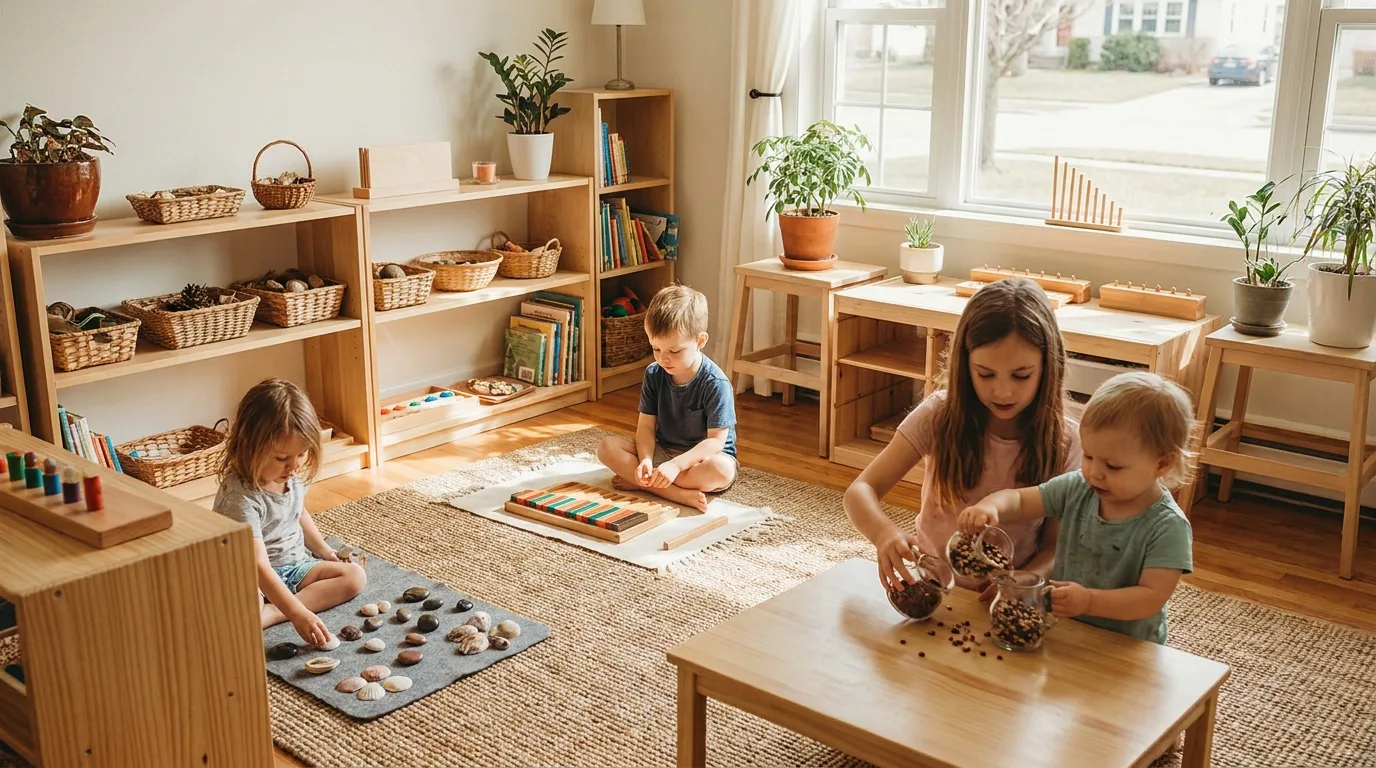
Mixed-age environments: Accommodating children with different ages and abilities, promoting socialization, empathy, and cooperation.
+ In a mixed-age environment, older children can take on leadership roles and mentor younger peers, while younger children can learn from observing and imitating their elders. This arrangement encourages social skills, emotional intelligence, and a sense of community.
Practical life skills: Teaching essential life skills, such as dressing, grooming, and cooking, alongside academic subjects.
+ Practical life activities help children develop fine motor skills, hand-eye coordination, and problem-solving abilities while also promoting independence and self-reliance.
Setting Up a Montessori Environment for Your Preschooler
Creating an effective Montessori at-home setup requires careful planning, patience, and creativity. Here are some key considerations to keep in mind:
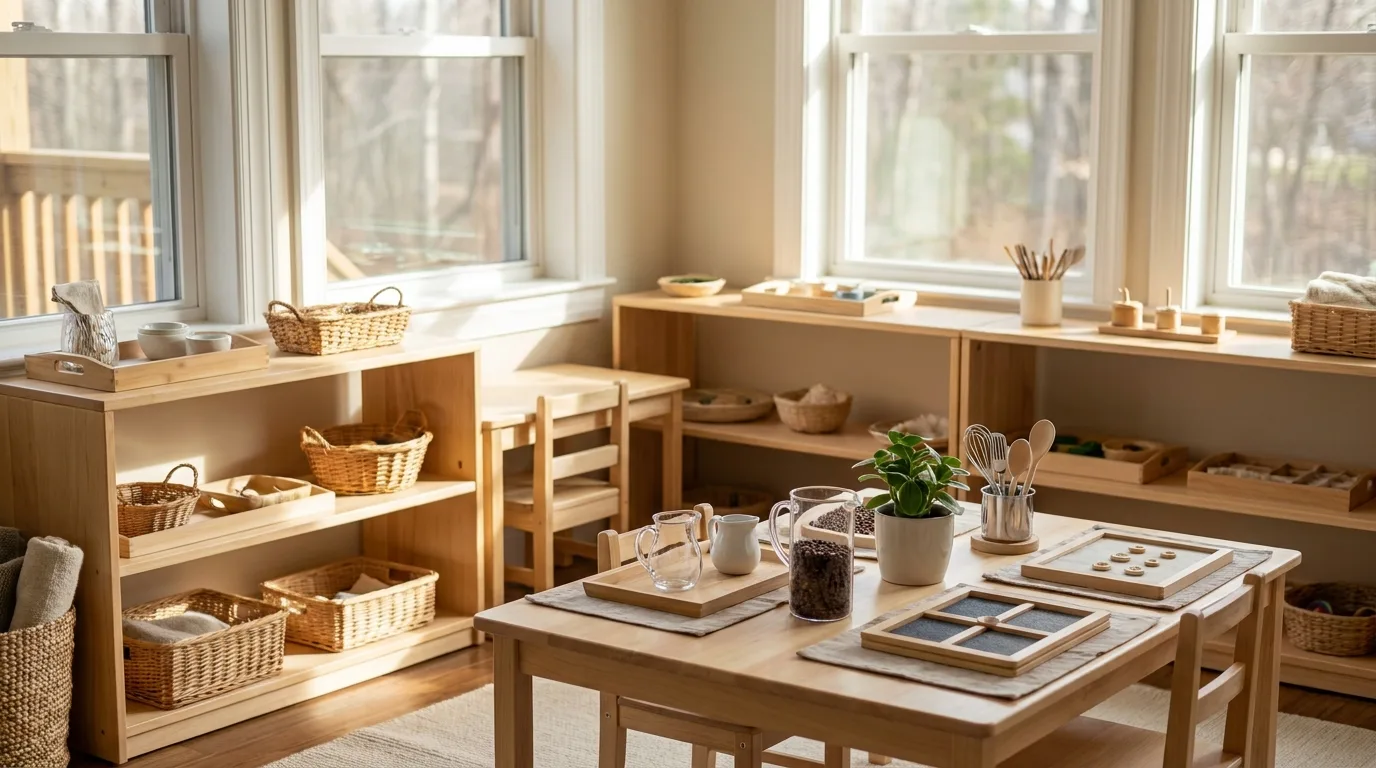
Dedicate a learning space: Designate a specific area of your home as the "learning environment" where materials and activities can be set up without distractions.
+ This dedicated space should be designed to promote focus and concentration. Consider setting up a quiet corner or a designated learning area that is free from clutter and interruptions.
Use natural light: Harness the power of natural light to create an inviting atmosphere that promotes learning.
+ Natural light has been shown to have numerous benefits for children's cognitive development, including improved mood, increased attention span, and enhanced creativity. Whenever possible, position your child's learning area near a window or outside in a secure outdoor space.
When setting up a Montessori environment, consider the following tips:
Use simple and clear labeling: Labeling materials and activities can help children understand what they're expected to do and how to use the materials.
+ Labels should be concise, easy to read, and placed in an accessible location. You can also incorporate visual aids like pictures or diagrams to support understanding.
Arrange materials in an orderly fashion: Keeping materials organized and tidy can help create a sense of calm and structure for your child.
+ Encourage children to clean up after themselves by making it a part of their daily routine. This helps develop responsibility, self-discipline, and a love for order.
Implementing Montessori Principles
To create a truly supportive learning environment, it's essential to implement the method's core principles:
Respect for the child: Recognizing each child's individuality and providing an environment that supports their unique needs.
+ This means acknowledging that every child learns at their own pace and in their own way. Be prepared to adapt your teaching approach to meet the changing needs of your child.
Prepared environment: Creating a space that is thoughtfully prepared to promote learning and exploration.
+ A well-prepared environment encourages children to explore, discover, and learn through hands-on experiences. This includes setting up materials, activities, and lessons that cater to different age groups and abilities.
Sensitive periods: Providing opportunities for children to learn during their sensitive periods, which are times when they are most receptive to new skills or knowledge.
Sensitive Periods
Sensitive periods refer to the specific times in a child's development when they are particularly receptive to learning certain skills or concepts. These periods typically last several months and can be influenced by factors such as age, experience, and interest.
Language: Children between 2-7 years old are typically in their language-sensitive period, during which they absorb and process vast amounts of linguistic information.
+ During this time, provide opportunities for children to engage with books, storytelling, and conversations. Encourage them to ask questions, explore words, and develop vocabulary.
Mathematics: Children between 2-10 years old are typically in their math-sensitive period, during which they learn fundamental concepts of number, quantity, and measurement.
+ Engage your child in hands-on math activities like counting, sorting, and basic addition. Use real-life examples to demonstrate mathematical concepts and encourage problem-solving.
Conclusion
Creating a Montessori at-home setup requires patience, creativity, and a deep understanding of the method's core principles. By prioritizing self-directed activity, mixed-age environments, and practical life skills, you can create a supportive learning environment that fosters your child's intellectual, social, and emotional growth.
Remember to stay flexible and adapt your approach as needed to meet the changing needs of your child. With dedication and persistence, you can help your child develop into a confident, curious, and capable individual who is equipped to succeed in all areas of life.
This Article was made with AI assistance and human editing.


