

Anxiety can be a debilitating feeling that affects millions of people worldwide, impacting daily life and making it challenging to focus on tasks and maintain productivity. It's essential to note that anxiety is not just an emotional state but also has physical manifestations, such as rapid heartbeat, sweating, and trembling.
Fortunately, there's a simple yet effective technique that can help reduce anxiety: box breathing. Box breathing is a mindfulness practice that involves controlling your breath to calm the mind and body. This technique has been used by Navy SEALs, business leaders, and individuals seeking stress relief. By incorporating box breathing into your daily routine, you'll learn how to manage anxiety and improve focus.
In this article, we'll explore the benefits of box breathing, provide a step-by-step guide on how to practice it, and offer tips for incorporating it into your daily life. You'll discover how this simple technique can help you:
• Reduce anxiety and stress
• Improve focus and concentration
• Enhance overall well-being
What is Box Breathing?
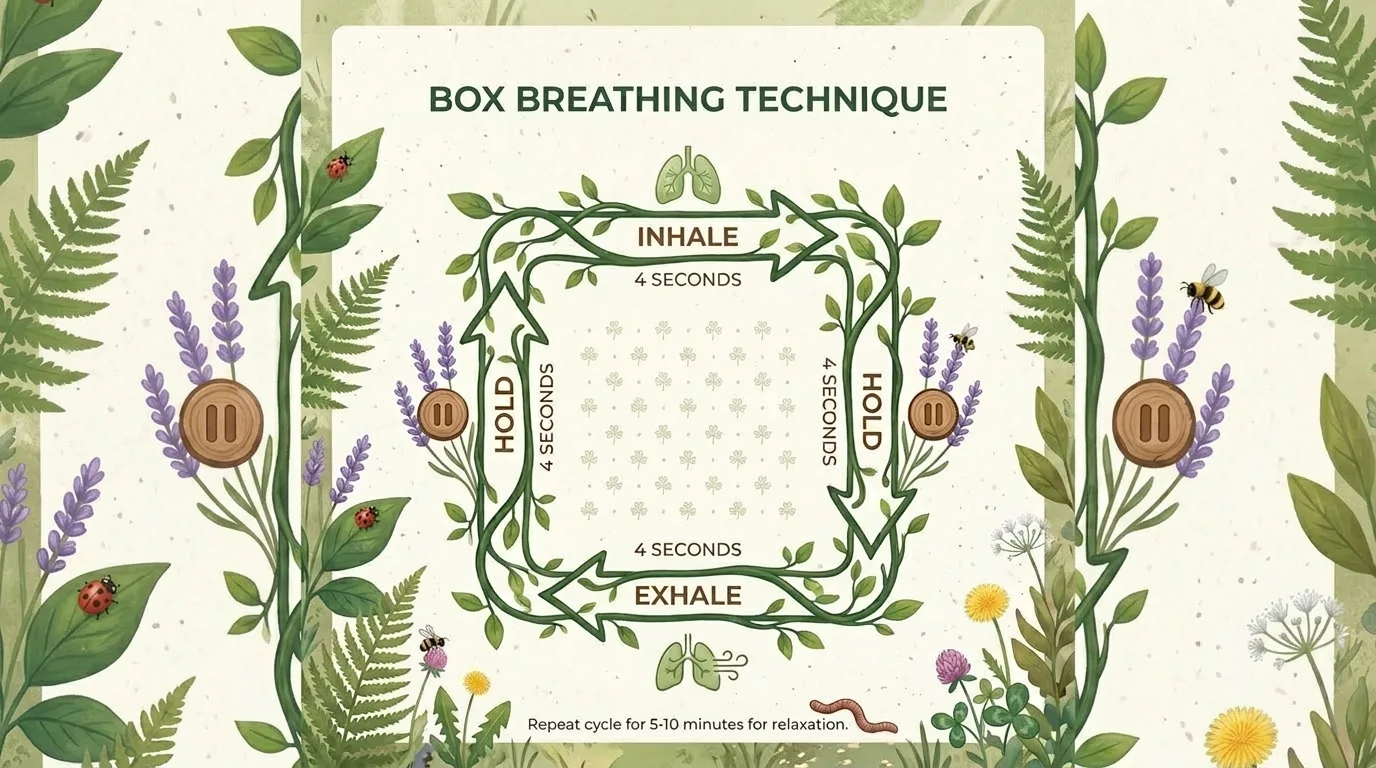
Box breathing is a specific type of controlled breathing that involves inhaling for a count of four, holding the breath for a count of four, exhaling for a count of four, and holding the breath again for a count of four. This creates a "box" shape with your breath, hence the name. The concept of box breathing is based on the idea of using the breath as a tool to calm the nervous system and reduce anxiety.
The Science Behind Box Breathing
Research has shown that controlled breathing can have numerous benefits on both physical and mental health. When we breathe, our brain sends signals to the body's various systems, including the respiratory, cardiovascular, and nervous systems. By controlling our breath, we can influence these systems and calm the mind and body.
Some of the key physiological changes that occur during box breathing include:
• Reduced heart rate: As you inhale for a count of four, your heart rate slows down, allowing your body to relax.
• Decreased blood pressure: The controlled breathing helps to dilate blood vessels, reducing blood pressure and promoting relaxation.
• Increased oxygenation: Box breathing allows for deeper breathing, which can lead to increased oxygenation of the body.
Benefits of Box Breathing
Research has shown that box breathing can have numerous benefits on both physical and mental health. Some of the advantages of box breathing include:
• Reduced anxiety and stress levels
• Improved focus and concentration
• Enhanced oxygenation of the body
• Increased feelings of calmness and relaxation
How to Practice Box Breathing
Practicing box breathing is simple and can be done anywhere, at any time. Here's a step-by-step guide on how to get started:
1. Find a quiet and comfortable space to sit or lie down.
2. Place one hand on your stomach and the other on your chest.
3. Inhale for a count of four through your nose, allowing your belly to rise as your diaphragm descends. Focus on filling your lungs completely, feeling your diaphragm expand downward.
4. Hold the breath for a count of four, keeping your lungs expanded. Feel the calmness spread throughout your body.
5. Exhale for a count of four through your mouth, allowing your belly to fall as your diaphragm rises. Focus on emptying your lungs completely.
6. Hold the breath again for a count of four, and then repeat the cycle.
Tips for Incorporating Box Breathing into Your Daily Life
Incorporating box breathing into your daily routine can be as simple as taking a few minutes each day to practice it. Here are some tips to help you get started:
• Start small: Begin with short sessions of 1-2 minutes and gradually increase the duration.
• Make it a habit: Incorporate box breathing into your morning or evening routine, such as during meditation or before bed.
• Use it in stressful situations: Practice box breathing when feeling overwhelmed or anxious to help calm the mind and body.
Common Questions Answered
Q: How do I know if I'm doing box breathing correctly?
A: Focus on maintaining a steady pace for each count, ensuring that your breaths are deep and controlled. Pay attention to your belly rising and falling with each inhale and exhale.
Q: Can I practice box breathing anywhere?
A: Yes! Box breathing can be done anywhere, at any time, making it an ideal technique for individuals on-the-go.
Q: Will box breathing help me fall asleep faster?
A: Yes! Controlled breathing has been shown to have a calming effect on the mind and body, helping to promote relaxation and improve sleep quality.
Overcoming Anxiety with Box Breathing
Anxiety can be a challenging experience that affects daily life. However, by incorporating box breathing into your routine, you'll learn how to manage anxiety and improve focus. This simple technique has been used by individuals seeking stress relief and has numerous benefits for both physical and mental health.
In conclusion, box breathing is a powerful tool for reducing anxiety and promoting relaxation. By incorporating this technique into your daily life, you can experience the many benefits of controlled breathing and improve your overall well-being.
This Article was made with AI assistance and human editing.