

Harnessing the Science: The 4-7-8 Breathing Method for Better Sleep
Are you tired of lying awake at night, struggling to fall asleep or wake up feeling refreshed? Millions of adults suffer from poor sleep quality or insomnia, which can have serious consequences on our physical and mental health. A simple breathing technique has been shown to help improve sleep quality, but it's essential to approach its effectiveness with a balanced perspective.
Welcome to the 4-7-8 breathing method, also known as the "Relaxation Breath." This ancient technique has been practiced for centuries, and various studies have investigated its potential benefits. In this article, we'll explore the science behind this breathing method and provide you with a step-by-step guide on how to incorporate it into your bedtime routine.
What is the 4-7-8 Breathing Method?
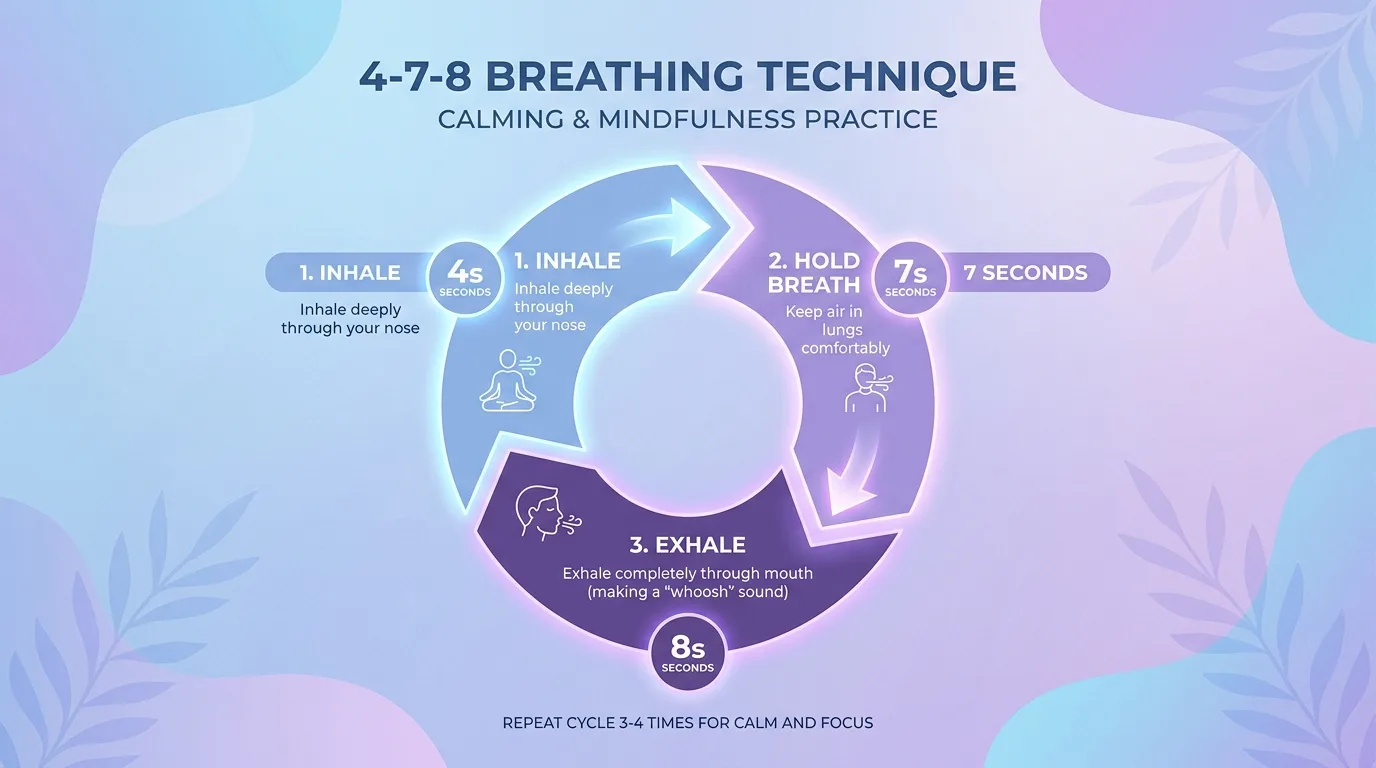
The 4-7-8 breathing technique was popularized by Dr. Andrew Weil, a renowned expert in integrative medicine. It's based on the idea that our breath can influence relaxation and calmness. By slowing down our breathing rate and synchronizing it with specific patterns, we may trigger a response in our nervous system that promotes deep relaxation.
The concept of synchronizing breathing patterns is rooted in ancient practices such as yoga and meditation. These practices emphasize the importance of harmonizing our breath with our body's natural rhythms to achieve balance and inner peace. The 4-7-8 technique takes this principle one step further by providing a simple approach to cultivating relaxation. Think of it as a way to "tune in" to your body's natural frequencies, allowing you to relax and unwind more effectively.
Here are the basic steps:
Inhale through your nose for a count of 4: Breathe in deeply through your nostrils, filling your lungs completely. As you inhale, focus on expanding your chest and belly, allowing your diaphragm to drop. Imagine fresh air filling your body, revitalizing your cells and muscles.
Hold your breath for a count of 7: Hold your breath for seven seconds, feeling the air fill your lungs and then hold it there. During this phase, try to relax any areas of tension in your body, starting from your toes and moving up to your head. Visualize any stress or anxiety leaving your body with each exhalation.
Exhale through your mouth for a count of 8: Slowly exhale through your mouth, emptying your lungs completely. As you exhale, focus on releasing any remaining tension or stress, allowing your body to relax further.
Understanding the Science Behind Breathing Patterns
Research has shown that breathing patterns can influence our nervous system's response to stress. When we breathe rapidly and shallowly, it stimulates the sympathetic nervous system (SNS), which is responsible for our "fight or flight" response. This leads to increased stress hormones like cortisol and adrenaline, making it difficult to fall asleep.
On the other hand, when we slow down our breathing rate, it triggers a response in the parasympathetic nervous system (PNS), also known as the "rest and digest" response. The PNS promotes relaxation and can help reduce stress levels. By practicing the 4-7-8 breathing technique, you may be able to quiet your mind and body, making it easier to fall asleep and stay asleep.
How Does the 4-7-8 Breathing Technique Work?
While the exact mechanisms behind the 4-7-8 breathing technique are not fully understood, research suggests that it may work by:
Reducing stress hormones like cortisol and adrenaline
Increasing oxygenation of the body
Promoting relaxation and reducing muscle tension
However, more research is needed to confirm its effectiveness. It's essential to approach this topic with a balanced perspective, recognizing both the potential benefits and limitations.
Benefits and Limitations

Some studies have reported potential benefits of the 4-7-8 breathing technique, including:
Reduced stress levels
Improved sleep quality
Increased oxygenation of the body
However, these findings are not consistent across all studies, and more research is needed to fully understand its effects. Additionally, individual results may vary, and this technique should not be relied upon as the sole solution for addressing sleep or stress issues.
Common Challenges and Solutions
While the 4-7-8 breathing technique is generally easy to learn, some people may encounter challenges along the way. Here are some common issues and their solutions:
Difficulty relaxing: If you find it hard to relax during the practice, try incorporating physical relaxation techniques such as progressive muscle relaxation or yoga.
Trouble with timing: To improve your timing, start by counting slowly and gradually increase your speed as you become more comfortable with the rhythm.
Tips for Effective Practice
To get the most out of the 4-7-8 breathing technique, try the following:
Practice regularly, ideally at bedtime
Find a quiet and comfortable space to practice
Focus on your breath, letting go of distractions
Be patient and consistent – it may take time to see results
By incorporating the 4-7-8 breathing technique into your daily routine, you may be able to improve your sleep quality, reduce stress levels, and cultivate greater relaxation and calmness in your life. Remember to approach this practice with an open mind and a willingness to explore the science behind it.
This Article was made with AI assistance and human editing.