

Investing in the stock market can be a daunting task, especially for those new to investing. With numerous strategies and products available, it's easy to feel overwhelmed. However, one strategy stands out as a smart choice for everyday investors: dollar-cost averaging in ETFs. By breaking down this concept into its component parts, we'll explore how it works, its benefits, and why it's an essential tool for navigating volatile markets.

What is Dollar-Cost Averaging?
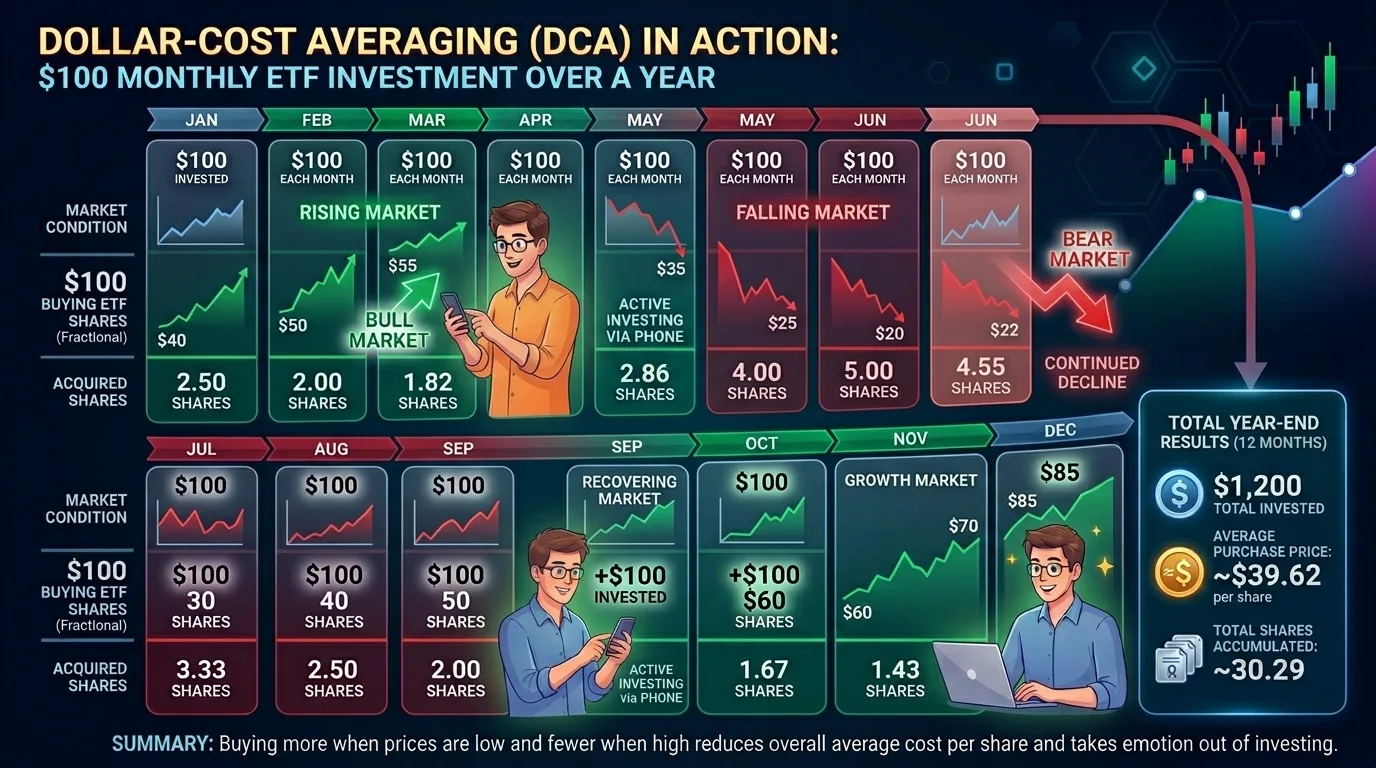
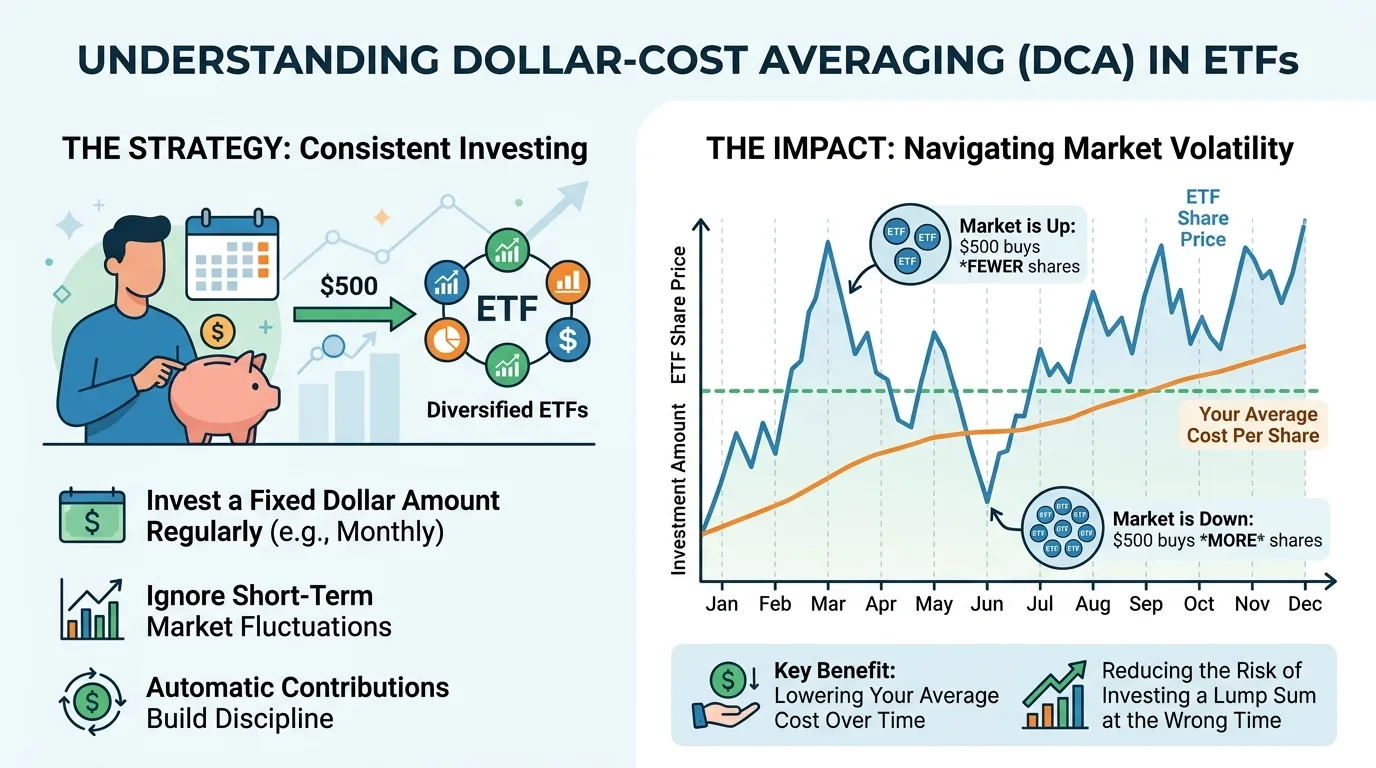
Dollar-cost averaging (DCA) is a long-term investing strategy that involves investing a fixed amount of money at regular intervals, regardless of the market's performance. This approach helps reduce the impact of market volatility on your investments by spreading out purchases over time. By doing so, you'll be buying more shares when prices are low and fewer shares when prices are high.
To illustrate this concept, imagine investing $100 each month in a particular ETF. If the market is trending upward, you'll buy more shares at the lower initial price and fewer shares at the higher subsequent price. Conversely, if the market is trending downward, you'll still be buying shares, albeit at a lower price. This strategy helps mitigate the impact of market fluctuations on your investments.
Benefits of Dollar-Cost Averaging in ETFs
ETFs (exchange-traded funds) offer a convenient way to implement DCA due to their flexibility and cost-effectiveness. Here are some key benefits:
Reduces Timing Risks
By investing a fixed amount regularly, you'll be less likely to try to time the market, which can lead to costly mistakes. This is because timing risks refer to the uncertainty surrounding when to buy or sell an investment based on its expected future performance.
To minimize timing risks, consider setting up automatic transfers from your checking account to your brokerage account for regular investments. This way, you'll ensure that a fixed amount is invested at predetermined intervals, regardless of market conditions.
Encourages Disciplined Investing
DCA helps you stick to your investment plan by investing at regular intervals, regardless of market fluctuations. This discipline is essential in achieving long-term financial goals and reducing emotional decision-making.
To cultivate disciplined investing habits, consider implementing a "set-it-and-forget-it" approach. By automating your investments, you'll ensure that you're consistently investing a fixed amount over time, rather than trying to predict market movements or making impulsive decisions based on short-term trends.
Hedging Against Inflation
As prices rise, DCA ensures that you're buying more shares over time, which means you'll own a larger portion of the fund's assets. This helps mitigate the effects of inflation on your investments.
To understand how DCA hedges against inflation, consider the following example: Suppose you invest $1,000 each month in an ETF with an initial price of $10 per share. Over time, the price rises to $15 per share due to inflation. With DCA, you'll be buying more shares at the lower initial price and fewer shares at the higher subsequent price, effectively reducing your exposure to inflation.
Tax Efficiency
Since you're investing a fixed amount regularly, you can take advantage of tax-loss harvesting to minimize your tax liability.
To maximize tax efficiency with DCA, consider consulting a tax professional or financial advisor. They can help you understand how to optimize your investments and minimize taxes through strategies such as tax-loss harvesting.
How Does Dollar-Cost Averaging Work in ETFs?
To implement DCA in an ETF, follow these steps:
Choose an ETF
Select a suitable ETF that aligns with your investment goals and risk tolerance. Consider factors such as the fund's expense ratio, tracking error, and underlying asset allocation.
Decide on a Regular Investment Schedule
Determine how often you'll invest, whether it's monthly, quarterly, or semiannually. This will help you establish a consistent investing rhythm and avoid impulsive decisions based on short-term market fluctuations.
Set Aside a Fixed Amount of Money
Decide on the amount you'll invest each period, taking into account your financial goals, income level, and expenses. Consider setting up automatic transfers to ensure that you're consistently investing a fixed amount over time.
Invest the Fixed Amount at Regular Intervals
Invest the fixed amount at the beginning of each period, regardless of market conditions. This will help you spread out purchases over time and reduce the impact of market volatility on your investments.
Step-by-Step Guide to Implementing Dollar-Cost Averaging
To make DCA more manageable, let's break down the process into smaller steps:
Choose an ETF
Select a suitable ETF that aligns with your investment goals and risk tolerance. Consider factors such as the fund's expense ratio, tracking error, and underlying asset allocation.
Decide on a Regular Investment Schedule
Determine how often you'll invest, whether it's monthly, quarterly, or semiannually. This will help you establish a consistent investing rhythm and avoid impulsive decisions based on short-term market fluctuations.
Set Aside a Fixed Amount of Money
Decide on the amount you'll invest each period, taking into account your financial goals, income level, and expenses. Consider setting up automatic transfers to ensure that you're consistently investing a fixed amount over time.
Invest the Fixed Amount at Regular Intervals
Invest the fixed amount at the beginning of each period, regardless of market conditions. This will help you spread out purchases over time and reduce the impact of market volatility on your investments.
Frequently Asked Questions
Q: How does DCA differ from lump-sum investing?
A: DCA involves investing a fixed amount regularly, whereas lump-sum investing involves investing a single sum upfront. While both strategies have their merits, DCA can be more effective in reducing timing risks and mitigating market volatility.
Q: Can I use DCA with individual stocks or only with ETFs?
A: You can use DCA with either individual stocks or ETFs. However, ETFs offer a convenient way to implement DCA due to their flexibility and cost-effectiveness.
Conclusion
Dollar-cost averaging is a simple yet effective strategy for reducing the impact of market volatility on your investments. By investing a fixed amount regularly in an ETF, you'll be buying more shares when prices are low and fewer shares when prices are high. This approach encourages disciplined investing habits, hedges against inflation, and promotes tax efficiency.
To implement DCA effectively, consider choosing a suitable ETF, deciding on a regular investment schedule, setting aside a fixed amount of money, and investing the fixed amount at regular intervals. By following these steps, you'll be well on your way to reducing timing risks and achieving your long-term financial goals.
This Article was made with AI assistance and human editing.

