

Fermentation Timeline: A Beginner's Guide to Making Sauerkraut
Making sauerkraut at home can seem intimidating, especially if you're new to fermentation techniques. However, with a clear understanding of the process and some basic equipment, anyone can create delicious, tangy sauerkraut in their own kitchen. In this article, we'll walk through the steps involved in fermenting sauerkraut, from preparation to finishing, and provide tips for achieving perfect fermentation.
What is Fermentation?
Fermentation is a natural process that involves the breakdown of sugars by microorganisms such as bacteria or yeast. This process not only preserves food but also enhances its nutritional value and flavor. In the case of sauerkraut, lactic acid-producing bacteria (such as Leuconostoc and Lactobacillus) convert sugars into lactic acid, creating an acidic environment that inhibits the growth of unwanted pathogens.
To better understand fermentation, it's essential to grasp its basic principles. Fermentation occurs when microorganisms feed on sugars present in food, producing carbon dioxide gas and other compounds as byproducts. This process can be either aerobic (requiring oxygen) or anaerobic (occurring without oxygen). Lactic acid fermentation, which is used for sauerkraut production, falls under the anaerobic category.
Preparing for Fermentation
Before starting your fermentation journey, you'll need a few basic ingredients and equipment. Here's what you'll need:
5 lbs cabbage (any variety, but firmer heads work best)
1 tablespoon salt
1 tablespoon caraway seeds (optional)
A large bowl or container with a lid (at least 1-gallon capacity)
A kraut pounder or similar tool for shredding and massaging the cabbage
When selecting cabbage for fermentation, choose varieties that are firm and crisp. Savoy and Red Cabbage are popular choices due to their high juice content.
Step 1: Shredding and Salting
Begin by washing and shredding the cabbage into thin strips. Place the shredded cabbage in a large bowl, adding salt and caraway seeds (if using). Massage the mixture with your hands or a kraut pounder to release the juices and help distribute the salt evenly.
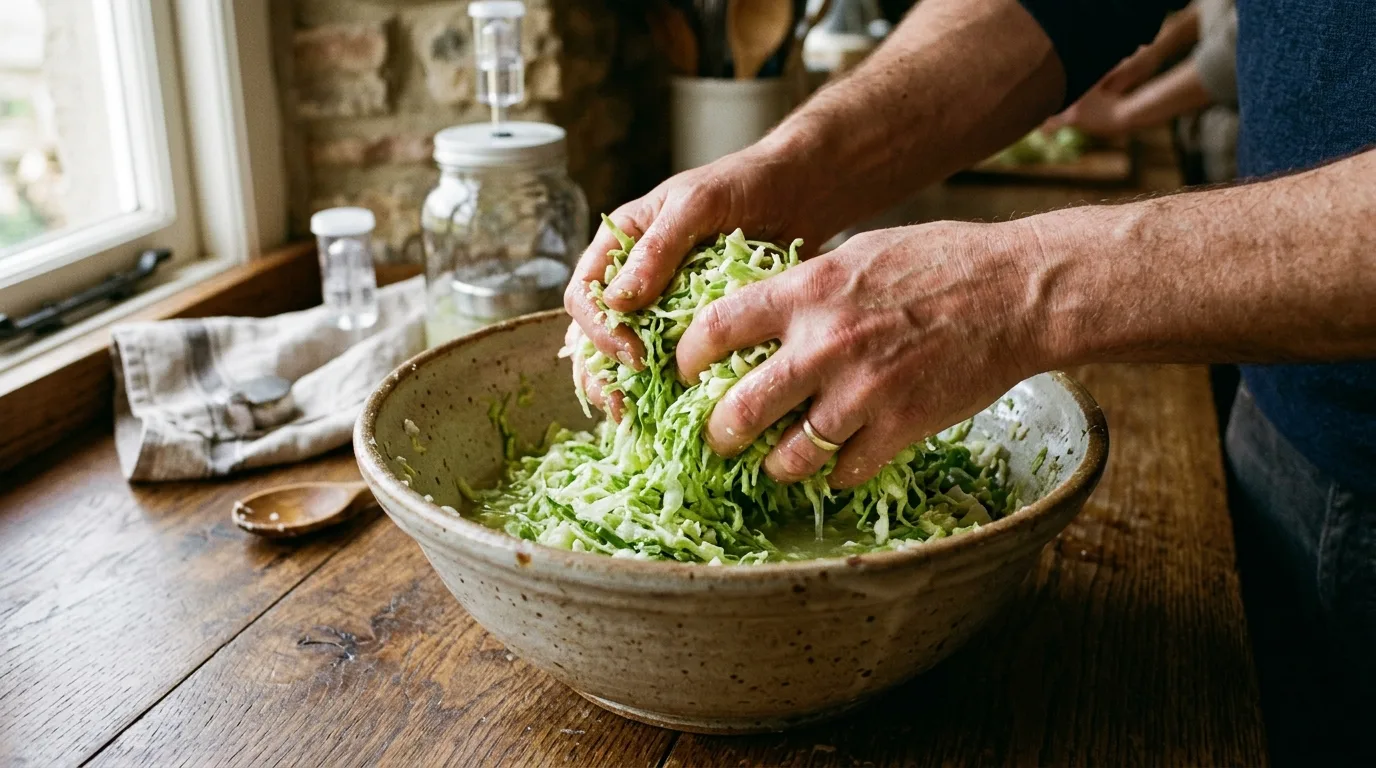
It's crucial to massage the cabbage thoroughly to facilitate the release of its natural juices. This process helps create an environment conducive to fermentation by providing the necessary moisture for microorganisms to thrive.
Step 2: Creating an Anaerobic Environment
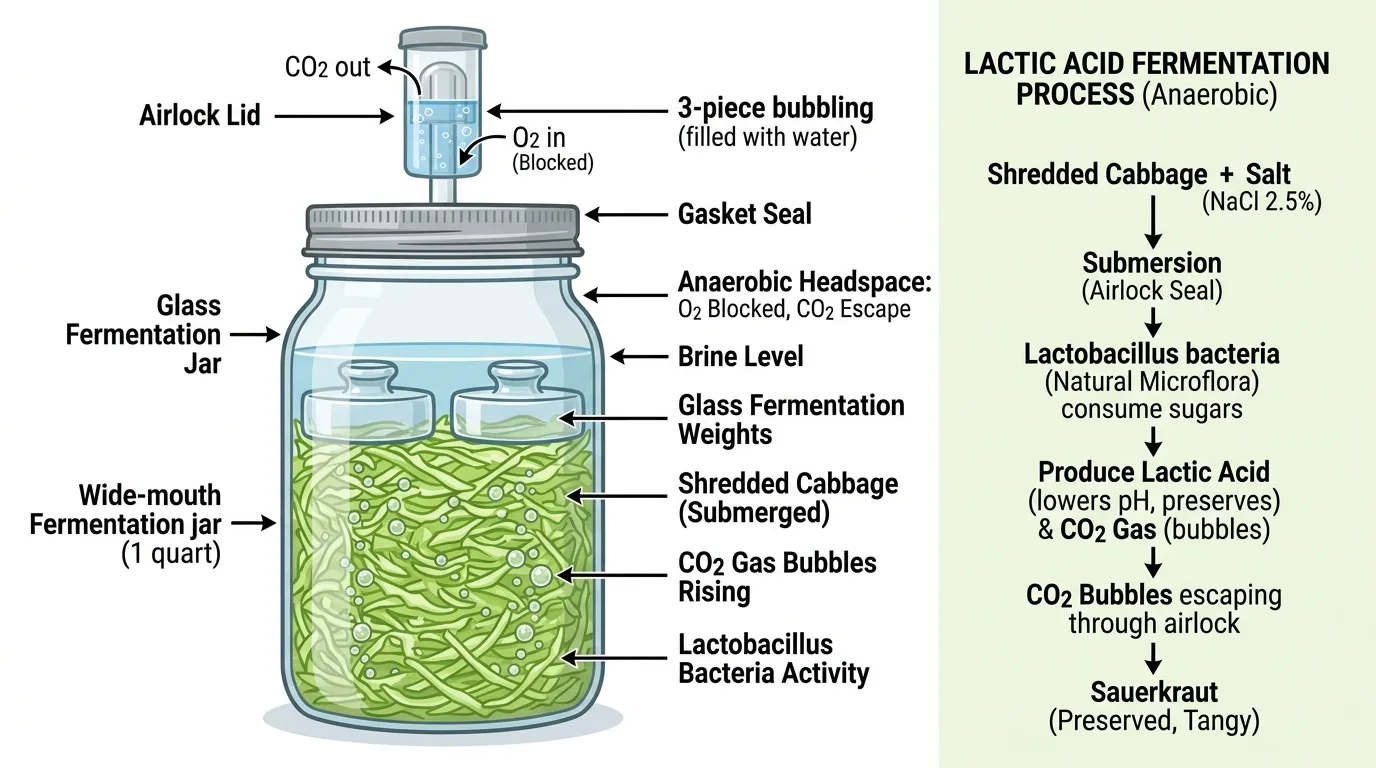
Transfer the cabbage mixture to your container, pressing down on it firmly to extract as much liquid as possible. You can use a weight or plate to keep everything submerged under the juice. Cover the container with a lid, but make sure it's not too tight – you want to allow for airflow while keeping the contents from drying out.
When creating an anaerobic environment, remember that air is your enemy in this context. By minimizing oxygen exposure, you'll prevent unwanted bacteria and mold growth, ensuring that lactic acid-producing bacteria dominate the fermentation process.
Step 3: Monitoring and Maintaining Fermentation
Check on your sauerkraut every day or two to ensure that the fermentation process is progressing as expected. You'll know it's working when you see bubbles rising to the surface, a tangy aroma filling the air, and the cabbage starting to soften. Keep the container away from direct sunlight and maintain a consistent temperature between 64°F and 75°F (18°C and 24°C).
Fermentation is an ongoing process that requires attention and patience. Regularly inspecting your sauerkraut will help you detect any issues, such as contamination or under-fermentation.
Step 4: Harvesting and Storing
After 3-5 days, depending on your desired level of sourness, remove the sauerkraut from the fermentation vessel and rinse it with fresh water to remove any excess salt. Transfer the sauerkraut to an airtight container or jar, pressing out as much liquid as possible before sealing.
When storing fermented foods, ensure that containers are completely sealed to prevent exposure to air. This will help maintain the product's quality and extend its shelf life.
Common Fermentation Challenges
Over-salting: Too much salt can inhibit fermentation, so be sure to use the recommended amount.
Under-fermentation: If your sauerkraut doesn't seem to be fermenting, check for factors such as temperature fluctuations or inadequate airflow.
Contamination: Keep your equipment and workspace clean to prevent unwanted bacteria from getting into your sauerkraut.
Fermentation can be a trial-and-error process. By understanding common challenges and their causes, you'll be better equipped to troubleshoot issues that may arise during fermentation.
Tips for Perfect Fermentation
To achieve perfect fermentation, follow these guidelines:
Maintain a consistent temperature between 64°F and 75°F (18°C and 24°C).
Keep the environment free from contamination by using clean equipment and storing the container away from direct sunlight.
Regularly inspect your sauerkraut to detect any issues.
Use the recommended amount of salt to prevent over-salting.
Fermentation is an art that requires patience, attention to detail, and a willingness to learn. By following these guidelines and understanding the basics of fermentation, you'll be well on your way to creating delicious, homemade sauerkraut.
Conclusion
Sauerkraut production involves a series of steps that require patience, attention to detail, and an understanding of fermentation principles. By following this guide, you'll be able to create delicious, tangy sauerkraut in the comfort of your own home.
Remember, practice makes perfect, so don't be discouraged if your first attempts at fermentation don't yield the desired results. With time and experience, you'll become proficient in creating a variety of fermented foods that will add flavor and nutrition to your diet.
This Article was made with AI assistance and human editing.