

For many gluten-free bakers, finding reliable recipes that don't compromise on taste and texture can be a daunting task. Traditional baked goods often rely on xanthan gum as a stabilizer and emulsifier, but what happens when you need to avoid this ingredient? In this article, we'll delve into the world of almond flour brownies without xanthan gum, exploring suitable substitutes, recipe tweaks, and expert tips to ensure your gluten-free treats turn out rich, fudgy, and utterly delicious.
What's Wrong with Xanthan Gum in Gluten-Free Baking?
Xanthan gum is a popular ingredient in gluten-free baking due to its ability to mimic the binding properties of gluten. However, some individuals may experience adverse reactions or prefer to avoid it altogether. If you're looking for alternatives to xanthan gum, it's essential to understand how this ingredient affects your baked goods.
Understanding Xanthan Gum's Effects
Xanthan gum works by forming a network of polysaccharides that helps to bind ingredients together and improve texture. This network is formed through the interaction between the hydroxyl groups of xanthan gum and the hydrogen bonds in other ingredients, creating a complex structure that enhances the overall texture and stability of the final product.
However, when used in excess or with certain combinations of ingredients, xanthan gum can create a sticky or rubbery texture, leading to unpleasant mouthfeel. This is because excessive xanthan gum can overpower the natural binding properties of other ingredients, resulting in an unbalanced texture that's more akin to chewing gum than a delicate brownie.
Here are some common issues associated with using xanthan gum in gluten-free baking:
Texture problems: Xanthan gum can create a sticky or rubbery texture in some recipes.
Unpleasant taste: Some people may detect an unpleasant aftertaste when consuming products containing xanthan gum.
Digestive issues: While rare, some individuals may experience digestive discomfort when consuming xanthan gum.
Understanding Almond Flour Brownies
Before we dive into substituting xanthan gum, let's explore the characteristics of almond flour brownies. These rich, fudgy treats rely on a combination of almond flour, sugar, eggs, and cocoa powder to deliver a deep, chocolatey flavor.
Characteristics of Almond Flour
When using almond flour in baking, it's crucial to note that this nut-based ingredient can behave differently than traditional wheat flour. Almond flour lacks the structure and elasticity provided by gluten, which means recipes may require adjustments to achieve the desired texture. Additionally, almond flour has a higher fat content compared to wheat flour, which can affect the final product's moisture level.
The high fat content in almond flour also means that it can be more prone to oxidation, leading to an unpleasant flavor and texture over time. To mitigate this effect, it's essential to use high-quality almond flour that's been properly stored and handled.
Substitutes for Xanthan Gum
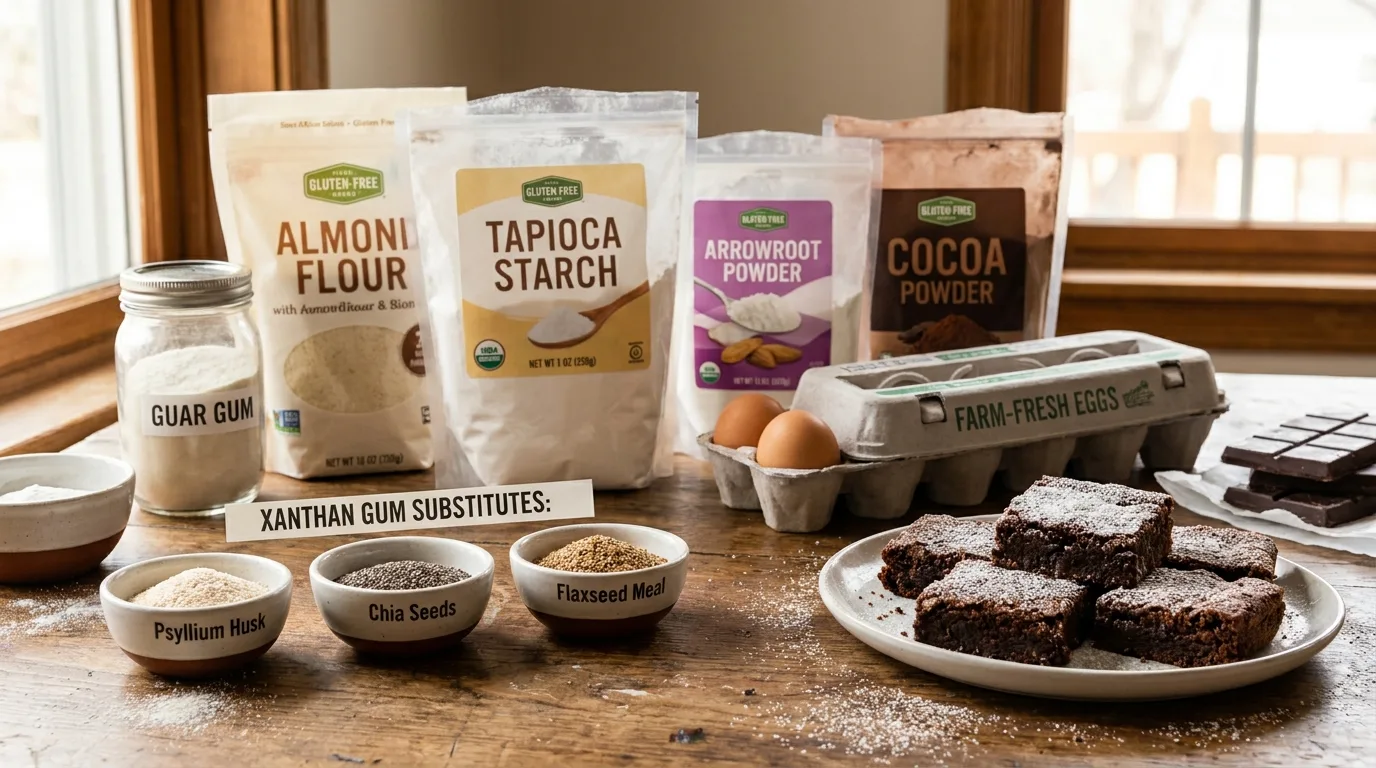
So, what can you use as a substitute for xanthan gum in almond flour brownies? Here are some popular alternatives:
Guar gum: A natural thickening agent derived from the guar bean, often used in combination with other gums.
Tapioca starch: A starchy powder extracted from cassava root, commonly used to add structure and texture to gluten-free baked goods.
Arrowroot powder: A flavorless, odorless powder made from the root of the arrowroot plant, often used as a thickening agent.
When substituting xanthan gum with these alternatives, keep in mind that different ratios may be required. Start by replacing 1 teaspoon of xanthan gum with 0.5-1 teaspoon of your chosen substitute.
It's also essential to note that substituting xanthan gum can affect the final product's texture and stability. Some bakers find that using guar gum or tapioca starch can create a denser, more moist crumb, while others prefer the light, airy texture achieved with arrowroot powder.
Example Recipe (Guar Gum Substitute)
The following example recipe includes guar gum as a substitute for xanthan gum:
Ingredients:
1 cup almond flour
1/2 cup sugar
1/4 cup cocoa powder
1 egg
1 teaspoon vanilla extract
1/2 teaspoon salt
Instructions:
1. Preheat your oven to 350°F (180°C). Grease an 8-inch square baking pan and set aside.
2. In a medium bowl, whisk together the almond flour, sugar, cocoa powder, and salt.
3. In a separate bowl, whisk together the egg, vanilla extract, and guar gum until smooth.
4. Add the wet ingredients to the dry ingredients and mix until well combined.
5. Pour the batter into the prepared baking pan and smooth out the top.
6. Bake for 25-30 minutes or until a toothpick inserted in the center comes out clean.
Tips for Achieving the Perfect Texture
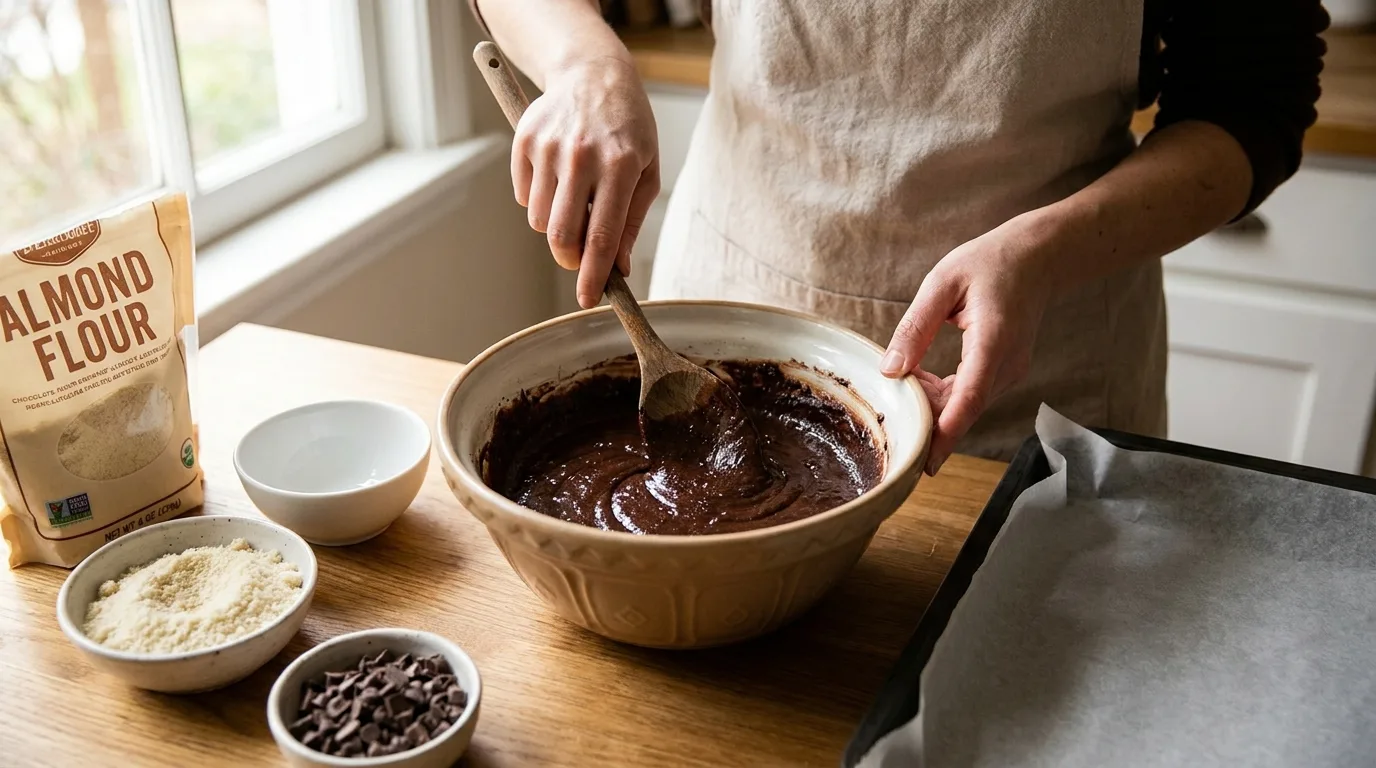
Achieving the perfect texture with gluten-free baked goods can be challenging, but there are several tips to keep in mind:
Use high-quality ingredients: Fresh eggs, real cocoa powder, and pure vanilla extract will make all the difference in your final product.
Don't overmix: Mix wet and dry ingredients separately and gently fold them together until just combined. Overmixing can lead to a dense, tough crumb.
Use the right ratio of liquid to dry ingredients: Too little liquid can result in a dense, dry crumb, while too much liquid can create a soggy texture.
Common Issues and Solutions
When working with gluten-free baked goods, it's not uncommon to encounter issues such as crumbling, spreading, or an unpleasant texture. Here are some common problems and their solutions:
Crumbling: Add more liquid to the batter or use a higher ratio of fat to flour.
Spreading: Use parchment paper or a silicone mat to prevent the dough from spreading too much.
Unpleasant texture: Adjust your recipe by substituting xanthan gum with another ingredient, or try adding xanthan gum in small increments to achieve the desired texture.
Conclusion
Substituting xanthan gum in gluten-free baked goods can be a challenge, but with the right combination of ingredients and techniques, you can achieve a rich, fudgy texture that's sure to please even the most discerning palates. Remember to experiment with different ratios of liquid to dry ingredients, and don't be afraid to try new combinations of xanthan gum substitutes.
By following these tips and experimenting with different recipes, you'll be well on your way to creating delicious gluten-free baked goods that are perfect for any occasion.
This Article was made with AI assistance and human editing.