

Managing HALT Triggers in Recovery: A Practical Guide
Are you tired of feeling like your sobriety is constantly being tested by small, seemingly insignificant triggers? Do you struggle to stay on track when faced with hunger, anger, loneliness, or exhaustion? If so, you're not alone. Managing HALT (Hungry, Angry, Lonely, Tired) triggers is a crucial aspect of maintaining long-term sobriety.
In this article, we'll delve into the world of HALT management, providing practical strategies and insights to help you navigate these common pitfalls. By the end of this guide, you'll have a better understanding of how to recognize and manage your own HALT triggers, allowing you to stay on track with your recovery goals.
What are HALT Triggers?
HALT triggers refer to four specific emotional or physical states that can lead individuals in recovery to relapse. These states are:
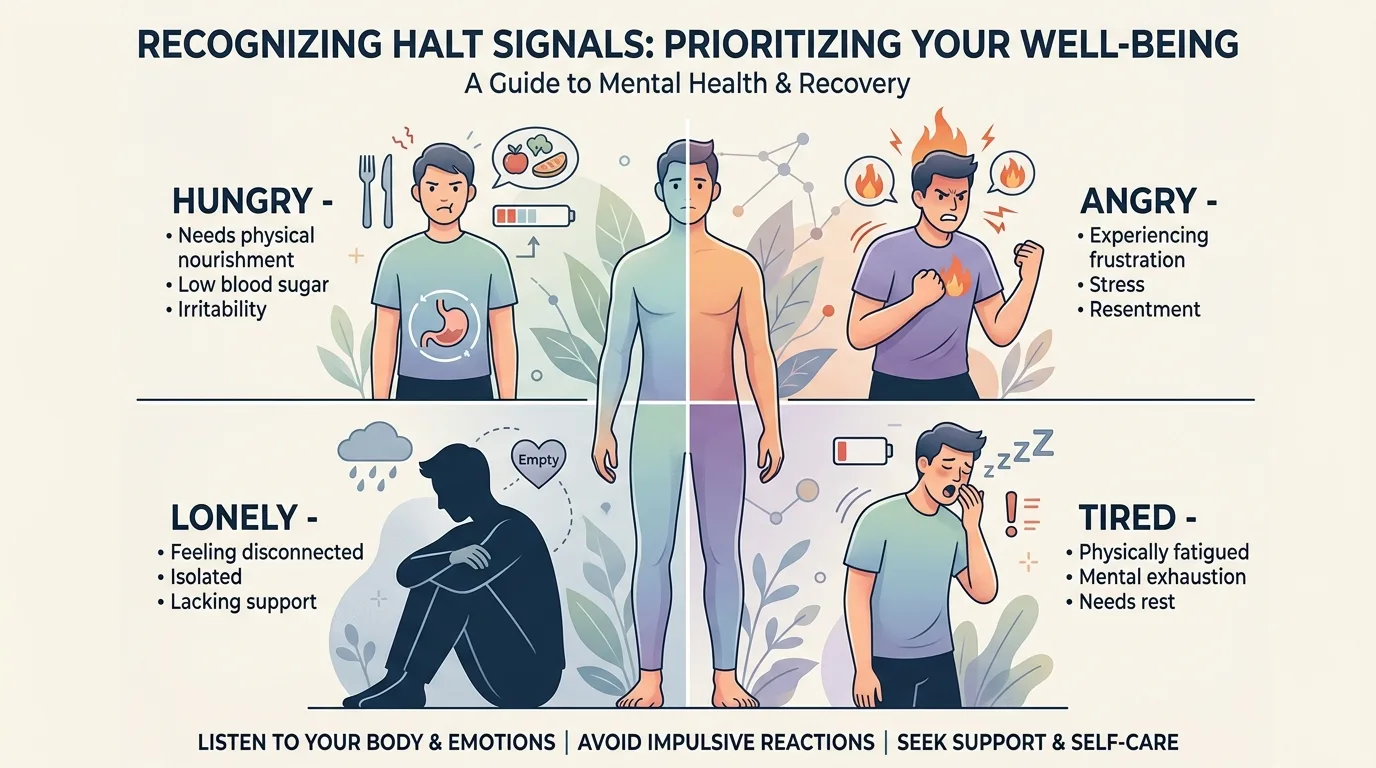
Hungry: This refers to a lack of food or proper nutrition, which can cause irritability, fatigue, and difficulty concentrating. Hunger is not just about eating food; it's also about fueling your body with the nutrients it needs to function properly.
Angry: Unmanaged anger can lead to aggressive behavior, poor decision-making, and strained relationships with others. It's essential to understand that anger is a normal emotion, but it's how you manage it that matters.
Lonely: Feelings of isolation or disconnection from others can trigger cravings for substances as a way to cope with emotional pain. Loneliness is a common experience for many people in recovery, and it's essential to address this issue proactively.
Tired: Physical exhaustion can impair cognitive function, making it more challenging to resist temptation.
Understanding HALT triggers is essential in recovery because they can often be the catalyst for relapse. By recognizing and managing these states, individuals can develop greater resilience and maintain sobriety over time.
Managing Hunger
When it comes to hunger, it's not just about eating food; it's also about fueling your body with the nutrients it needs to function properly. Here are some tips for managing hunger in recovery:
Eat regular meals: A balanced diet that includes plenty of fruits, vegetables, and whole grains can help regulate blood sugar levels and reduce cravings.
Stay hydrated: Dehydration can exacerbate feelings of hunger, leading to poor food choices. Drink plenty of water throughout the day, aiming for at least eight glasses a day.
Plan ahead: Know where your next meal will come from and prepare healthy snacks in advance to avoid relying on high-sugar or high-fat foods.
For example, if you know you'll be busy during the day, pack a lunch or snack that's easy to grab on the go. This can help prevent overeating or making unhealthy choices.
Managing Anger
Unmanaged anger can be a significant obstacle in recovery. Here are some strategies for managing anger:

Practice relaxation techniques: Activities like meditation, deep breathing, or yoga can help calm the body and mind.
Identify triggers: Reflect on what causes your anger and try to address the root issue rather than reacting impulsively.
Develop healthy communication skills: Learn how to express yourself effectively without resorting to aggression.
For instance, if you feel angry when someone cuts you off in traffic, take a deep breath and reflect on why this situation is causing you distress. Is it because you're feeling frustrated with the driver's behavior or is it something more? By understanding your emotions, you can respond more thoughtfully.
Managing Loneliness
Loneliness is a common experience for many people in recovery. Here are some tips for managing loneliness:
Connect with others: Join a support group, attend meetings, or participate in social activities to build relationships and a sense of community.
Engage in hobbies: Pursue interests and passions outside of recovery work to create a sense of purpose and fulfillment.
Practice self-care: Take time for yourself to relax, read, or engage in other enjoyable activities.
For example, if you're feeling lonely, try reaching out to a friend or family member. You can also join an online community or support group to connect with others who understand what you're going through.
Managing Tiredness
Physical exhaustion can have serious consequences on mental health. Here are some strategies for managing tiredness:
Prioritize sleep: Aim for 7-8 hours of sleep each night and establish a consistent bedtime routine.
Stay active: Engage in regular exercise to improve energy levels and reduce fatigue.
Take breaks: Allow yourself time to rest and recharge throughout the day.
For instance, if you're feeling tired during the workday, take a short walk outside or do some stretching exercises. This can help increase your energy levels and focus.
Putting it all Together
Managing HALT triggers requires a combination of self-awareness, planning, and strategy. By recognizing when you're experiencing hunger, anger, loneliness, or tiredness, you can take proactive steps to manage these feelings.
Remember that recovery is a journey, and it's okay to make mistakes along the way. The key is to learn from your experiences and develop strategies for managing HALT triggers in the future.
By following the tips and strategies outlined in this article, you'll be better equipped to navigate the challenges of recovery and maintain sobriety over time.
This Article was made with AI assistance and human editing.