

Mastering One-Pot Pasta Primavera: A Step-by-Step Guide
Are you ready to create a delicious and satisfying one-pot pasta primavera that's sure to become a family favorite? This classic Italian dish is a staple for a reason – it's easy to make, packed with flavor, and can be customized to suit any taste. In this comprehensive guide, we'll walk you through the process of making one-pot pasta primavera from scratch, including tips on ingredient substitution and time-saving techniques.
What is One-Pot Pasta Primavera?
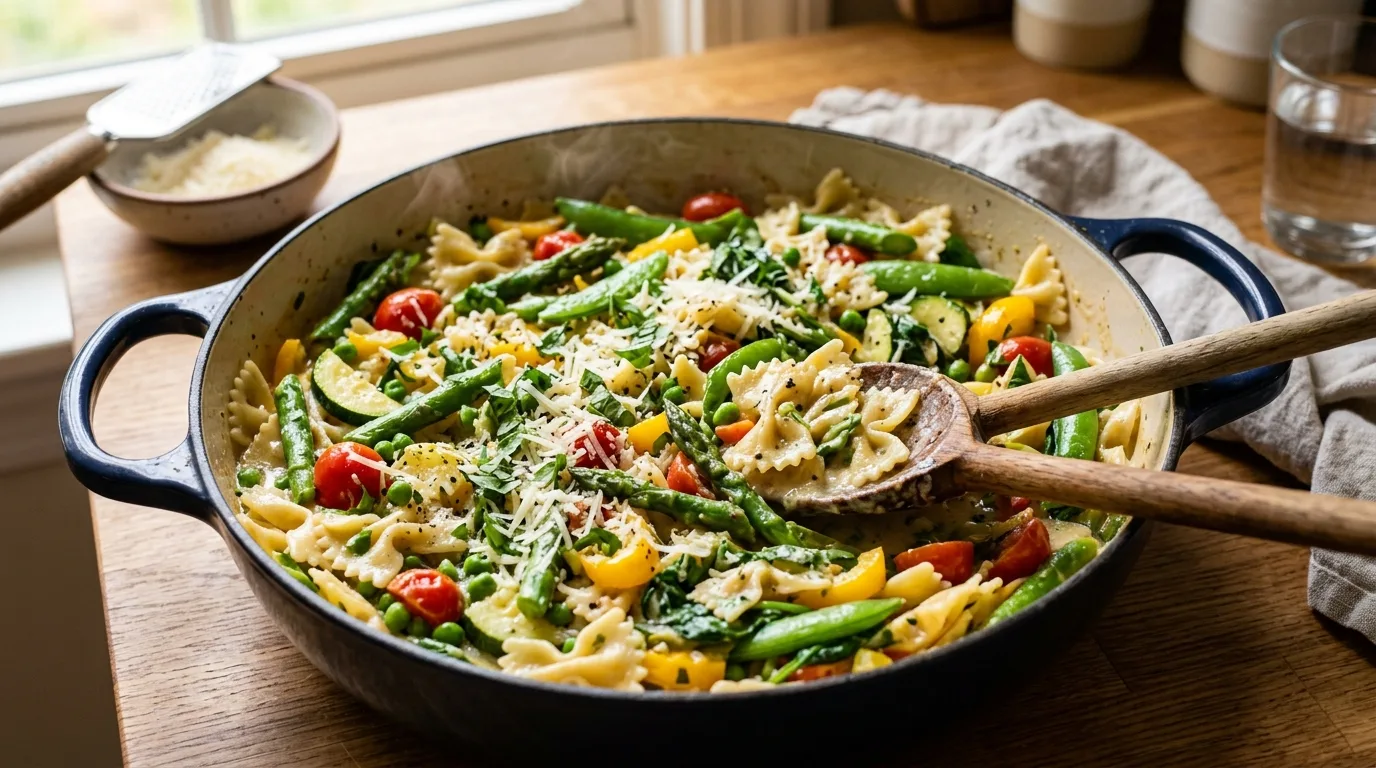
One-pot pasta primavera is a vegetarian dish that originated in Italy, characterized by its simplicity and versatility. The name "primavera" translates to "spring" in Italian, reflecting the fresh flavors of springtime vegetables typically used in this recipe. This dish is made by cooking pasta, vegetables, and seasonings all in one pot, making it an ideal choice for busy home cooks.
One-pot pasta primavera is a perfect example of Italian cuisine's emphasis on simplicity and using high-quality ingredients to let their natural flavors shine through. By cooking everything in one pot, you can ensure that the flavors meld together perfectly, creating a dish that's greater than the sum of its parts.
Ingredients: A Flexible Foundation
To make a great one-pot pasta primavera, you'll need the following ingredients:
1 pound of pasta (such as bow tie or penne)
2 tablespoons of olive oil
1 onion, diced
3 cloves of garlic, minced
1 cup of mixed spring vegetables (see substitution tips below)
1 cup of chicken or vegetable broth
1 cup of grated Parmesan cheese
Salt and pepper to taste
When selecting your pasta, choose a shape that's designed for one-pot cooking. Bow tie and penne are excellent choices because they hold onto the sauce well and cook evenly.
Substitution Tips: Customizing Your Primavera
One of the best things about one-pot pasta primavera is its flexibility. Feel free to substitute vegetables according to your taste and dietary preferences. Some popular options include:
Cherry tomatoes for a burst of juicy sweetness
Mushrooms for an earthy, savory flavor
Asparagus for a delicate, springtime flair
Bell peppers for added crunch
When substituting vegetables, keep the following tips in mind:
Choose vegetables that cook at a similar rate to prevent overcooking or undercooking.
Adjust the cooking time accordingly based on the new ingredients.
For example, if you're using cherry tomatoes, they'll cook quickly and add a pop of color to your dish. On the other hand, if you're using bell peppers, they may take longer to cook through.
Step 1: Preparing Your Ingredients
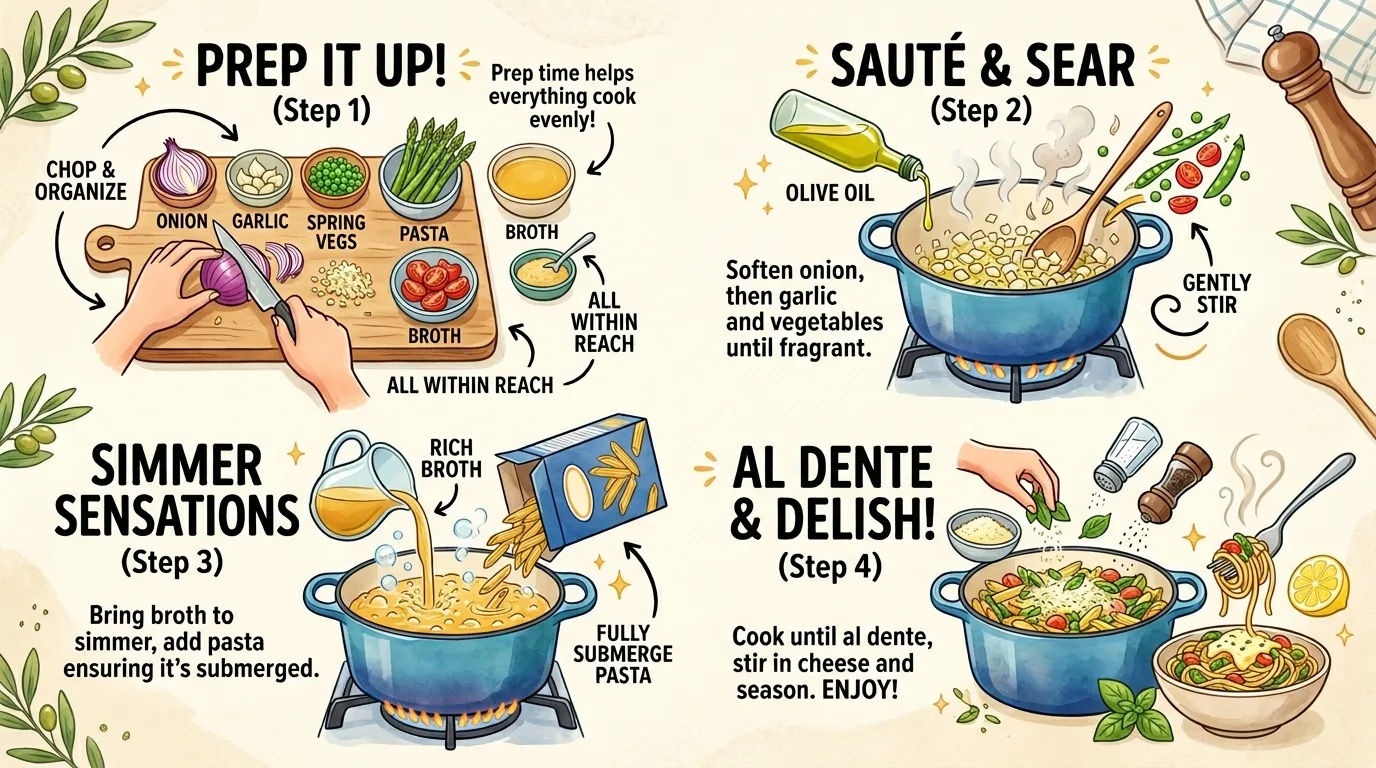
Before starting, make sure you have all your ingredients ready and within reach. Chop the onion and garlic, and set them aside with the other ingredients.
Take a few minutes to prep your ingredients before cooking. This will help ensure that everything is cooked evenly and that you can focus on the actual cooking process.
Step 2: Cooking the Pasta and Vegetables
In a large pot or Dutch oven, heat the olive oil over medium-high heat. Add the diced onion and cook for 3-4 minutes, until softened. Then, add the minced garlic and cook for another minute, until fragrant.
When cooking your onion, make sure to stir it frequently to prevent it from burning. You want a soft, translucent texture that will add depth to your dish.
Next, add the mixed spring vegetables and cook for 5-7 minutes, until they start to tenderize. Be gentle when stirring to avoid breaking up the vegetables.
Step 3: Adding Broth and Pasta
Add the chicken or vegetable broth to the pot, bringing it to a simmer. Cook for 2-3 minutes, until the liquid has reduced slightly.
When adding your broth, make sure to use a high-quality store-bought option or homemade broth that's rich in flavor.
Then, add the pasta to the pot, making sure it's fully submerged in the liquid. Stir gently to prevent sticking.
Step 4: Seasoning and Finishing
Cook the pasta according to package instructions, typically 8-12 minutes or until al dente. When cooked, remove from heat and stir in grated Parmesan cheese. Season with salt and pepper to taste.
When seasoning your dish, don't be afraid to add a pinch of salt or pepper to bring out the flavors. You can also use other seasonings like dried herbs or red pepper flakes to give it an extra kick.
Tips for Achieving Perfection
Use high-quality ingredients: The quality of your ingredients will directly impact the flavor and texture of your dish.
Don't overcook your pasta: Al dente is key when cooking pasta in one pot. You want it to still have a bit of bite and texture.
Experiment with different vegetables: One-pot pasta primavera is all about using fresh, seasonal ingredients. Try new combinations to find your favorite.
By following these tips and techniques, you'll be well on your way to creating a delicious one-pot pasta primavera that will impress even the pickiest of eaters.
Conclusion
One-pot pasta primavera is a versatile and flavorful dish that's perfect for any occasion. With its simple ingredients and easy cooking method, it's an excellent choice for busy home cooks who want to create a memorable meal without breaking the bank.
So next time you're in the mood for Italian cuisine, give one-pot pasta primavera a try! Your taste buds will thank you.
This Article was made with AI assistance and human editing.