

Mastering Warrior II: Tips for Balance and Alignment
As you step onto your yoga mat, you're about to embark on a journey of self-discovery, strength, and flexibility. One of the most iconic poses in the yoga repertoire is Warrior II (Virabhadrasana II), a powerful stance that requires balance, focus, and control. In this comprehensive guide, we'll delve into the intricacies of Warrior II, exploring its correct alignment, benefits, and tips for mastering this challenging pose.
Understanding Warrior II: A Foundational Pose

Warrior II is a foundational standing pose in many yoga sequences, serving as a gateway to more advanced postures. It's an excellent exercise for strengthening the legs, hips, and lower back, while also improving balance, flexibility, and concentration. When executed correctly, Warrior II can help alleviate stress, anxiety, and fatigue.
It's essential to understand that Warrior II is not just a physical pose but also a mental one. The balanced stance required in this pose can have a profound impact on the mind-body connection. By cultivating focus, awareness, and control, you'll be able to navigate life's challenges with greater ease and confidence.
Correct Alignment: The Key to Balance
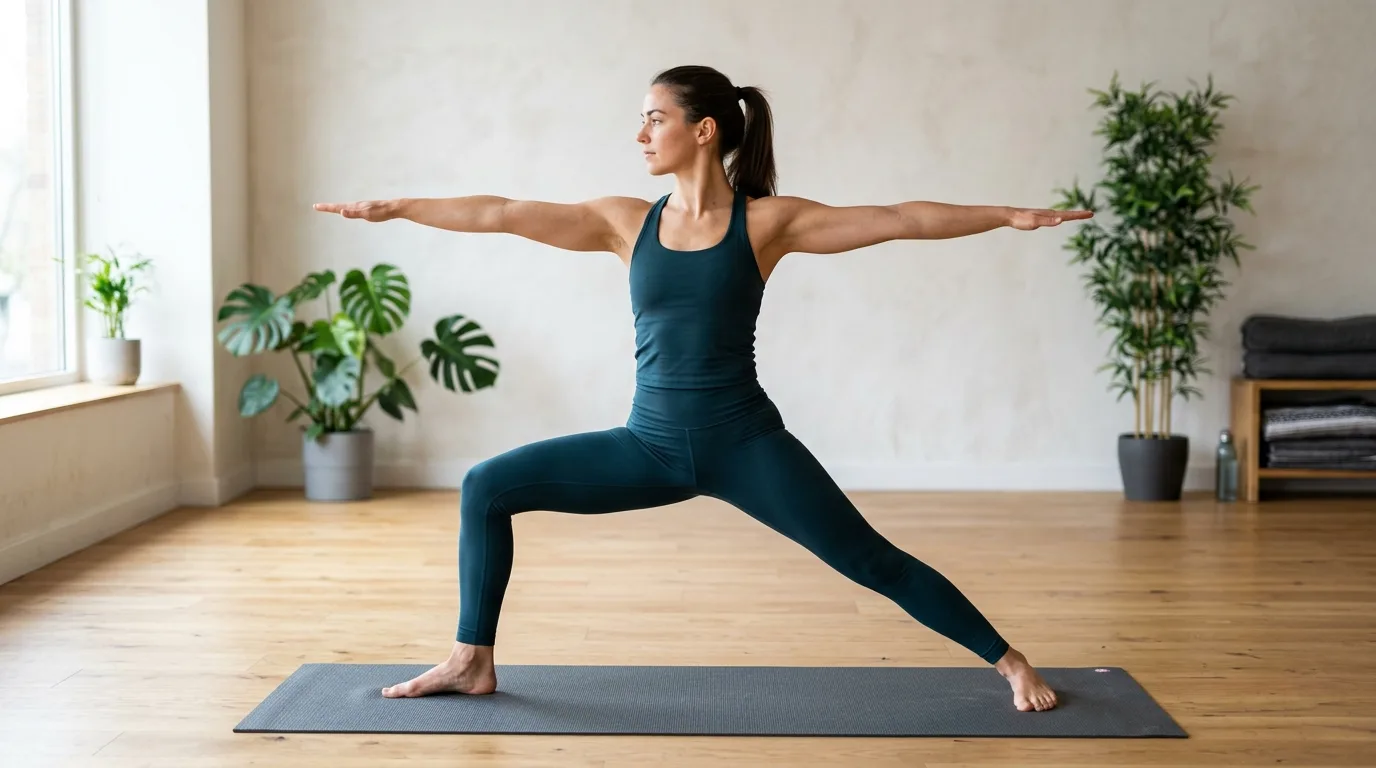
To establish a strong foundation in Warrior II, it's crucial to understand the correct alignment of the pose. Here are some key points to keep in mind:
Foot Placement: Stand with your feet wide apart, with one foot facing forward (the front foot) and the other foot at a 90-degree angle (the back foot). Imagine drawing an equilateral triangle with your feet, with each leg forming one side.
Engage Your Core: Engage your core muscles by drawing your navel towards your spine. This will help stabilize your body and maintain balance.
Shoulder Alignment: Keep your shoulders relaxed and down, avoiding any tension or strain. Imagine a string pulling your head upwards, keeping your shoulders in a neutral position.
Engaging Your Core: The Secret to Balance
One of the most common challenges in Warrior II is maintaining balance. To overcome this hurdle, it's essential to engage your core muscles effectively. Here are some tips to help you achieve stability:
Pelvic Clock Exercise: Imagine a clock on your pelvis, with 12 o'clock at the top and 6 o'clock at the bottom. Engage your core by drawing your navel towards the 12 o'clock position. As you inhale, imagine filling the pelvic area with energy; as you exhale, imagine releasing any tension or strain.
Kegel Contractions: Squeeze your pelvic floor muscles as if you're stopping the flow of urine. Hold for a few seconds, then release. This will help engage your core and maintain balance in the pose.
Deep Breathing: Focus on slow, deep breaths, inhaling through your nose and exhaling through your mouth. As you breathe, imagine fresh energy entering your body, nourishing your cells and tissues.
Tips for Improving Balance
Balance is not just about physical alignment; it's also an internal process that requires focus, concentration, and mental awareness. Here are some tips to help you improve your balance in Warrior II:
Weight Distribution: Evenly distribute your weight between both feet, avoiding any excessive pressure on one side.
Visualization: Imagine a line running from the crown of your head to the heels of your feet. Visualize this line as straight and stable, like an invisible thread connecting your body to the earth.
Breathing: Focus on slow, deep breaths, inhaling through your nose and exhaling through your mouth.
Common Misalignments: Recognizing and Correcting
As you practice Warrior II, it's essential to recognize common misalignments that can compromise the pose. Here are some tips for correcting these issues:
Forward Foot: Ensure the front foot is parallel to the back foot, with the toes pointing straight ahead.
Back Foot: Keep the back foot at a 90-degree angle, with the heel aligned with the front ankle.
Hip Alignment: Maintain a neutral pelvis alignment, avoiding any excessive rotation or tilting.
Benefits of Warrior II: More Than Just Balance
Warrior II is not just about balance; it offers numerous benefits for the physical and mental body. Some of the advantages include:
Strengthening the Legs and Hips: Warrior II helps strengthen the muscles in your legs and hips, improving overall flexibility and mobility.
Improving Balance and Coordination: By practicing Warrior II regularly, you'll develop better balance and coordination, helping you navigate everyday challenges with ease.
Reducing Stress and Anxiety: The balanced stance required in this pose can have a calming effect on the mind-body connection, reducing stress and anxiety.
Putting it All Together: Mastering Warrior II
Mastering Warrior II requires patience, practice, and dedication. To get started, focus on developing your core muscles through exercises like planks and bridges. Practice Warrior II regularly, paying attention to your alignment, breathing, and visualization techniques.
Remember that balance is not just a physical state but also an internal one. By cultivating awareness, control, and focus, you'll be able to navigate life's challenges with greater ease and confidence.
Final Tips for Mastering Warrior II
Here are some final tips to help you master Warrior II:
Practice Regularly: Practice Warrior II regularly, ideally 2-3 times a week.
Focus on Alignment: Pay attention to your alignment in each pose, ensuring that your feet, hips, and shoulders are properly aligned.
Breathe Deeply: Focus on slow, deep breaths, inhaling through your nose and exhaling through your mouth.
By following these tips and practicing Warrior II regularly, you'll be well on your way to mastering this challenging yet rewarding pose. Remember that balance is a journey, not a destination – enjoy the process of discovery and growth.
This Article was made with AI assistance and human editing.