

Mastering Spherification: A Guide to Molecular Gastronomy at Home
Imagine dining on a delicate, bouncy sphere of caviar-infused water that dissolves in your mouth, releasing a burst of flavor. This culinary experience is not reserved for high-end restaurants; with the right techniques and ingredients, you can achieve it in the comfort of your own home. Molecular gastronomy, also known as experimental cuisine, has been revolutionizing the way we cook and perceive food. In this article, we'll delve into the world of spherification, a fundamental technique used by top chefs to create visually stunning and flavorful dishes.
What is Spherification?
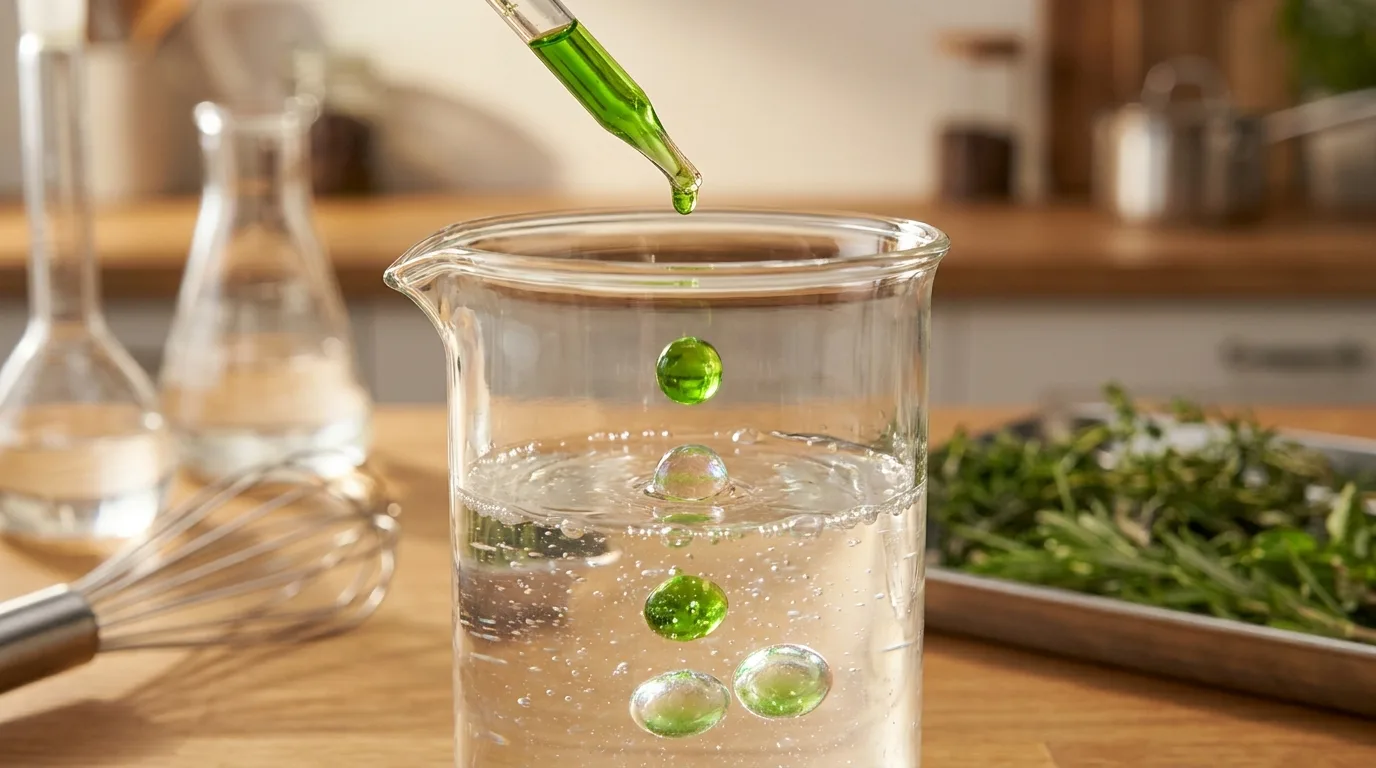
Spherification is a cooking method that involves creating spheres from liquids using sodium alginate and calcium chloride. The process works as follows: when sodium alginate comes into contact with calcium chloride, it reacts to form a gel-like membrane around the liquid, trapping it inside. This results in the formation of small, bouncy spheres that can be used as garnishes or even as main components of dishes.
To understand spherification better, let's break down the concept of a "sphere" in culinary terms. A sphere is a three-dimensional shape with no edges or corners, making it an ideal form for presentation and texture. Spheres are also versatile, allowing them to be used in various applications, from garnishes to main courses.
The Science Behind Spherification
To understand spherification, we need to dive into its scientific basis. Sodium alginate is a natural polymer found in seaweed that can form a gel-like substance when it comes into contact with calcium ions. Calcium chloride, on the other hand, is a salt that releases calcium ions when dissolved in water. When sodium alginate is dropped into a bath of calcium chloride, the calcium ions bind to the alginate molecules, triggering a reaction that creates a membrane around the liquid.
This process can be compared to other culinary techniques, such as emulsification or gelation. Emulsification involves combining two or more liquids that don't normally mix, while gelation involves forming a solid structure from a liquid. Spherification, however, combines both concepts by creating a solid sphere from a liquid using sodium alginate and calcium chloride.
Equipment and Ingredients Needed
To get started with spherification, you'll need:
Sodium alginate: A natural polymer found in seaweed that can form a gel-like substance when it comes into contact with calcium ions.
Calcium chloride: A salt that releases calcium ions when dissolved in water.
Water: Used as a base for the sodium alginate and calcium chloride solutions.
A syringe or pipette: Used to drop small amounts of liquid into the bath.
A container for the bath (calcium chloride solution): This can be any container that holds at least 4 cups of water.
It's essential to note that sodium alginate can be found in most health food stores or online. Make sure to use a high-quality, food-grade product to ensure optimal results.
Step-by-Step Guide to Spherification
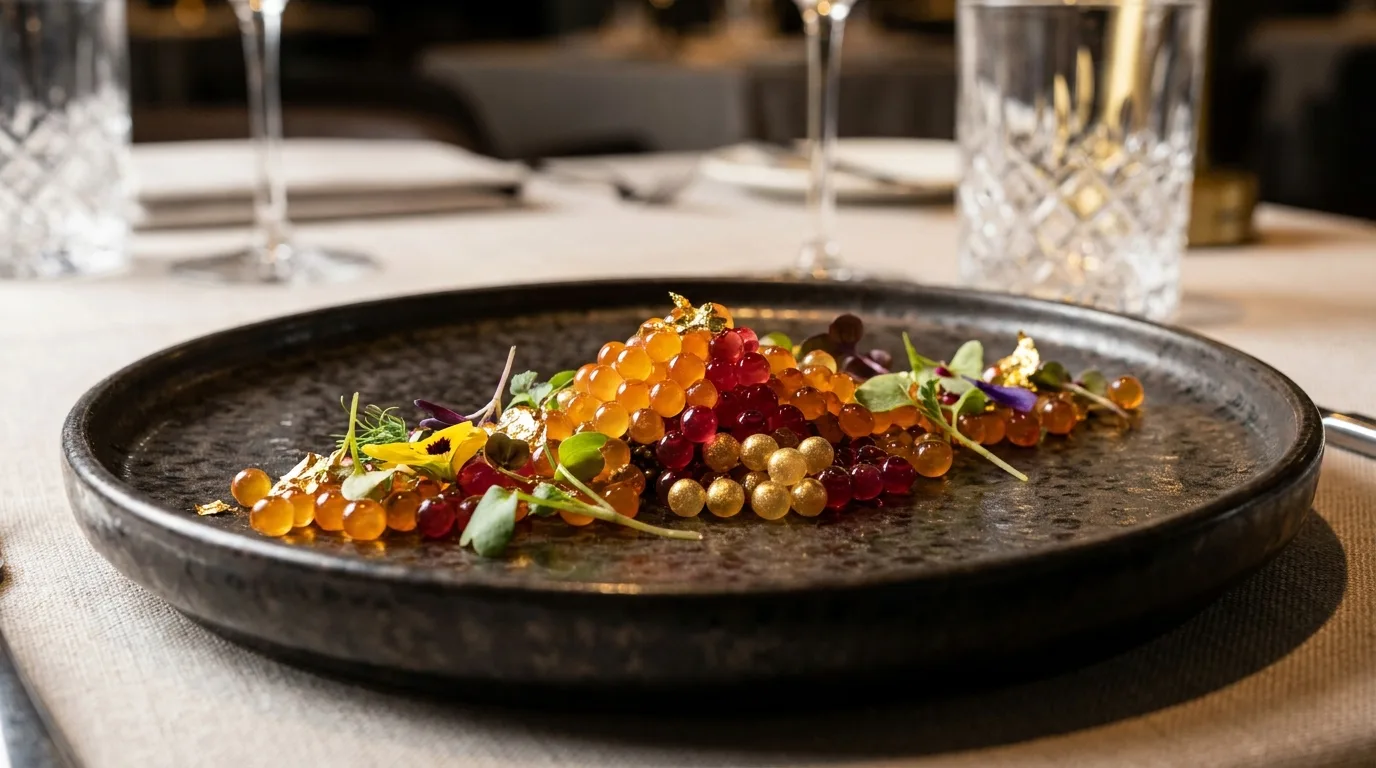
Here's a step-by-step guide to creating spherified pearls:
1. Prepare the bath: Dissolve 1-2 cups of calcium chloride in 4 cups of water. This solution is called the "bath" and will be used to create the spheres.
2. Add flavorings and colorants: Add any desired flavorings or colorants to the liquid you want to sphereify (e.g., water, juice, or broth).
3. Use a syringe or pipette: Drop small amounts of the flavored liquid into the bath using a syringe or pipette.
4. Observe as the spheres form: Watch as the spheres form around each droplet.
When creating spherified pearls, it's essential to use a steady hand and gentle movements when handling the spheres. This will help prevent them from breaking apart or becoming misshapen.
Tips for Successful Spherification
Use a high-quality sodium alginate that is specifically designed for cooking.
Adjust the ratio of calcium chloride to water to achieve the right consistency.
Experiment with different flavorings and colorants to create unique combinations.
Be patient and gentle when handling the spheres, as they can be fragile.
Common Challenges and Solutions
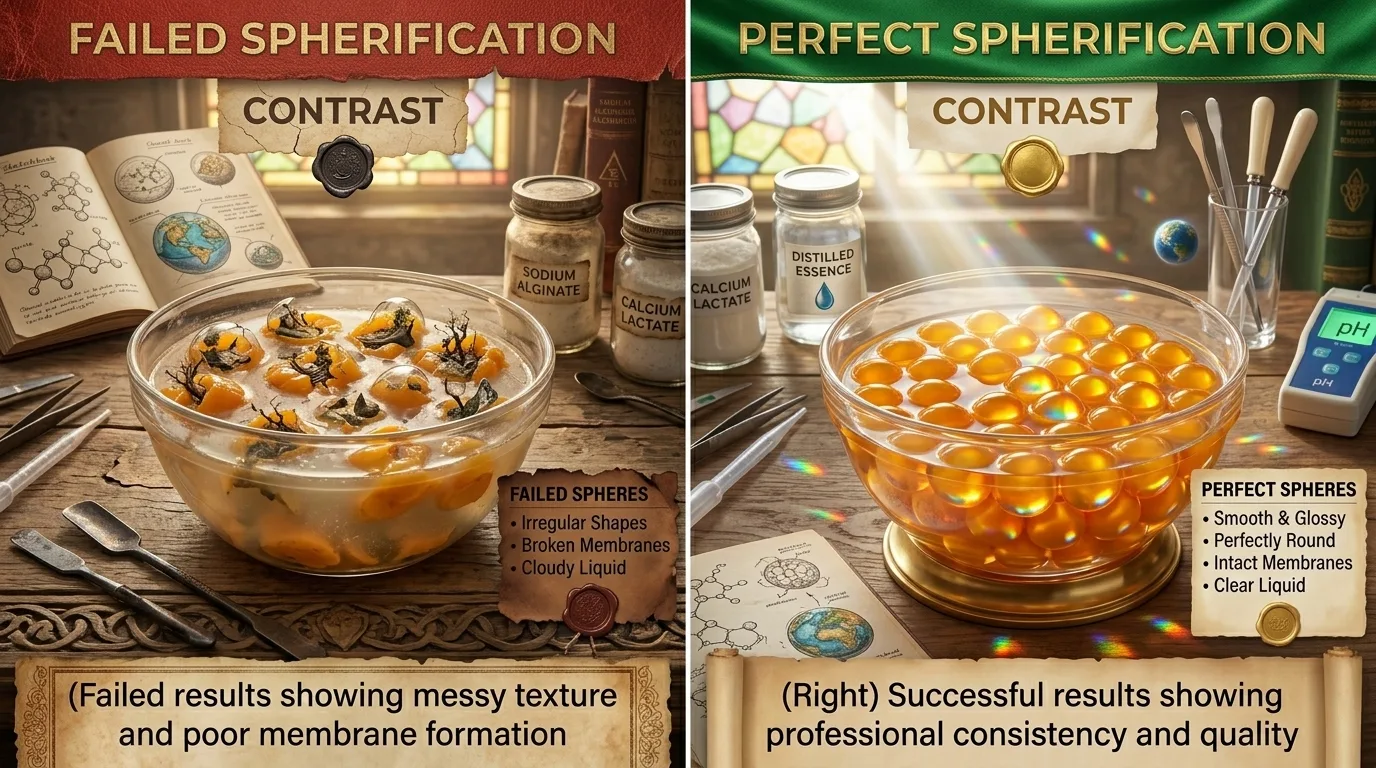
One common challenge faced by home cooks attempting spherification is achieving consistent results. Here are some tips to overcome this:
Ensure that your sodium alginate is fresh and of high quality.
Adjust the temperature of the bath to achieve optimal reaction rates.
Use a syringe or pipette with a fine nozzle to control the amount of liquid dropped into the bath.
By following these tips, you can overcome common challenges and achieve consistent results when creating spherified pearls.
Inspiration for Your Own Spherification Creations
Here are some creative ideas to get you started:
Spherified caviar: Mix water, sodium alginate, and edible gold dust to create luxurious pearls.
Fruit spheres: Use juice or puree as a base and add flavorings like citrus or mint.
Savory spheres: Experiment with broth or soup bases for unique flavors.
These ideas are just the beginning. With practice and experimentation, you can come up with your own unique creations using spherification.
By mastering the art of spherification, you'll be able to create visually stunning and flavorful dishes that will impress even the most discerning palates. So go ahead, give it a try, and see what amazing creations you can come up with!
This Article was made with AI assistance and human editing.