

As the aromas of Thailand's vibrant markets and street food stalls transport us to a world of flavors, it's no wonder that green curry paste has become a staple in kitchens around the globe. This versatile condiment is the foundation for some of Thai cuisine's most beloved dishes, from fragrant curries to rich sauces. However, with store-bought options often lacking authenticity and homemade recipes scattered across the internet, many cooks find themselves lost in a sea of conflicting instructions.
What is Thai Green Curry Paste?
Thai green curry paste is a fundamental component in many traditional dishes, providing the foundation for rich, complex flavors. Typically made with a combination of fresh herbs, spices, and chilies, this vibrant paste adds depth and heat to curries, soups, and sauces. By understanding its composition and role in Thai cuisine, you'll be better equipped to create authentic, mouth-watering dishes.
In Thai cooking, green curry paste is often referred to as "gaeng keow wan" or "green curry sauce." This name refers not only to the color of the paste but also to the type of chilies used. The term "keow" means "curry," and "wan" means "green."
Key Ingredients in Thai Green Curry Paste
While store-bought options may vary in quality, homemade green curry paste allows for precise control over the ingredients. Here are some essential components that will elevate your curry game:
Fresh lemongrass: This citrusy herb adds a bright, uplifting flavor to the paste. Lemongrass has a unique aroma and taste, often described as a combination of lemon and ginger.
Galangal or Thai ginger: Providing warmth and depth, this rhizome is often used in combination with fresh chilies for an intense heat. Galangal has a more robust flavor than ginger and is commonly used in Southeast Asian cuisine.
Chilies (Thai bird's eye or serrano): Adding a spicy kick, these chilies are usually seeded and chopped before being added to the mixture. Thai bird's eye chilies are known for their intense heat and are often used whole or seeded in Thai cooking.
Garlic and shallots: Mince these aromatics to release their oils and intensify the paste's flavor. Garlic is a fundamental ingredient in many Southeast Asian dishes, while shallots add a sweet, oniony flavor.
Cilantro (coriander leaves): Fresh cilantro adds freshness and a hint of citrus, balancing out the spiciness. Cilantro is often used as a garnish or added towards the end of preparation to preserve its delicate flavor.
Grated lime zest: Providing a burst of citrus flavor, this is often added towards the end of preparation.
Preparing the Essential Ingredients
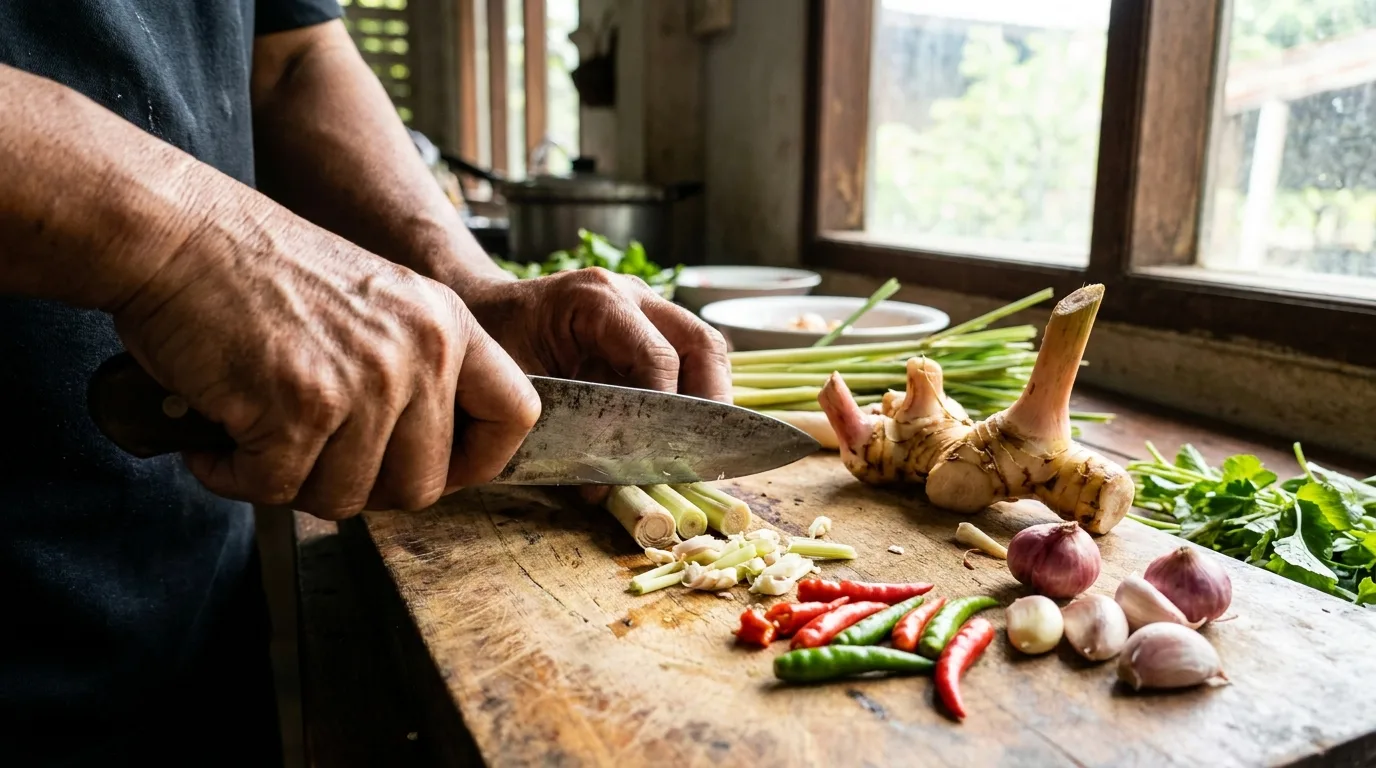
Before mixing your curry paste, it's essential to prepare each ingredient with care. Here are some key steps:
Lemongrass and galangal should be chopped finely, releasing their oils for maximum flavor. Use a sharp knife or cleaver to chop these ingredients, as they can be quite fibrous.
Fresh chilies can be seeded and chopped for reduced heat or left whole for a more intense experience. When handling chilies, wear gloves or use a utensil to avoid transferring the oils to your skin.
Garlic and shallots need to be minced carefully to release their oils. Use a microplane grater or sharp knife to mince these ingredients, being careful not to crush them.
Cilantro leaves should be chopped fresh just before use.
Making the Green Curry Paste
To create an authentic Thai green curry paste from scratch, follow these steps:
1. Grind lemongrass, galangal, chilies, garlic, and shallots in a mortar and pestle until you reach a smooth consistency. This will help release their oils and flavors.
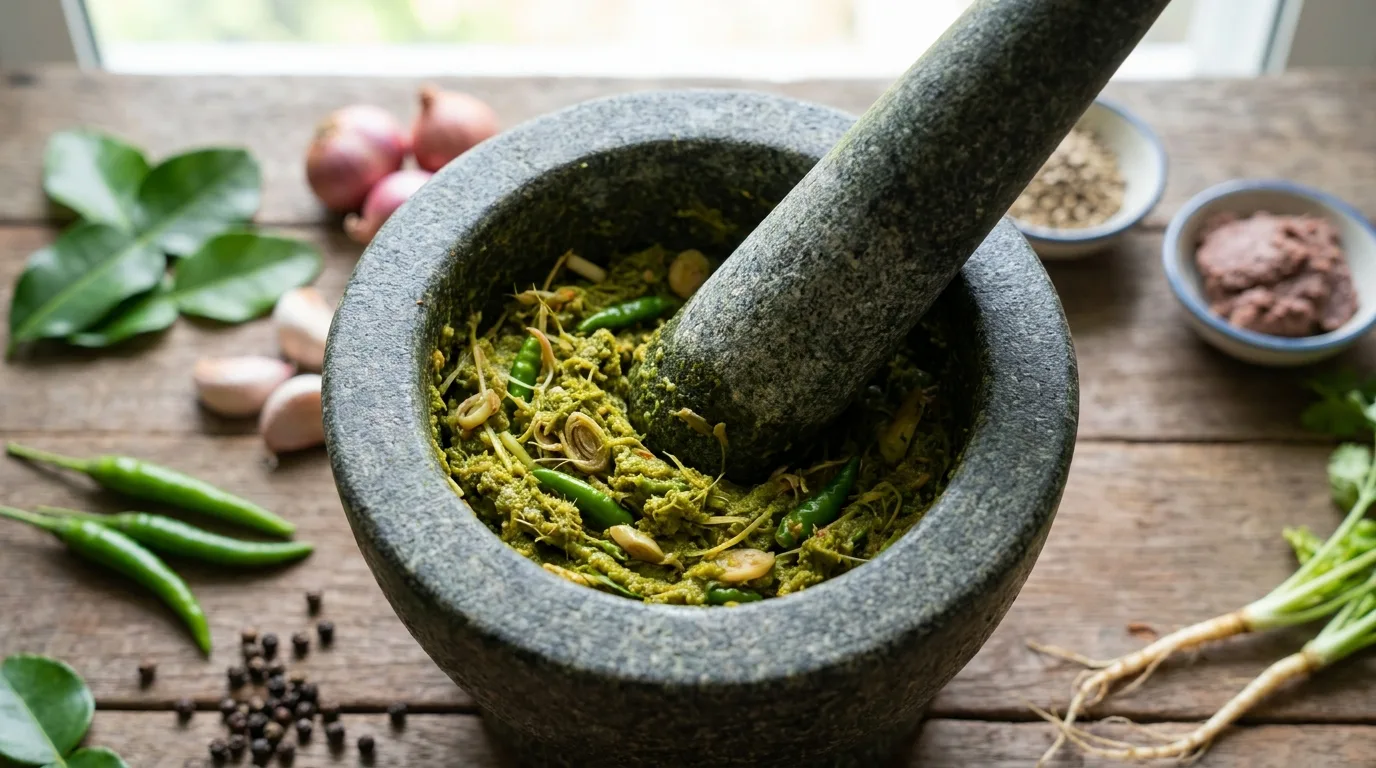
2. Add chopped cilantro leaves and grated lime zest towards the end of preparation for maximum flavor.
When grinding the ingredients, be sure to stop occasionally to scrape down the sides of the mortar with a spatula. This will ensure that all the ingredients are well incorporated and the paste is smooth.
Tips and Variations
While our recipe provides a solid foundation for authentic green curry paste, feel free to experiment with different ingredients or proportions:
For a more intense heat, add more chilies or use hotter varieties like Thai ghost peppers.
To reduce spiciness, omit seeds from chilies or substitute in milder options.
Try adding other herbs like basil, mint, or Thai basil for unique flavor profiles.
Storage and Shelf Life
Once you've made your green curry paste, store it in an airtight container in the refrigerator. The paste will keep for several weeks in the fridge and can be frozen for up to 6 months. When using frozen paste, simply thaw it overnight in the fridge or at room temperature.
Using Your Green Curry Paste
Now that you've made your green curry paste, it's time to use it! This versatile paste can be used as a base for curries, soups, and sauces. Some popular ways to use green curry paste include:
Adding it to stir-fries or sautéed vegetables
Mixing it with coconut milk or cream for a creamy sauce
Using it as a marinade for meats or seafood
Remember to adjust the amount of paste according to your personal taste preferences and the number of servings you're preparing. Happy cooking!
This Article was made with AI assistance and human editing.