

Managing finances can be overwhelming, especially for those who are new to budgeting. With so many different approaches and rules out there, it's easy to feel uncertain about where to start. However, one simple yet effective approach is the 50/30/20 budget rule. By allocating 50% of your income towards necessary expenses, 30% towards discretionary spending, and 20% towards saving and debt repayment, you can create a balanced financial plan that sets you up for long-term success.
In this article, we'll explore what the 50/30/20 budgeting rule is, how to track your expenses using free apps, and provide practical tips for implementing this approach in your daily life. By the end of this guide, you'll have a clear understanding of how to master the 50/30/20 budget rule and start achieving your financial goals.
What is the 50/30/20 Budgeting Rule?
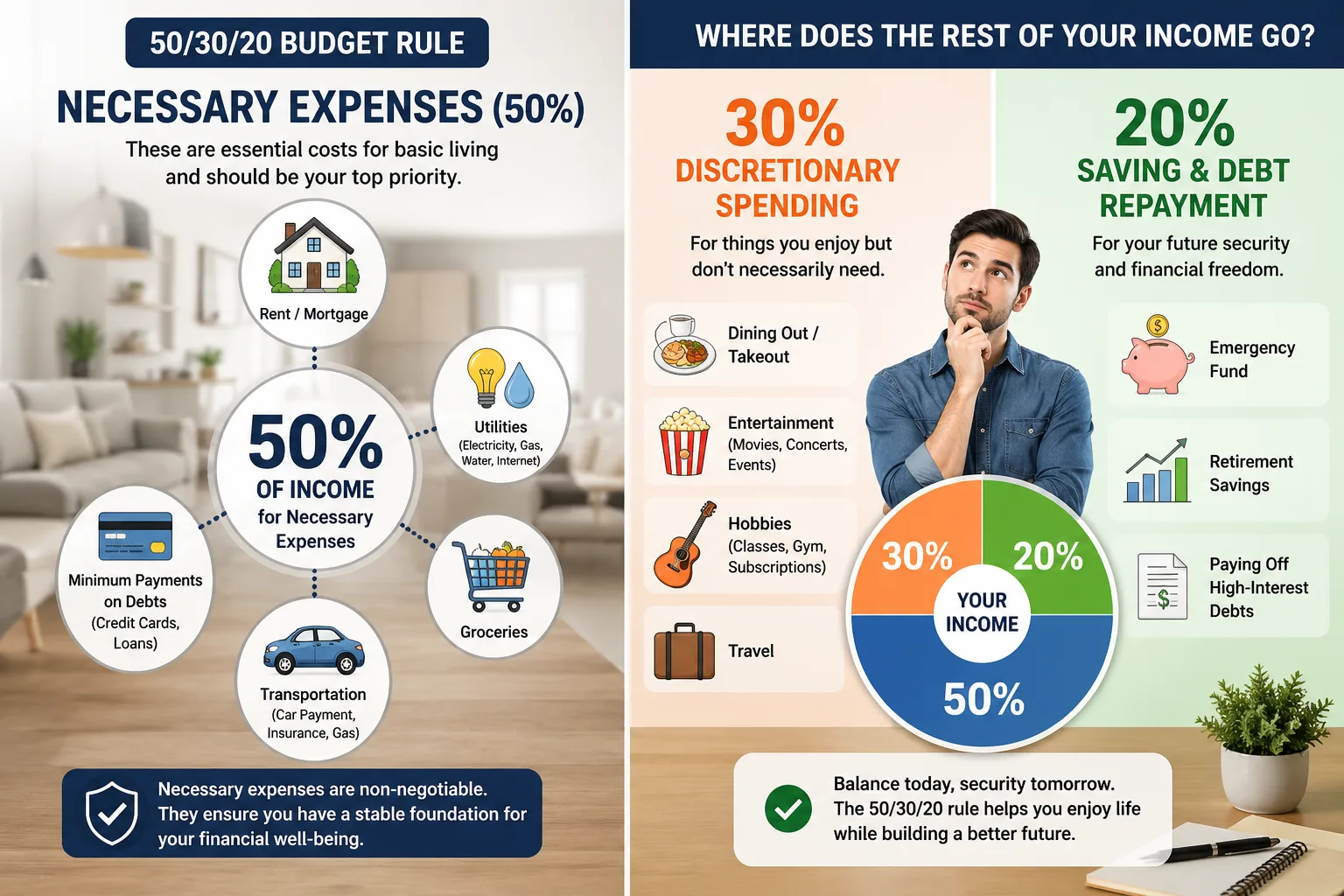
The 50/30/20 budgeting rule is a simple yet effective approach to managing your finances. It involves allocating 50% of your income towards necessary expenses, such as rent/mortgage, utilities, and groceries. This category includes all essential expenses that you need to survive.
Understanding Necessary Expenses
Necessary expenses are those that are required for basic living costs. These expenses can vary depending on individual circumstances, but common examples include:
Rent or mortgage
Utilities (electricity, gas, water, internet)
Groceries
Transportation costs (car payment, insurance, gas)
Minimum payments on debts (credit cards, loans)
It's essential to note that necessary expenses should be the top priority when allocating income. This ensures that you have a stable foundation for your financial well-being.
The 30% Discretionary Spending Category
Next, 30% of your income should go towards discretionary spending, such as entertainment, hobbies, and lifestyle upgrades. This category includes expenses that are not essential but can improve your quality of life.
Examples of Discretionary Spending
Discretionary spending can include a wide range of activities, including:
Dining out or ordering takeout
Entertainment (movies, concerts, sporting events)
Hobbies (music lessons, art classes, gym membership)
Travel
While discretionary spending is not essential, it's still important to allocate a portion of your income towards these expenses. This can help you maintain a balance between financial responsibility and enjoyment.
The 20% Savings and Debt Repayment Category
Finally, 20% of your income should be allocated towards saving and debt repayment. This category includes expenses such as retirement savings, emergency funds, and paying off high-interest debts.
Benefits of Prioritizing Savings
Prioritizing savings is crucial for long-term financial stability. By allocating a portion of your income towards savings, you can:
Build an emergency fund to cover unexpected expenses
Pay off high-interest debts and reduce financial stress
Invest in retirement savings and secure your future
Benefits of the 50/30/20 Budgeting Rule
So why is the 50/30/20 budgeting rule so effective? Here are some benefits:
Simplifies Budgeting
By dividing your income into three categories, you can easily track your expenses and stay on top of your finances. This simplification makes it easier to manage your money and make informed financial decisions.
Prioritizes Needs Over Wants
The 50/30/20 rule ensures that essential expenses come first, leaving room for discretionary spending only after necessary expenses are covered. This prioritization helps you avoid overspending on non-essential items and maintain a balanced budget.
Promotes Savings
Allocating 20% of your income towards saving and debt repayment encourages you to prioritize long-term financial stability. By building an emergency fund and paying off high-interest debts, you can reduce financial stress and achieve greater peace of mind.
Tracking Expenses with Free Apps
To effectively implement the 50/30/20 budgeting rule, it's essential to track your expenses accurately. Fortunately, there are many free apps available that can help you monitor your spending and stay on top of your finances.
Popular Free Apps for Tracking Expenses
Here are some popular free apps for tracking expenses:
Mint: A comprehensive app that tracks income and expenses, sets budgets, and offers bill tracking.
Personal Capital: A financial management tool that tracks income and expenses, investments, and debts.
YNAB (You Need a Budget): A budgeting app that helps you track income and expenses, set budgets, and achieve financial goals.
Implementing the 50/30/20 Budget Rule
Implementing the 50/30/20 budget rule requires discipline and patience. Here are some steps to follow:
1. Track your income: Start by tracking your income from all sources, including salary, investments, and side hustles.
2. Categorize expenses: Divide your expenses into necessary, discretionary, and savings categories.
3. Set budgets: Allocate 50% of your income towards necessary expenses, 30% towards discretionary spending, and 20% towards saving and debt repayment.
4. Monitor and adjust: Regularly review your budget to ensure you're on track to meet your financial goals.
By following these steps and using free apps to track your expenses, you can master the 50/30/20 budget rule and achieve greater financial stability.
Conclusion
The 50/30/20 budgeting rule is a simple yet effective approach to managing finances. By allocating 50% of your income towards necessary expenses, 30% towards discretionary spending, and 20% towards saving and debt repayment, you can create a balanced budget that sets you up for long-term success.
Remember, implementing the 50/30/20 rule requires discipline and patience. Start by tracking your income and categorizing your expenses, then set budgets and monitor your progress. With time and practice, you'll become proficient in implementing the 50/30/20 budgeting rule and start achieving your financial goals.
This Article was made with AI assistance and human editing.


