

As investors navigate the ever-changing landscape of the stock market, it's essential to understand sector rotation strategies and how they impact economic cycles. Sector rotation refers to the phenomenon where investor attention and money flow from one sector to another in response to changes in market conditions, economic trends, and interest rates. By grasping this concept, retail investors can better manage risk and make informed decisions about their portfolios.
In this article, we'll delve into the world of sector rotation strategies, exploring what they are, how to apply them during economic cycles, and providing actionable insights for balanced portfolios.
What is Sector Rotation Strategy?
Sector rotation is a natural consequence of market dynamics. As economic conditions change, certain sectors become more attractive than others. This shift in investor sentiment can lead to significant price movements, making it crucial for investors to understand the underlying drivers of sector rotation.
To better comprehend sector rotation, let's consider an analogy. Imagine a river with different currents and eddies. Just as water flows from one current to another in response to changes in the riverbed or surrounding environment, investor attention and money flow from one sector to another in response to changes in market conditions.
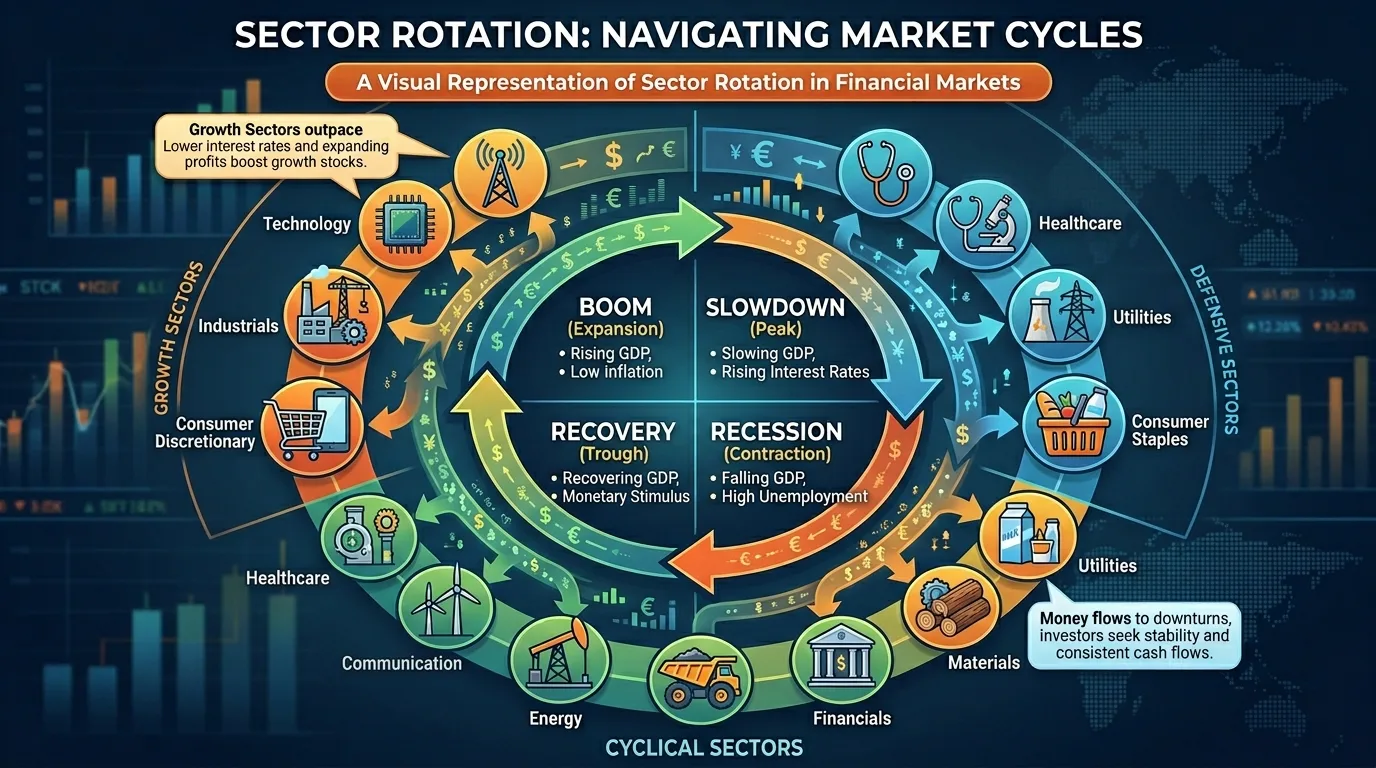
Here are some key features of sector rotation strategies:
Sector identification: Identifying which sectors are poised to benefit from changing market conditions
Portfolio rebalancing: Adjusting portfolio allocations to reflect changes in sector performance
Risk management: Managing risk by diversifying investments across multiple sectors
Sector Identification: A Closer Look
To identify sectors that are likely to benefit from changing market conditions, investors can analyze various economic indicators, such as:
GDP growth rates
Inflation rates
Unemployment rates
Interest rate changes
These indicators can help investors anticipate which sectors are likely to perform well or poorly in response to changes in the economy.
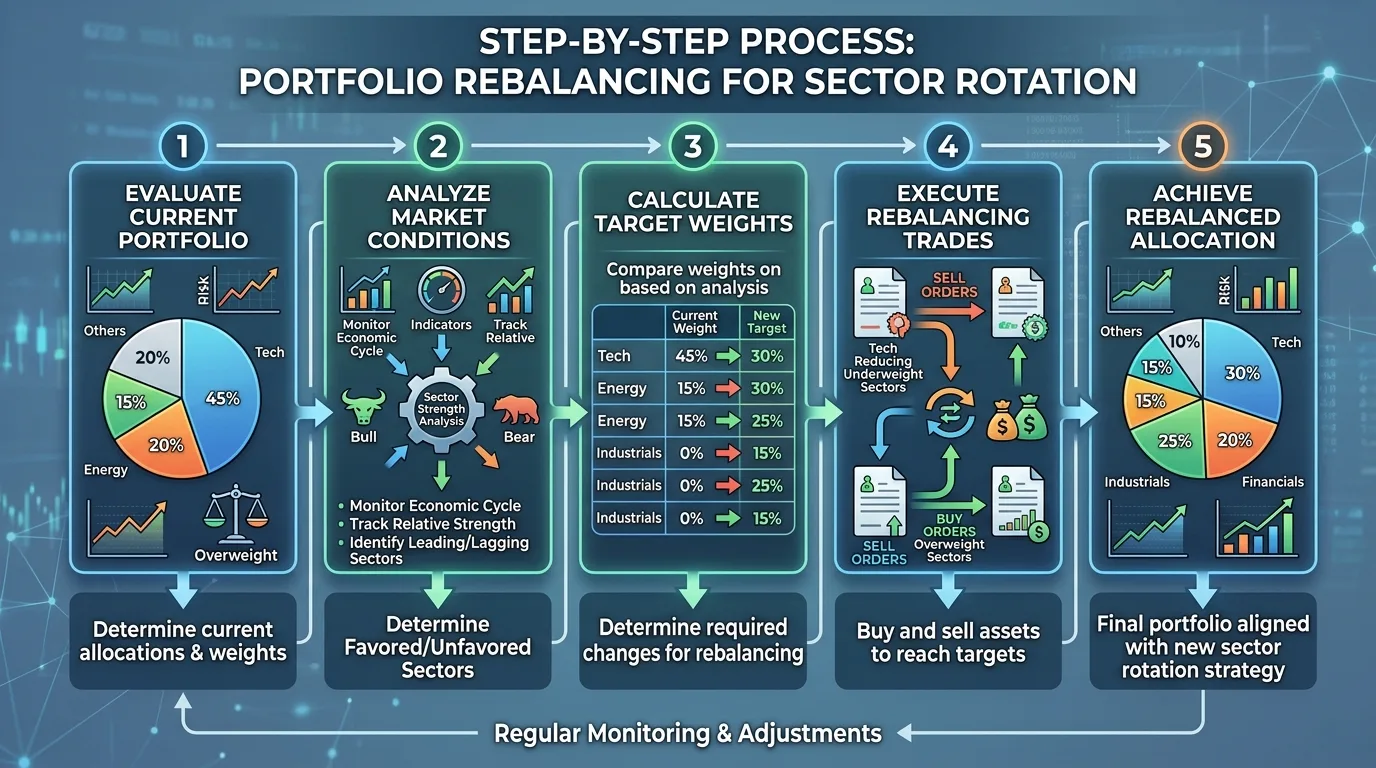
Portfolio Rebalancing: A Step-by-Step Guide
Rebalancing a portfolio involves adjusting the allocation of investments among different sectors. This process typically occurs when there is a significant shift in market conditions, such as:
A change in interest rates
An unexpected economic downturn or upswing
A major event that impacts specific industries (e.g., natural disasters, trade wars)
To rebalance a portfolio effectively, investors should follow these steps:
1. Monitor market trends and sector performance regularly.
2. Identify sectors that are underperforming or overperforming compared to their historical averages.
3. Adjust the allocation of investments among different sectors to reflect changes in market conditions.
Risk Management: Diversification Across Sectors
Diversifying investments across multiple sectors is a crucial aspect of risk management. By spreading investments across various sectors, investors can reduce their exposure to market volatility and increase potential returns.
To diversify effectively, investors should:
1. Identify sectors that are highly correlated with each other (e.g., technology and consumer discretionary).
2. Allocate investments among these sectors in proportion to their expected performance.
3. Regularly review and adjust the portfolio allocation as market conditions change.
Applying Sector Rotation Strategies during Economic Cycles
During economic cycles, sector rotation can be a powerful tool for investors. By understanding the underlying drivers of market trends, investors can make informed decisions about their portfolios.
Here are some key considerations when applying sector rotation strategies:
Expansionary phase: During periods of economic growth, sectors such as technology and consumer discretionary tend to outperform.
Contractionary phase: In times of economic downturn, sectors like healthcare and utilities often perform better.
Interest rate changes: Changes in interest rates can significantly impact sector performance, with rising rates favoring sectors with high-interest rates.
Benefits of Sector Rotation Strategies
Implementing sector rotation strategies can provide several benefits for investors:
Improved risk management: By diversifying investments across multiple sectors, investors can reduce exposure to market volatility.
Increased returns: Sector rotation can help investors capture gains in outperforming sectors while minimizing losses in underperforming ones.
Enhanced portfolio flexibility: By regularly rebalancing portfolios, investors can adapt to changing market conditions and stay aligned with their investment goals.
Case Study: Sector Rotation during the 2020 COVID-19 Pandemic
During the 2020 COVID-19 pandemic, sector rotation played a significant role in shaping market trends. As governments imposed lockdowns and restrictions on businesses, sectors like healthcare and technology saw significant gains.
Here are some key takeaways from this case study:
Increased demand for remote work solutions: Technology companies like Zoom and Microsoft benefited from the shift to remote work.
Growing importance of healthcare services: Companies like Johnson & Johnson and UnitedHealth Group experienced significant growth due to increased demand for medical supplies and healthcare services.
Key Steps to Implement Sector Rotation Strategies
Implementing sector rotation strategies requires a clear understanding of market trends, economic conditions, and investor sentiment. Here are some key steps to follow:
Monitor market trends: Regularly review market data to identify changes in sector performance.
Adjust portfolio allocations: Rebalance portfolios to reflect changes in sector performance.
Diversify investments: Spread investments across multiple sectors to manage risk.
Conclusion
Navigating sector rotation strategies requires a deep understanding of market dynamics, economic conditions, and investor sentiment. By grasping this concept, retail investors can better manage risk and make informed decisions about their portfolios.
In conclusion, sector rotation is an essential tool for investors seeking to adapt to changing market conditions. By identifying sectors that are poised to benefit from these changes, rebalancing portfolios accordingly, and diversifying investments across multiple sectors, investors can increase potential returns while minimizing risk.
Remember, sector rotation is a continuous process that requires ongoing monitoring and adaptation. By staying informed about market trends and economic indicators, investors can make data-driven decisions and achieve their investment goals.
This Article was made with AI assistance and human editing.