

As a small business owner, managing your finances and staying compliant with tax laws can be overwhelming. One often overlooked opportunity to reduce your tax burden is by utilizing Section 179 deductions for equipment purchases. This valuable deduction allows businesses to expense the full purchase price of eligible equipment in the year it's acquired, rather than depreciating it over several years. In this article, we'll break down the eligibility rules, application process, and benefits of Section 179 deductions to help you navigate this often complex topic.
What are Section 179 Deductions?
Section 179 is a tax code section that allows small businesses to expense up to $1 million in equipment purchases in a single year. This deduction can be used for various types of equipment, including computers, software, and even vehicles. To qualify, the equipment must be purchased or financed during the tax year, and it must be placed into service by the end of the year.
It's essential to note that Section 179 deductions are not a loan or a grant; they're a legitimate tax deduction that reduces your business's taxable income. By expensing equipment costs upfront, you'll reduce your tax liability for the year, resulting in significant savings on your tax bill.
Eligibility Rules for Section 179 Deductions
To take advantage of Section 179 deductions, your business must meet certain eligibility criteria:
You must be a small business owner (typically defined as a sole proprietorship or single-member LLC). This means that if you're a corporation or partnership, you may not qualify.
The equipment purchased must have a useful life of three years or less. This includes items like computers, software, and vehicles.
The total cost of the equipment cannot exceed $1 million. If your purchases exceed this amount, you'll need to consult with a tax professional to determine the best strategy for claiming the deduction.
The equipment must be used more than 50% for business purposes. This means that if you're using the equipment for both personal and business use, only the business-use percentage will qualify.
Types of Equipment Eligible for Section 179 Deductions
The following types of equipment are eligible for Section 179 deductions:
Computers and computer software
Office furniture and equipment (such as copiers, printers, and scanners)
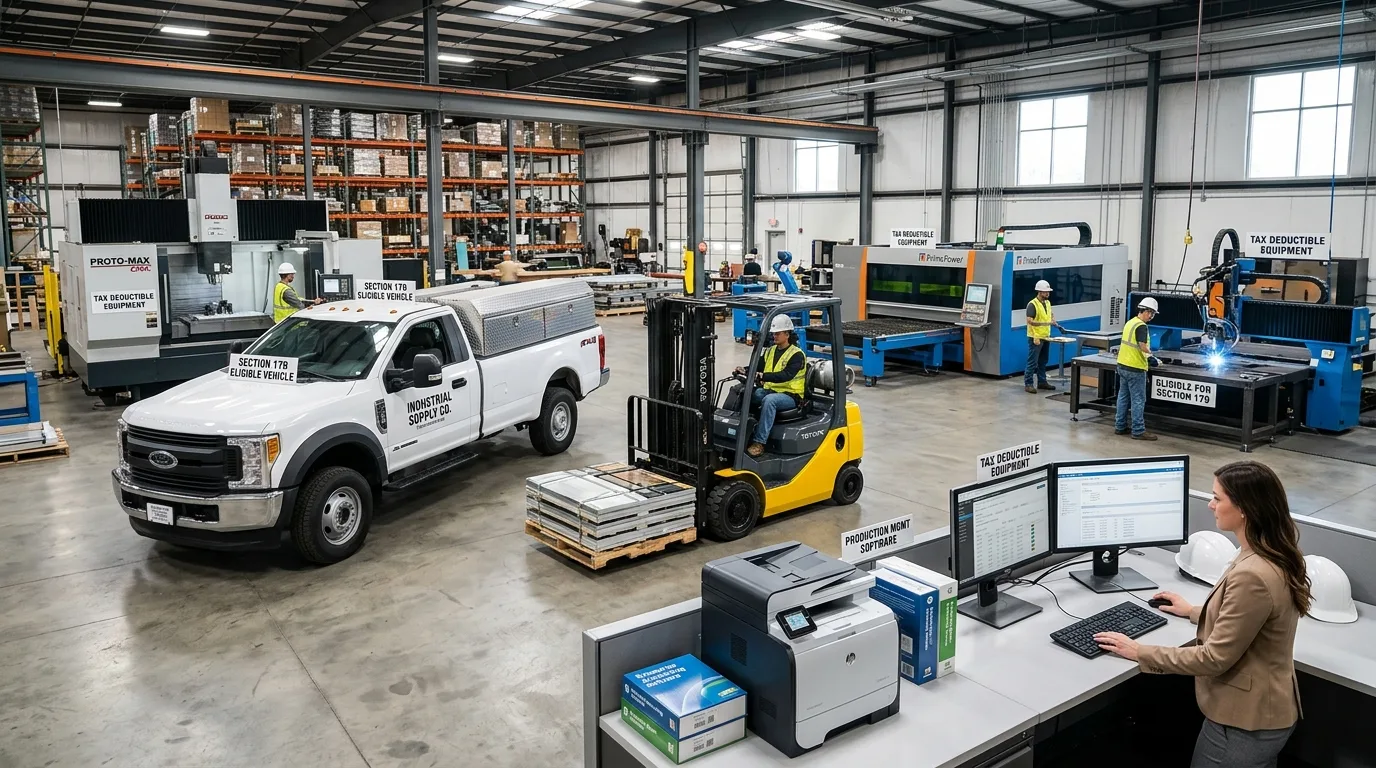
Vehicles (including cars, trucks, vans, and SUVs) used for business purposes
Manufacturing equipment and machinery
Agricultural equipment
When selecting equipment to purchase or finance, consider the following factors:
Will the equipment last more than three years?
Is it necessary for your business operations?
Can you claim a significant portion of the cost as a tax deduction?
Application Process for Section 179 Deductions
To apply for Section 179 deductions, follow these steps:
1. Determine Eligibility: Review your business's tax status and ensure you meet the eligibility criteria.
2. Choose Equipment: Select the eligible equipment to be purchased or financed during the tax year.
3. Document Purchases: Keep detailed records of all equipment purchases, including receipts, invoices, and financing agreements.
4. Claim Deduction: Report the Section 179 deduction on your business's tax return (Form 1040 for individuals and Form 1120S for corporations).
When documenting purchases, make sure to include:
A clear description of the equipment purchased
The date of purchase or financing
The total cost of the equipment
Any applicable financing agreements
Benefits of Section 179 Deductions
By utilizing Section 179 deductions, small businesses can:
Reduce taxable income by expensing equipment costs upfront
Increase cash flow by reducing depreciation expenses over several years
Improve financial flexibility by allocating funds to other business needs
Think about it: if you're a small business owner with $100,000 in equipment purchases, you'll reduce your taxable income by the same amount. This can lead to significant tax savings and improved cash flow.
Real-World Example: How a Small Business Owner Utilized Section 179 Deductions
Meet Jane, owner of a local printing company. She purchased a new high-speed printer and copier for $100,000 in January of the tax year. Since she uses these machines more than 50% for business purposes, they qualify for Section 179 deductions.
Jane reduces her taxable income by $100,000, resulting in significant savings on her tax bill. This also means that she'll reduce her depreciation expenses over several years, freeing up funds for other business needs.

Common Misconceptions and Mistakes
Avoid the following common mistakes when claiming Section 179 deductions:
Failure to meet eligibility criteria: Ensure your business meets the required conditions before applying for the deduction.
Incorrect documentation: Keep accurate records of equipment purchases to support your claim.
Inaccurate tax reporting: Report the Section 179 deduction on your tax return correctly to avoid penalties and audits.
Some common misconceptions about Section 179 deductions include:
Thinking that you can only claim the deduction in a single year
Assuming that the deduction is limited to specific industries or types of equipment
Believing that you need to depreciate equipment over several years before claiming the deduction
Conclusion
Maximizing your tax savings through Section 179 deductions requires careful planning and attention to detail. By understanding the eligibility rules, application process, and benefits of the deduction, you'll be well on your way to reducing your taxable income and improving your business's cash flow.
If you're unsure about whether you qualify for Section 179 deductions or need help with the application process, consult a tax professional to ensure that you're taking advantage of this valuable tax benefit.
This Article was made with AI assistance and human editing.