

As the world grapples with the pressing issue of climate change, eco-conscious travelers are increasingly looking for ways to reduce their environmental impact while still enjoying meaningful and enriching travel experiences. One significant aspect of sustainable travel is carbon offsetting flights, which can be a complex and often misunderstood topic. In this article, we'll delve into the world of carbon offset flights and explore train alternatives in Europe, providing you with the information you need to make informed choices about your next trip.

What are Carbon Offset Flights?
Carbon offset flights involve calculating the amount of greenhouse gas emissions produced by a flight and then investing in projects or activities that reduce equivalent amounts of emissions elsewhere. This can include renewable energy projects, reforestation efforts, or even sustainable agriculture initiatives. The idea is to compensate for the carbon footprint of your flight by supporting projects that mitigate climate change.
However, the process of calculating and offsetting carbon emissions is often shrouded in mystery. Airlines typically use a complex formula to estimate their emissions, which can be influenced by various factors such as fuel efficiency, passenger numbers, and route lengths. Some airlines may also offer voluntary offset programs, while others might include offsets as part of their standard ticket prices.
To understand the carbon offset process better, it's essential to grasp the concept of greenhouse gas emissions. Greenhouse gases (GHGs) are released into the atmosphere through various human activities, including transportation, industry, and agriculture. The most common GHG is carbon dioxide (CO2), which is produced when fossil fuels like coal, oil, or natural gas are burned.
Calculating Carbon Emissions
Calculating carbon emissions can be a complex task, requiring detailed information about the flight route, fuel type, passenger numbers, and other factors. Airlines typically use various methods to estimate their emissions, including:
Fuel consumption estimates: This involves calculating the amount of fuel used during the flight and estimating its CO2 emissions.
Route length calculations: The distance traveled by a flight is a significant factor in determining its carbon footprint.
Passenger load factor assessments: The number of passengers on board affects the overall emissions of a flight.
However, these estimates may not always accurately reflect the actual emissions produced by a flight. To get an accurate estimate, airlines use various formulas and algorithms that take into account multiple factors.
For instance, when calculating fuel consumption, airlines consider factors such as:
Aircraft type: Different planes have varying levels of fuel efficiency.
Flight speed: Faster flights tend to burn more fuel.
Altitude: Flights at high altitudes may require more fuel due to increased air resistance.

What is Carbon Offsetting?
Carbon offsetting involves compensating for the carbon emissions produced by an activity (like flying) by investing in projects or activities that reduce equivalent amounts of emissions elsewhere. This can include reforestation efforts, renewable energy projects, or sustainable agriculture initiatives.
To illustrate this concept, imagine a scenario where you take a flight from Paris to Rome, producing 100 kg of CO2 emissions. To offset these emissions, you invest in a reforestation project that plants trees in the Amazon rainforest. The trees absorb CO2 from the atmosphere over time, reducing the overall carbon footprint.
Train Travel: A More Environmentally Friendly Option
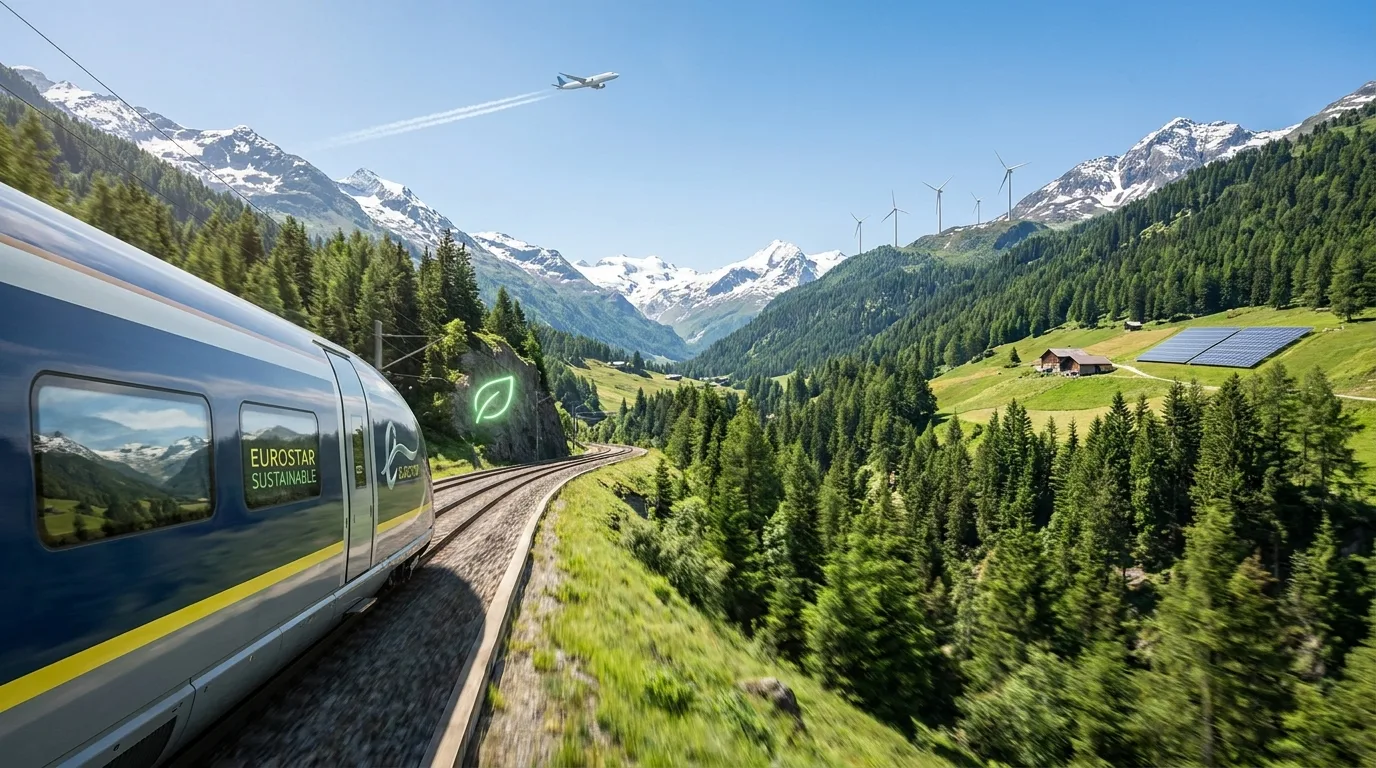
Train travel is often a more environmentally friendly option compared to flying, especially for shorter distances. According to the International Union of Railways (UIC), rail transport has a lower carbon footprint than domestic flights. However, it's essential to note that the exact carbon footprint values can vary depending on several factors, including the type of fuel used and the route taken.
Train Travel vs. Flying: A Comparison
| Mode of Transportation | Estimated Carbon Footprint (per passenger kilometer) | | --- | --- | | Rail transport | 14-17 grams CO2e (varies depending on the source and methodology) | | Domestic flights | 100-150 grams CO2e |
It's worth noting that train travel is not always a perfect solution. For instance, high-speed trains often use electricity generated from fossil fuels, which can lead to increased carbon emissions.
Factors Influencing Carbon Emissions
Several factors influence the carbon emissions of a flight or train journey:
Fuel type: The type of fuel used by an aircraft or train affects its carbon footprint. For example, biofuels can be a more environmentally friendly option than traditional fossil fuels.
Route length: Longer flights and trains tend to produce more CO2 emissions due to increased fuel consumption.
Passenger load factor: Flights and trains with lower passenger loads have a higher carbon footprint per passenger.
Calculating Your Carbon Footprint
To calculate your carbon footprint, you'll need to determine the amount of CO2 emitted during your flight or train journey. This can be done using various online tools or calculators that take into account factors such as:
Flight route and distance
Fuel type and consumption
Passenger numbers and load factor
Choosing an Offset Project
Once you've calculated your carbon emissions, it's essential to choose a reputable offset project that reduces equivalent amounts of emissions. Look for projects that have been certified by organizations like the Verified Carbon Standard (VCS) or the Gold Standard.
Evaluating Offset Projects
When evaluating offset projects, consider factors such as:
Carbon reduction: The project should reduce carbon emissions in a quantifiable and verifiable manner.
Additionality: The project should not have been undertaken without external funding or support.
Durability: The project's benefits should be long-lasting and not dependent on continued financing.
Conclusion
Carbon offsetting flights can seem complex, but understanding the basics is essential for making informed choices about your travel habits. By choosing train travel over flying and investing in reputable offset projects, you can reduce your carbon footprint and contribute to a more sustainable future.
Remember, every small step counts, and even simple changes to your daily habits can make a significant difference when combined with collective action.
This Article was made with AI assistance and human editing.