

As cryptocurrency adoption continues to grow, so does the need for scalable and secure blockchain solutions. With the increasing number of users and transactions on decentralized networks, traditional scalability limitations have become a major bottleneck. Enter layer-2 scaling solutions, which aim to solve these issues while maintaining the decentralization and security that cryptocurrencies are known for. In this article, we'll delve into the world of Polygon's layer-2 scaling solutions, exploring their benefits, how they work, and addressing common concerns about centralization.
What are Layer-2 Scaling Solutions?
Layer-2 scaling solutions are a type of scalability technique designed to enhance the performance of blockchain networks. They operate as an additional layer on top of the main blockchain, processing transactions in batches and reducing the load on the underlying network. This approach allows for faster transaction times, lower fees, and increased capacity without compromising decentralization or security.
To understand how layer-2 scaling solutions work, imagine a traditional highway with many cars traveling at different speeds. As more cars join the road, congestion increases, leading to slower travel times. In contrast, a layer-2 solution is like building a parallel highway that can handle excess traffic, allowing cars to move faster and reducing congestion on the main road.

How Does Polygon Work?
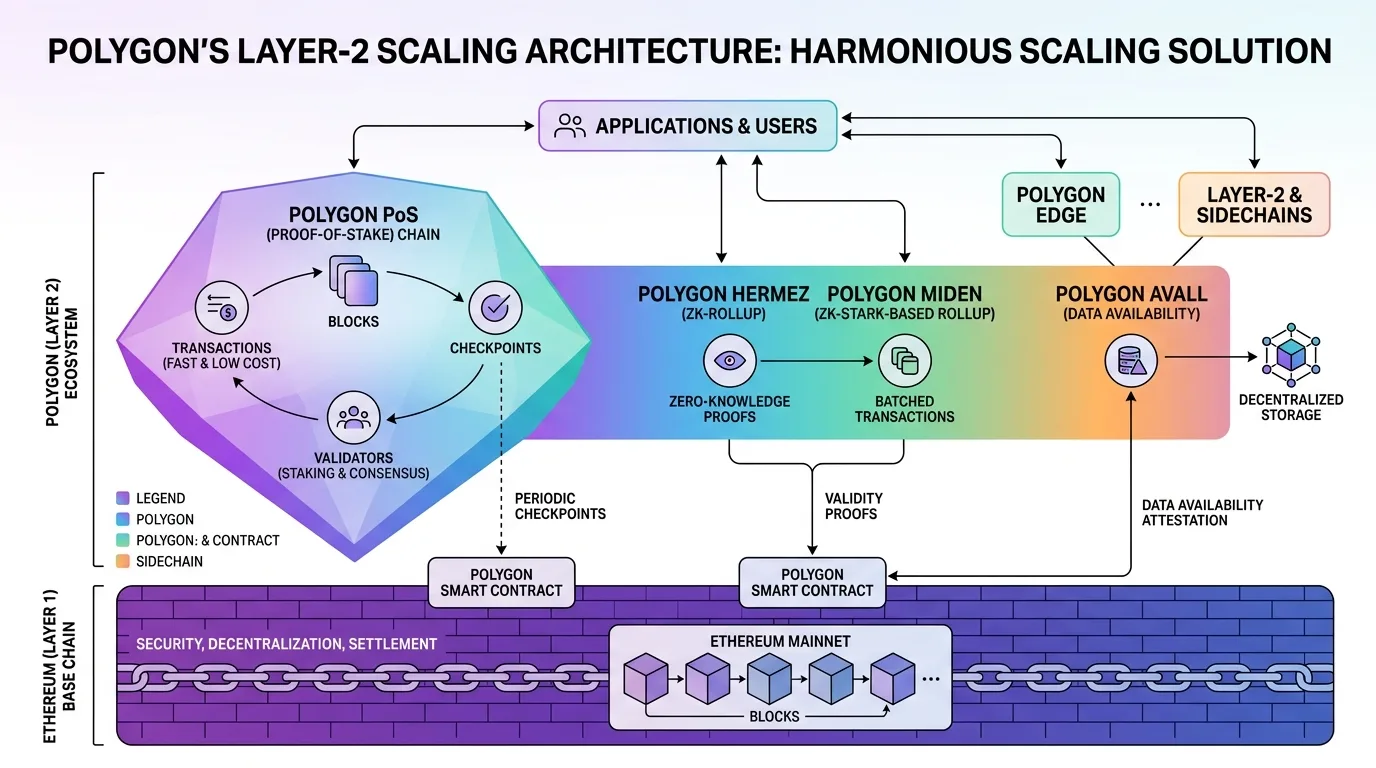
Polygon (formerly Matic Network) is a popular layer-2 scaling solution built on Ethereum. It uses a proof-of-stake (PoS) consensus algorithm to secure the network and process transactions in batches. The key components of Polygon's architecture include:
Layer 2 blocks: These are batches of transactions that are processed together, reducing the load on the main Ethereum blockchain.
Validators: A group of validators responsible for creating and verifying layer 2 blocks.
Bridge: A mechanism that connects the Polygon network to the main Ethereum blockchain.
The PoS consensus algorithm used by Polygon is a type of consensus mechanism where validators compete to create new blocks, but instead of using energy-intensive computational power, they use their stake in the network (i.e., the number of coins they hold) as collateral. This approach is more energy-efficient and less susceptible to centralization.
Benefits of Using Layer-2 Scaling Solutions
The advantages of using layer-2 scaling solutions like Polygon are numerous:
Faster transaction times: With reduced congestion on the main blockchain, transactions are processed and confirmed much faster.
Lower fees: By reducing the load on the network, transaction fees decrease significantly.
Increased capacity: Layer-2 scaling solutions can handle a higher volume of transactions without compromising security or decentralization.
To illustrate these benefits, consider a decentralized application (dApp) that requires frequent transactions. Without layer-2 scaling solutions, the dApp might experience slow transaction times and high fees, making it less appealing to users. By integrating Polygon into this dApp, developers can improve user experience while reducing operational costs.
Key Features of Polygon
Some of the key features that make Polygon an attractive choice for developers and users include:
• Ethereum compatibility: Polygon is built on top of Ethereum, allowing seamless integration with existing decentralized applications (dApps) and smart contracts.
• High transaction capacity: With a focus on scalability, Polygon can handle a large number of transactions per second.
• Low fees: By reducing the load on the network, transaction fees are significantly lower compared to traditional blockchain solutions.
The Ethereum compatibility feature is particularly important as it enables developers to build dApps that leverage existing smart contract functionality while benefiting from the improved performance and scalability offered by Polygon.
Risks of Centralization
One of the primary concerns with layer-2 scaling solutions is centralization. As more users and developers rely on these networks, there's a risk that power becomes concentrated in the hands of a few entities. To mitigate this risk:
Distributed architecture: Polygon's architecture is designed to be distributed, reducing the likelihood of centralization.
Validator incentives: Validators are incentivized to participate in the network through rewards and penalties.
Community governance: The Polygon community plays an active role in decision-making and ensuring the network remains decentralized.
To further mitigate the risk of centralization, developers can implement measures such as decentralized governance models, where decision-making authority is distributed among stakeholders rather than being concentrated in a single entity.
Addressing Security Concerns
Security is a top priority for any blockchain solution, including layer-2 scaling solutions like Polygon. To ensure security:
PoS consensus algorithm: Polygon uses a PoS consensus algorithm, which is considered more secure than traditional proof-of-work (PoW) algorithms.
Regular audits and testing: The network undergoes regular audits and testing to identify vulnerabilities and improve overall security.
Decentralized architecture: Polygon's decentralized architecture reduces the risk of single-point failures and improves resilience against attacks.
To further enhance security, developers can implement additional measures such as multi-signature wallets, which require multiple signatures to execute a transaction, thereby reducing the likelihood of unauthorized transactions.
Conclusion
Polygon's layer-2 scaling solutions offer a promising approach to addressing scalability issues in blockchain networks. By understanding how these solutions work and their benefits, developers can build more efficient and user-friendly decentralized applications that leverage the improved performance and security offered by Polygon. While there are risks associated with centralization, measures such as distributed architecture and community governance can help mitigate these concerns. As the adoption of layer-2 scaling solutions continues to grow, we can expect to see even more innovative applications and use cases emerge in the blockchain space.
Appendix
For a deeper understanding of Polygon's architecture and implementation details, refer to the following resources:
[Polygon Whitepaper](https://polygon.technology/whitepaper)
[Polygon GitHub Repository](https://github.com/maticnetwork/)
[Polygon Documentation](https://docs.polygon.technology/)
This Article was made with AI assistance and human editing.