

Optimize Your To-Do List with the Eisenhower Matrix
Imagine being able to tackle your tasks with clarity and focus, knowing exactly which ones require your immediate attention and which can wait. Sounds like a productivity dream come true, right? Well, it's not just a fantasy – there's a simple yet powerful tool that can help you optimize your to-do list: the Eisenhower Matrix.
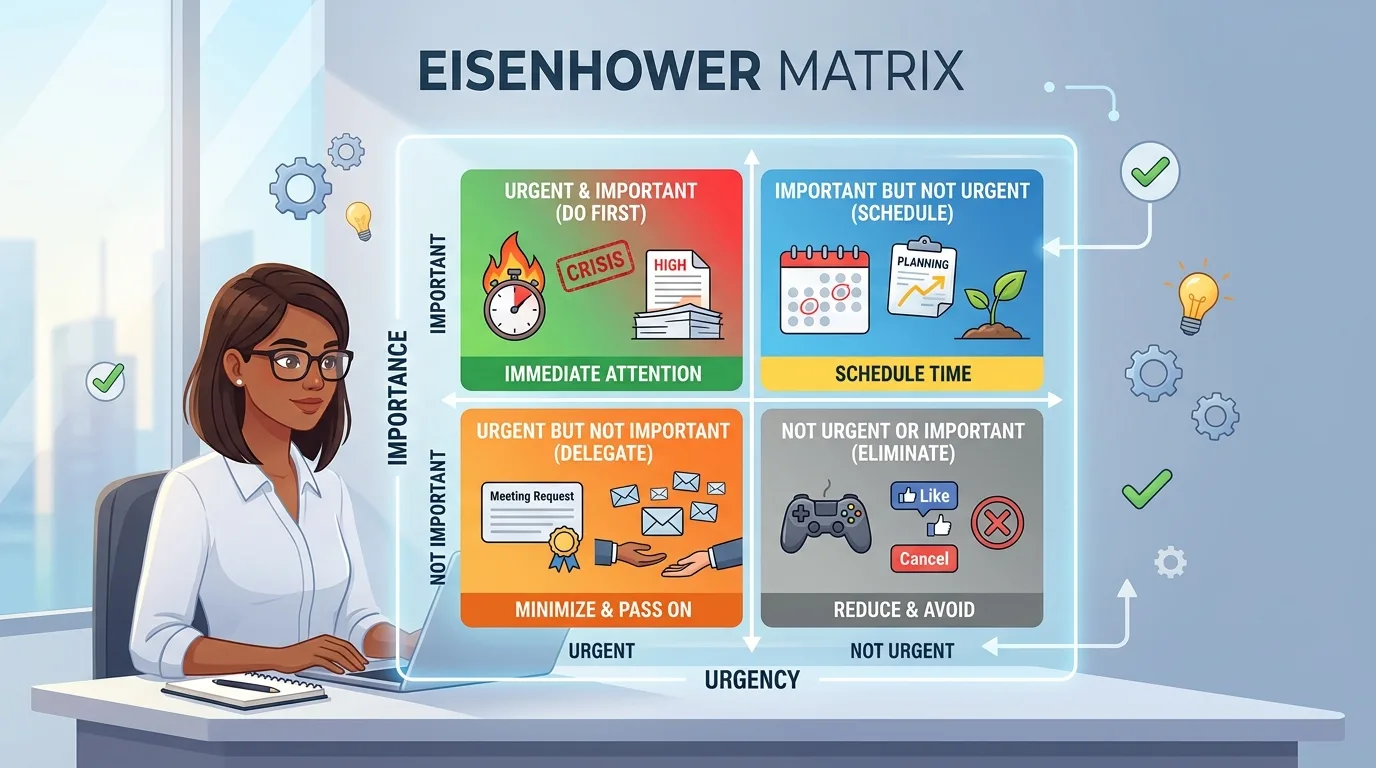
Developed by Stephen Covey in his book "The 7 Habits of Highly Effective People," this decision-making matrix is based on the idea that tasks should be prioritized according to their urgency and importance. By using the Eisenhower Matrix, you'll be able to categorize your tasks into four quadrants: urgent & important, important but not urgent, urgent but not important, and not urgent or important.

In this article, we'll delve into the world of the Eisenhower Matrix, exploring how it works, its benefits, and providing a step-by-step guide on how to implement it in your daily life. By the end of this journey, you'll be equipped with the knowledge and skills necessary to revolutionize your task management and boost your productivity.
What is the Eisenhower Matrix?
The Eisenhower Matrix is a decision-making tool that helps individuals prioritize tasks based on their level of urgency and importance. It's a simple yet effective way to manage your time and energy, ensuring that you focus on what truly matters.
Imagine a grid with four quadrants:
Urgent & Important (Do First)
Important but Not Urgent (Schedule)
Urgent but Not Important (Delegate)
Not Urgent or Important (Eliminate)
Each task is placed into one of these quadrants, allowing you to quickly identify which ones require your immediate attention and which can be scheduled for later.
How Does the Eisenhower Matrix Work?
To use the Eisenhower Matrix effectively, follow these steps:
1. Write down all your tasks, big or small.
2. Evaluate each task based on its level of urgency and importance.
3. Place each task into one of the four quadrants:
Urgent & Important (Do First): Tasks that are both urgent and important should be done immediately.
Important but Not Urgent (Schedule): Schedule these tasks for later, as they have long-term benefits.
Urgent but Not Important (Delegate): Delegate or automate these tasks to free up time for more pressing matters.
Not Urgent or Important (Eliminate): Eliminate or minimize these tasks, as they don't contribute significantly to your goals.
4. Focus on the most critical tasks first, and then move on to less urgent ones.
Benefits of Using the Eisenhower Matrix
By implementing the Eisenhower Matrix in your daily life, you can:
Improve task prioritization and focus on what truly matters
Reduce stress and anxiety caused by an overwhelming to-do list
Increase productivity and efficiency
Enhance decision-making skills
Let's explore these benefits in more detail.
Benefits of the Eisenhower Matrix
The Eisenhower Matrix offers numerous benefits, including:
Improved Task Prioritization: By categorizing tasks based on their level of urgency and importance, you'll be able to focus on what truly matters.
Reduced Stress and Anxiety: An overwhelming to-do list can cause significant stress. The Eisenhower Matrix helps you prioritize tasks, reducing feelings of overwhelm.
Increased Productivity: By focusing on the most critical tasks first, you'll be able to complete them efficiently, freeing up time for other activities.
Enhanced Decision-Making Skills: The Eisenhower Matrix teaches you to evaluate tasks based on their level of urgency and importance, developing your decision-making skills.
Real-World Examples:
To illustrate how the Eisenhower Matrix works, let's consider a few examples:
Suppose you're a busy professional with multiple deadlines approaching. You have a task list that includes:
Meeting a project deadline (urgent & important)
Responding to emails (important but not urgent)
Attending a non-essential meeting (urgent but not important)
Browsing social media (not urgent or important)
Using the Eisenhower Matrix, you'd categorize these tasks as follows:
Meeting a project deadline: Urgent & Important
Responding to emails: Important but Not Urgent
Attending a non-essential meeting: Urgent but Not Important
Browsing social media: Not Urgent or Important
By focusing on the most critical task (meeting the project deadline), you'll be able to complete it efficiently and then move on to less urgent tasks.
Common Challenges and Solutions
As with any productivity system, there are potential challenges to using the Eisenhower Matrix:
Difficulty in categorizing tasks: It can be challenging to evaluate each task based on its level of urgency and importance.
Overwhelm from too many tasks: An extensive to-do list can cause feelings of overwhelm, making it difficult to focus on what truly matters.
To overcome these challenges:
Use the Eisenhower Matrix regularly: The more you practice using the matrix, the easier it becomes to categorize tasks.
Prioritize tasks based on their impact: Focus on tasks that have a significant impact on your goals and objectives.
Conclusion
The Eisenhower Matrix is a powerful tool for optimizing your to-do list and boosting productivity. By categorizing tasks into four quadrants – urgent & important, important but not urgent, urgent but not important, and not urgent or important – you'll be able to prioritize what truly matters.
Remember, the key to success lies in consistent practice and adaptation. As you implement the Eisenhower Matrix, be prepared to adjust your approach as needed.
By following these steps and incorporating the Eisenhower Matrix into your daily routine, you'll be well on your way to revolutionizing your task management and achieving greater productivity.
The Eisenhower Matrix is a simple yet effective tool for managing time and energy. By categorizing tasks based on their level of urgency and importance, you'll be able to prioritize what truly matters and achieve greater productivity.
This Article was made with AI assistance and human editing.
