

Are you tired of performing the same old bodyweight exercises without seeing any significant muscle growth? You're not alone. Many fitness enthusiasts struggle to achieve their goals using calisthenics, but it's often due to a lack of understanding about progressive overload. In this article, we'll delve into the world of progressive overload and provide you with a comprehensive guide on how to apply it in your bodyweight training.
What is Progressive Overload?
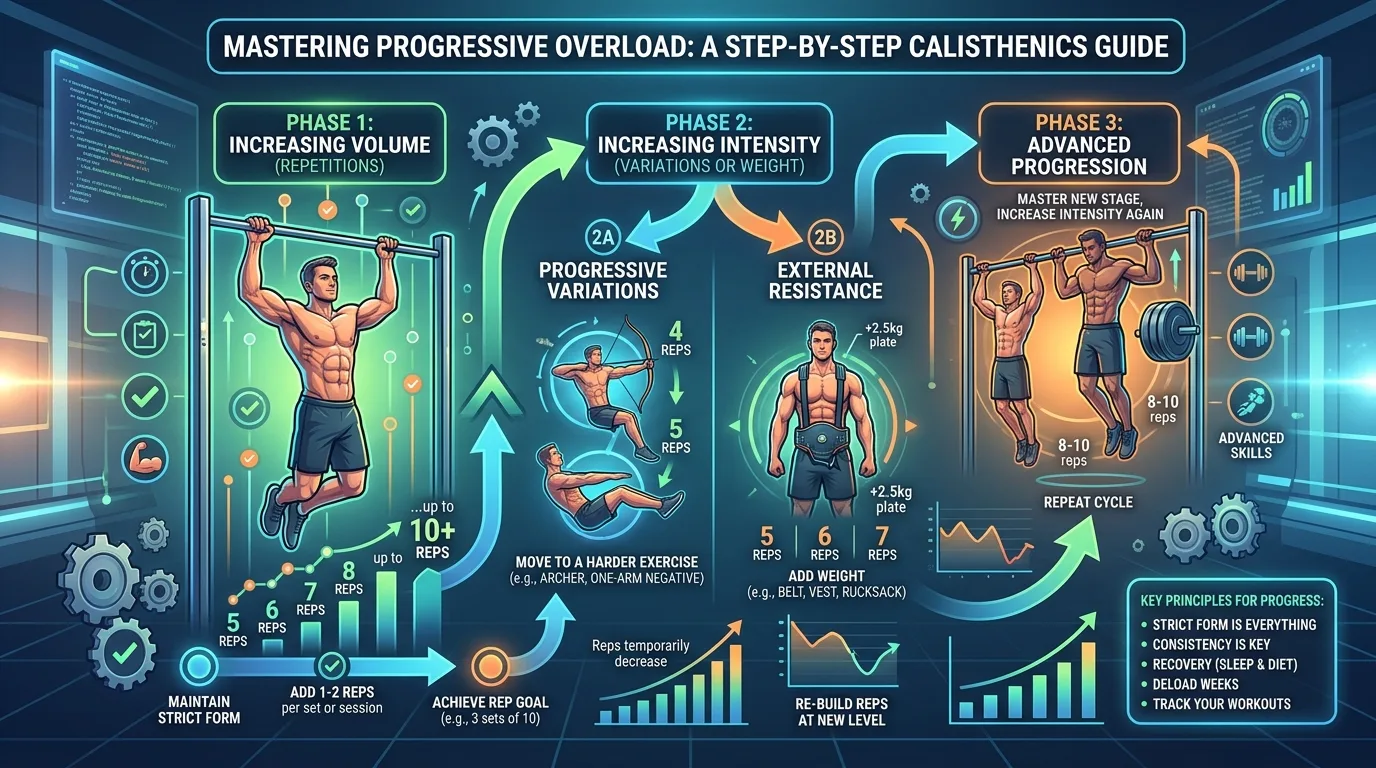
Progressive overload refers to the gradual increase in weight or resistance used in exercises over time to continue making gains in strength and muscle mass. This concept is crucial for athletes, especially those who rely on calisthenics as their primary form of exercise. By progressively increasing the intensity of your workouts, you'll be able to push past plateaus and achieve new heights.
In simple terms, progressive overload means challenging yourself more with each workout session by doing more reps, sets, or weight than before. It's a gradual process that requires patience and consistency to see results. For example, if you're doing 10 push-ups and can't do any more, you might start by adding one or two more reps to your next workout. Over time, this will help you build strength and muscle mass.
Benefits of Progressive Overload
So, why is progressive overload so important? Here are some benefits that you can expect from incorporating it into your training:
Increased Muscle Mass: As you continue to challenge yourself with heavier weights or more difficult exercises, your muscles will adapt by growing stronger and larger. When you increase the weight or resistance, your muscles need to work harder to lift it, which leads to increased muscle mass.
Improved Strength: The ability to lift heavier weights or perform more reps is a direct result of progressive overload. This increased strength can translate to everyday activities, sports, and even mental performance. For instance, if you're a athlete who relies on calisthenics for training, progressive overload will help you improve your performance in games and competitions.
Injury Prevention: Gradually increasing the intensity of your workouts reduces the risk of injury. By allowing your muscles and tendons to adapt, you'll be less likely to experience overuse or acute injuries. When you gradually increase the weight or resistance, your body has time to adjust and become stronger, reducing the risk of injury.
How to Apply Progressive Overload in Calisthenics
Now that we've covered the benefits of progressive overload, let's dive into how you can apply it to your bodyweight training:
Increase Repetitions: As you get stronger, aim to increase the number of repetitions you complete for each exercise. For example, if you're doing 10 push-ups, try increasing it to 12 or 15 over time.
+ Start by adding one or two more reps to your workout and gradually increase the number as you build strength.
Decrease Rest Time: Reduce the amount of rest between sets and exercises to increase the overall intensity of your workout. This will help you build endurance and get more out of each session.
+ Begin by reducing the rest time by 10-15 seconds between sets, then gradually decrease it as you become more comfortable with the new pace.
Increase Sets: Add more sets to your routine to continue challenging yourself. For example, if you're doing 3 sets of squats, try adding a fourth set with a higher weight or difficulty level.
+ Start by adding one more set to your workout and gradually increase the number as you build strength.
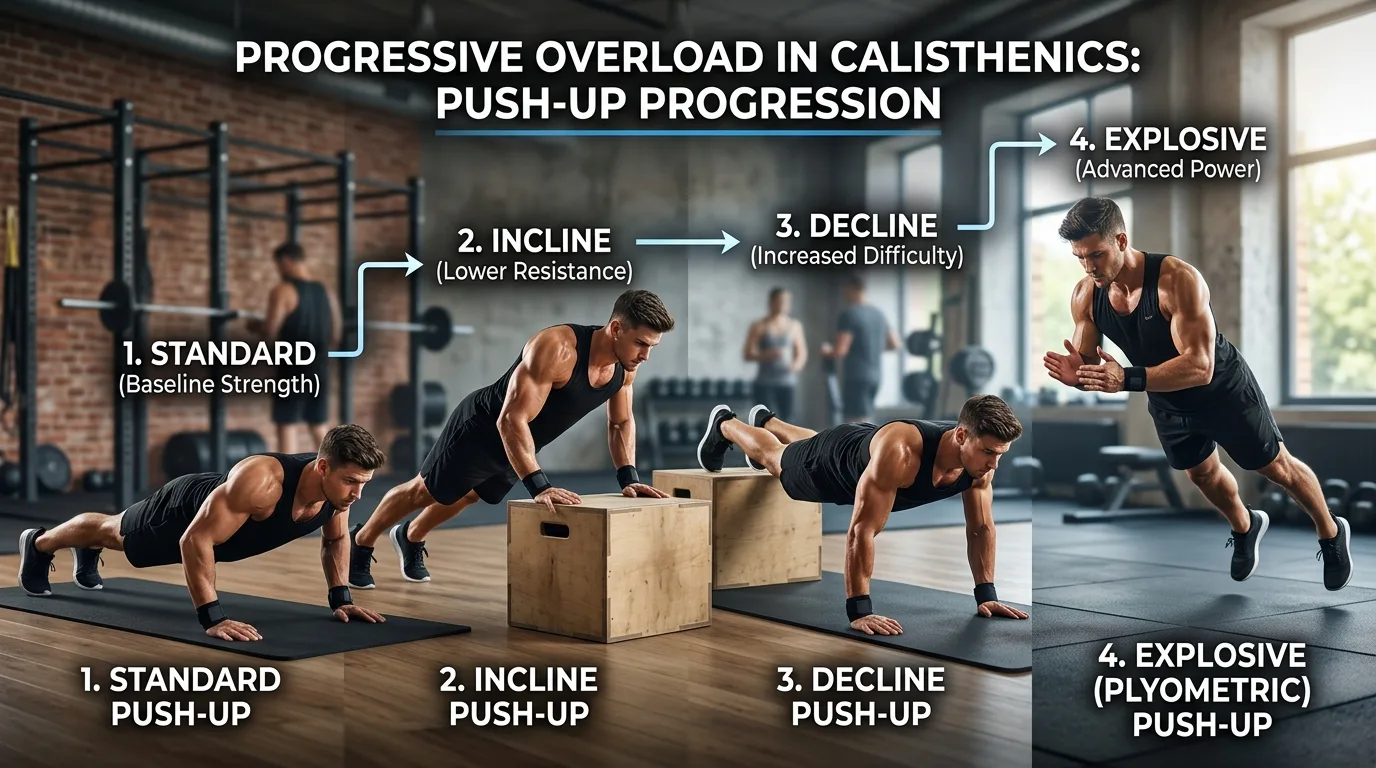
Progressive Increase in Difficulty: Gradually increase the difficulty of exercises by changing hand positions (e.g., from diamond to wide-grip push-ups), increasing depth, or adding explosive movements.
+ Begin by making small adjustments, such as changing hand positions or increasing depth, and gradually increase the difficulty level as you become more comfortable.
Implementing Progressive Overload in Your Workout Routine
Here's an example of how you can incorporate progressive overload into your workout routine:
Warm-up and Stretch: Begin with a dynamic warm-up and static stretches for major muscle groups.
Monday (Upper Body): Start with 3 sets of push-ups, then increase to 4 sets as you get stronger. After 2-3 weeks, try diamond push-ups or add a clap between reps.
+ Remember to start with a manageable number of sets and gradually increase it over time.
Wednesday (Lower Body): Begin with 3 sets of squats, then increase to 4 sets. As you get stronger, aim for single-leg squats or try adding explosive movements like box jumps.
Common Pitfalls and Solutions
One common mistake when implementing progressive overload is not giving your body enough time to adapt. Make sure to:
Listen to Your Body: Pay attention to your muscles and take rest days as needed.
+ If you're feeling fatigued or experiencing muscle soreness, it's a sign that your body needs more time to recover.
Increase the Weight Gradually: Avoid making sudden changes in weight or resistance, as this can lead to injury. Instead, gradually increase the weight over several workouts.
Conclusion
Progressive overload is a powerful tool for building strength and muscle mass through calisthenics. By incorporating it into your workout routine, you'll be able to challenge yourself more effectively and achieve your fitness goals faster. Remember to start with small changes and gradually increase the intensity of your workouts over time. With patience and consistency, you can unlock the full potential of progressive overload and take your fitness journey to the next level.
This Article was made with AI assistance and human editing.