

Understanding Time-Restricted Eating and Metabolic Health
As humans, we've been conditioned to believe that eating is a necessary evil – something we need to do frequently throughout the day to maintain our energy levels. However, research has shown that the timing of our meals can have a significant impact on our metabolic health. Enter time-restricted eating (TRE), also known as 16/8, which has gained popularity in recent years due to its potential benefits for weight loss and improved glucose regulation.
What is Time-Restricted Eating?
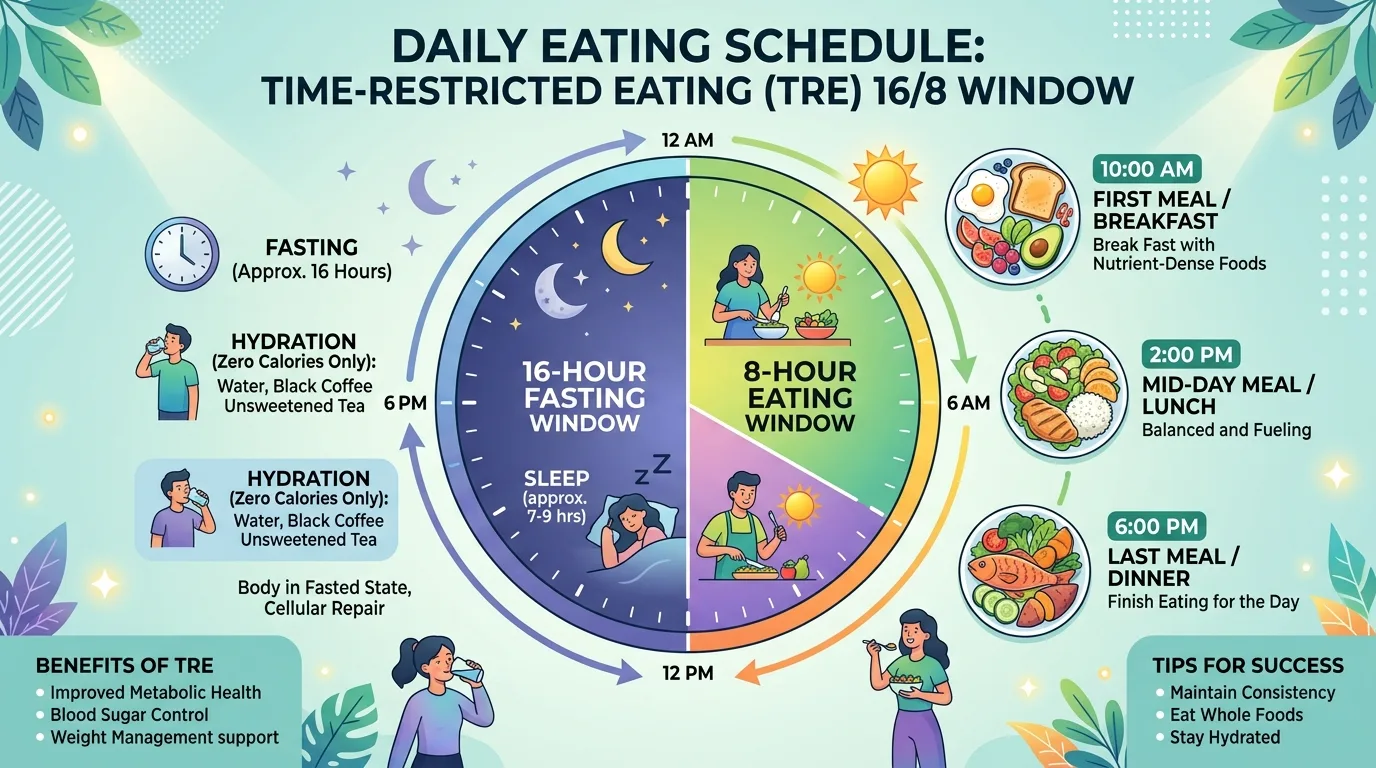
Time-restricted eating involves restricting food intake to a certain window of time each day. This means that you eat all meals within an 8-hour period, and then fast or abstain from food for the remaining 16 hours. The most common implementation of TRE is the 16/8 method, where you eat between 10am and 6pm, for example.
To put this into perspective, consider a typical day. If you wake up at 7am and go to bed at 11pm, your eating window would be from 12pm to 8pm. This allows for three meals and one or two snacks, depending on individual needs. The key is to restrict food intake to this shorter period, allowing the body to adapt and regulate its metabolic cycles.
How Does Time-Restricted Eating Work?
The concept of time-restricted eating has its roots in the study of circadian rhythms and the body's natural metabolic cycles. Research has shown that our bodies have an innate ability to regulate metabolism based on feeding schedules. When we eat within a certain window, the body adapts by increasing insulin sensitivity and reducing inflammation.
Benefits for Metabolic Health
Time-restricted eating can have several key benefits:
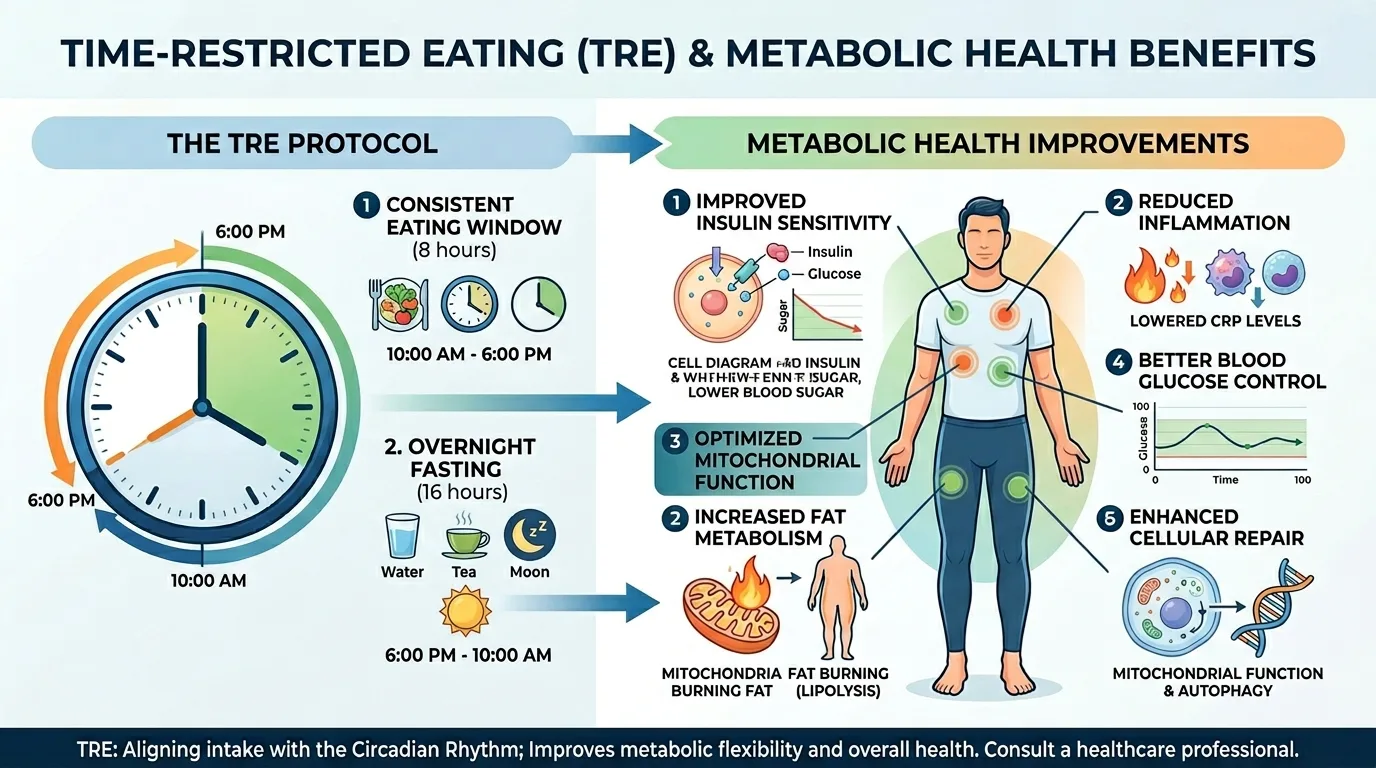
Improved Insulin Sensitivity: Restricting food intake to a shorter period allows the body to better regulate blood sugar levels. This can lead to improved insulin sensitivity and reduced risk of developing type 2 diabetes.
Increased Human Growth Hormone (HGH) Production: Fasting has been shown to stimulate HGH production, which plays a crucial role in regulating metabolism, growth, and development.
Enhanced Autophagy: Time-restricted eating can stimulate autophagy, a natural process where the body breaks down damaged cells and proteins. This can help maintain cellular health and reduce oxidative stress.
Weight Loss: Restrictive eating patterns have been shown to lead to weight loss in some individuals.
How to Implement Time-Restricted Eating
Implementing time-restricted eating requires patience, discipline, and commitment. Here are some tips to get started:
1. Start by identifying your eating window and sticking to it. 2. Focus on nutrient-dense foods that keep you full for longer periods. 3. Avoid snacking between meals and try to eat only during your designated eating window. 4. Listen to your body and adjust your eating schedule as needed.
Common Challenges and Solutions
When starting time-restricted eating, some common challenges include:
Hunger and cravings: Try to eat nutrient-dense foods that keep you full for longer periods.
Social pressures: Find healthy alternatives, such as sharing meals or cooking together.
By being aware of these common challenges and having a plan in place, we can successfully implement time-restricted eating into our daily routine.
Examples of Time-Restricted Eating Windows
For example, if you typically wake up at 7am and go to bed at 11pm, your eating window could be from 12pm to 8pm. This allows for three meals and one or two snacks, depending on individual needs.
Step-by-Step Guide to Implementing Time-Restricted Eating
1. Identify your eating window and stick to it. 2. Plan out your meals in advance to ensure you're getting the nutrients you need. 3. Start with a small window (e.g., 12 hours) and gradually increase as needed. 4. Listen to your body and adjust your schedule as needed.
Tips for Sticking to Time-Restricted Eating
Drink plenty of water throughout the day to stay hydrated.
Get enough sleep each night to help regulate metabolism.
Avoid screens before bedtime to promote better sleep.
Find healthy ways to cope with hunger and cravings, such as taking a walk or practicing deep breathing.
Conclusion
Time-restricted eating is a dietary approach that involves restricting food intake to a certain window of time each day. While it may have several benefits for metabolic health, including improved insulin sensitivity, increased HGH production, enhanced autophagy, and weight loss, its effectiveness can vary from person to person. To get started with time-restricted eating, try identifying your eating window and sticking to it, focusing on nutrient-dense foods, avoiding snacking between meals, and listening to your body.
By making this change, we can improve our overall health and well-being, reducing the risk of chronic diseases like type 2 diabetes and heart disease. It's essential to remember that time-restricted eating is not a quick fix but rather a long-term commitment to adopting healthier habits.
Frequently Asked Questions
Q: How often should I eat during my eating window?
A: Aim for three meals and one or two snacks, depending on individual needs.
Q: Can I still exercise during the fasting period?
A: Yes, but it's essential to listen to your body and adjust your schedule as needed.
Q: How long does it take to see results from time-restricted eating?
A: Results can vary, but most people start seeing improvements in insulin sensitivity and weight loss within 2-4 weeks.
By understanding the benefits and challenges of time-restricted eating, we can make informed decisions about our dietary habits and promote overall health and well-being.
This Article was made with AI assistance and human editing.