

The SAT math section can be a daunting task, especially when it comes to managing time effectively. With a strict 80-minute time limit and 54 questions to answer, students often find themselves scrambling to complete the section in time. However, with the right strategies and techniques, it's possible to improve your scores and achieve success on this critical exam.
Understanding the SAT Math Section
Before diving into specific strategies, it's essential to understand the format and content of the SAT math section. The test consists of two main parts: multiple-choice questions and grid-in questions. Multiple-choice questions are designed to assess your knowledge and understanding of mathematical concepts, while grid-in questions require you to solve problems and provide numerical answers.
To improve your scores, it's crucial to understand how to allocate time effectively between these two types of questions. Typically, students spend more time on multiple-choice questions, as they often have more options to choose from. However, grid-in questions can be just as challenging, requiring careful attention to detail and a strong understanding of mathematical concepts.
Why Time Management is Critical
Time management is critical in the SAT math section because it allows you to complete all the questions within the given time limit. If you spend too much time on one question, you may not have enough time to answer the remaining questions accurately. Effective time management also helps reduce stress levels and improves your overall performance.
Time Management Strategies
Effective time management is the key to success in the SAT math section. Here are some essential strategies to help you stay on track:
Create a Time Plan
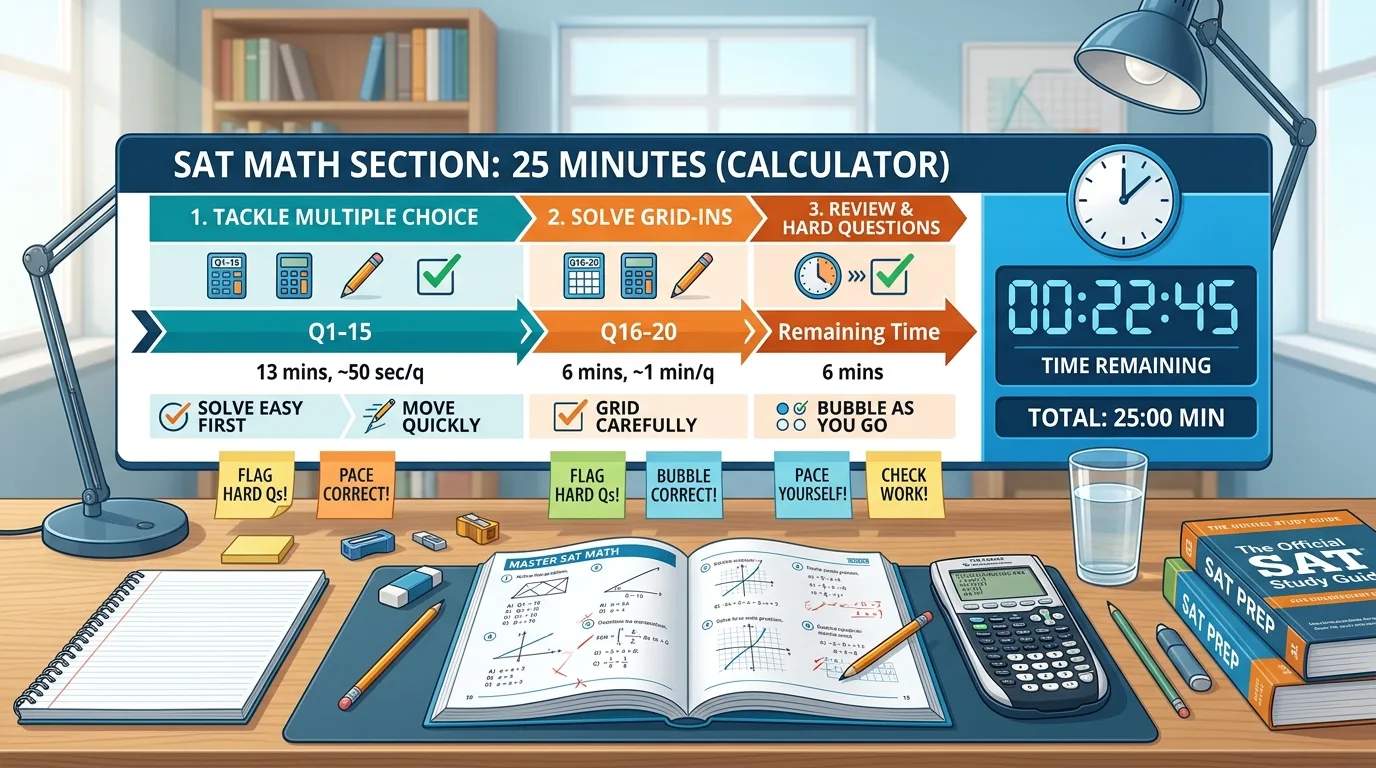
Before starting the test, allocate specific times for each type of question. For example, you might dedicate 20 minutes to multiple-choice questions and 15 minutes to grid-in questions. This will help you stay focused and ensure that you have enough time to complete all the questions.
Prioritize Questions
Focus on completing the easiest questions first, as this will help build momentum and reduce stress levels. By completing the easier questions first, you'll be able to clear your mind and tackle the more challenging questions with a fresh perspective.
Use the Process of Elimination
When faced with a difficult question, eliminate any obviously incorrect options before making an educated guess or providing a numerical answer. This will help you narrow down your choices and increase your chances of selecting the correct answer.

Techniques for Improving Speed
Speed is critical in the SAT math section, as slow performance can lead to missed questions and reduced scores. Here are some techniques to help you improve your speed:
Practice Mental Math
Develop mental math skills by practicing simple arithmetic operations, such as multiplication tables or basic algebra. This will help you perform calculations quickly and accurately, saving you time during the test.
Use Estimation Techniques
Learn how to estimate answers quickly, especially for multiple-choice questions. This can save valuable time and reduce stress levels. By estimating answers, you'll be able to eliminate incorrect options and make an informed decision about your choice.
Streamline Your Work
Minimize unnecessary calculations and focus on the most critical steps required to solve each problem. This will help you complete questions quickly and accurately, improving your overall performance.
Strategies for Managing Distractions
Distractions are a common challenge in timed exams, particularly when faced with a tight deadline. Here are some strategies to help you stay focused:
Develop a Pre-Test Routine
Establish a consistent pre-test routine to help you relax and focus before the exam. This could include activities such as meditation, deep breathing, or reading.
Use Positive Self-Talk
Encourage yourself with positive affirmations, reminding yourself of your preparation and skills. This will help boost your confidence and stay motivated throughout the test.
Minimize Breaks
Limit breaks during the test, as these can disrupt momentum and reduce scores. By staying focused and minimizing distractions, you'll be able to complete all the questions within the given time limit.
Putting it All Together
To achieve success in the SAT math section, it's essential to combine effective time management strategies with techniques for improving speed and managing distractions. Here are some key takeaways:
Practice Regularly: Regular practice is critical for developing the skills and confidence needed to succeed on the SAT.
Stay Focused: Maintain a consistent focus throughout the test, avoiding distractions and staying committed to your time plan.
Review and Reflect: After completing each section, review your performance and reflect on areas for improvement.
Conclusion
Improving your scores in the SAT math section requires a combination of effective time management strategies, techniques for improving speed, and skills for managing distractions. By following these key strategies and staying focused throughout the test, you'll be well on your way to achieving success on this critical exam. Remember to practice regularly, stay positive, and review your performance to continually improve.
By mastering SAT math timing drills, you'll not only achieve better scores but also build confidence in your mathematical abilities. With persistence and dedication, you can overcome the challenges of the SAT math section and unlock your full potential.
This Article was made with AI assistance and human editing.