

The Stoic Influence on Modern Leadership Decisions
In today's fast-paced and ever-changing business world, leaders face numerous challenges that require them to make informed decisions quickly. Among various philosophies and management theories, Stoicism has emerged as a significant influence in shaping modern leadership decisions. By applying the principles of Stoicism, leaders can develop a more resilient mindset, improve their decision-making skills, and create a positive impact on their organizations.
In this article, we will explore how Stoicism relates to modern leadership, examine its benefits in decision-making, and provide practical examples to help leaders integrate these principles into their daily operations.
Understanding Stoicism
Stoicism is an ancient Greek philosophy that emphasizes reason, self-control, and inner strength. It was founded by Zeno of Citium in the 3rd century BC and has since influenced some of the most prominent thinkers in history, including Epictetus, Seneca, and Marcus Aurelius.
At its core, Stoicism teaches individuals to focus on things within their control, accept what they cannot change, and cultivate a sense of inner strength through self-discipline. This philosophy is centered around three main tenets:
Virtue: Living in accordance with reason and virtue
Virtue can be achieved by developing habits and practices that align with one's values and principles. Leaders who embody virtue are more likely to make decisions that benefit their organizations and stakeholders.
Reason: Using reason to understand the world and make decisions
Reason involves analyzing information, considering different perspectives, and making informed choices. Leaders who use reason effectively can navigate complex situations and make better decisions.
Indifference to external events: Accepting things beyond one's control with equanimity
This principle involves recognizing that some events are outside of one's control and focusing on what can be changed. Leaders who practice indifference to external events can maintain their composure under pressure and respond more effectively to challenges.
Applying Stoicism in Modern Leadership

While Stoicism originated as a philosophical framework for personal development, its principles can be applied to modern leadership in various ways. Here are some key benefits of applying Stoic principles in decision-making:
Improved resilience: By focusing on things within their control and accepting what they cannot change, leaders can develop greater resilience in the face of challenges and setbacks.
Resilience enables leaders to bounce back from failures and adapt to changing circumstances. Leaders who are resilient can make better decisions under pressure and maintain a positive impact on their organizations.
Better decision-making: Stoicism encourages leaders to use reason and logic when making decisions, rather than relying on emotions or personal biases.
Decision-making involves weighing options, considering different perspectives, and choosing the best course of action. Leaders who make better decisions can achieve their goals more effectively and create a positive impact on their organizations.
Increased self-awareness: By cultivating a sense of inner strength and self-discipline, leaders can better understand their own strengths, weaknesses, and motivations.
Self-awareness involves recognizing one's values, principles, and limitations. Leaders who are self-aware can make more informed decisions and develop a stronger sense of purpose.
Key Features of Stoic Leadership
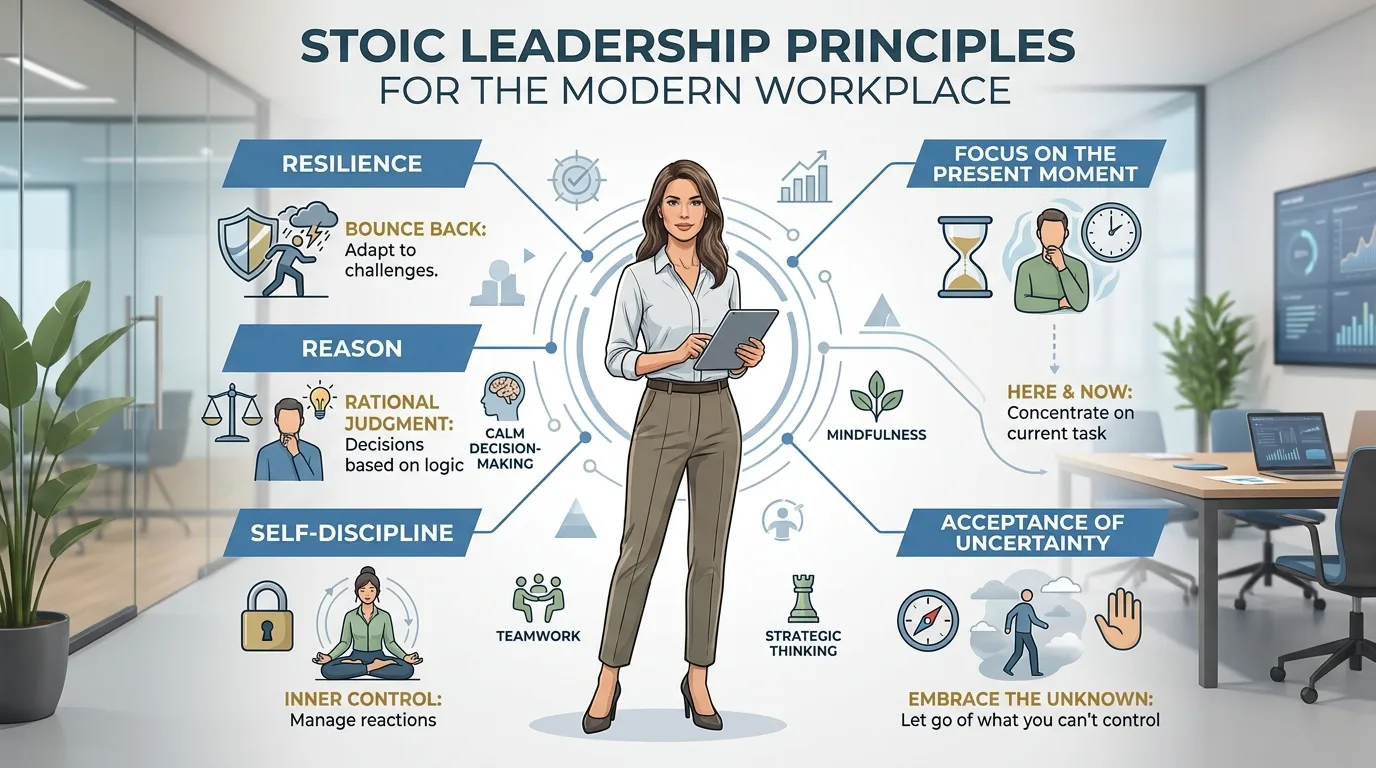
Stoic leadership is characterized by several key features, including:
Focus on the present moment: Stoic leaders prioritize the present moment over past regrets or future worries.
Focus on the present involves letting go of distractions and staying focused on what needs to be done. Leaders who focus on the present can make more effective decisions and achieve their goals more efficiently.
Acceptance of uncertainty: They accept that some things are outside their control and focus on what they can change.
Accepting uncertainty involves recognizing that some events are beyond one's control. Leaders who accept uncertainty can maintain their composure under pressure and respond more effectively to challenges.
Emphasis on inner strength: Stoic leaders cultivate a sense of inner strength through self-discipline, reason, and virtue.
Inner strength involves developing habits and practices that align with one's values and principles. Leaders who embody inner strength can make better decisions and achieve their goals more effectively.
Practical Applications of Stoicism in Leadership
While Stoicism may seem like an abstract philosophical framework, its principles can be applied to real-world leadership challenges. Here are some practical examples:
Crisis management: During times of crisis, Stoic leaders remain calm and focused on the present moment, using reason and logic to make informed decisions.
Crisis management involves staying calm under pressure and responding effectively to changing circumstances. Leaders who practice crisis management can maintain their composure and make better decisions during difficult times.
Communication: Stoic leaders communicate clearly and effectively with their teams, stakeholders, and customers.
Communication involves sharing information, listening actively, and building trust with others. Leaders who communicate effectively can build strong relationships and achieve their goals more efficiently.
Integrating Stoicism into Leadership Practice
To integrate Stoicism into leadership practice, leaders can start by:
1. Reflecting on their values and principles: Identify what is most important to you as a leader, and let those values guide your decisions.
2. Developing habits of self-discipline: Cultivate habits that align with your values and principles, such as regular exercise or meditation.
3. Practicing mindfulness: Focus on the present moment, letting go of distractions and staying focused on what needs to be done.
4. Embracing uncertainty: Recognize that some events are outside of one's control and focus on what can be changed.
By integrating Stoicism into their leadership practice, leaders can develop a more resilient mindset, improve their decision-making skills, and create a positive impact on their organizations.
This Article was made with AI assistance and human editing.