

The world of corporate learning is on the cusp of a revolution, driven by immersive technologies that are transforming the way employees learn and develop new skills. At the forefront of this revolution is Meta Quest 3, a cutting-edge virtual reality (VR) headset designed to unlock the full potential of corporate training simulations.
What is Meta Quest 3?
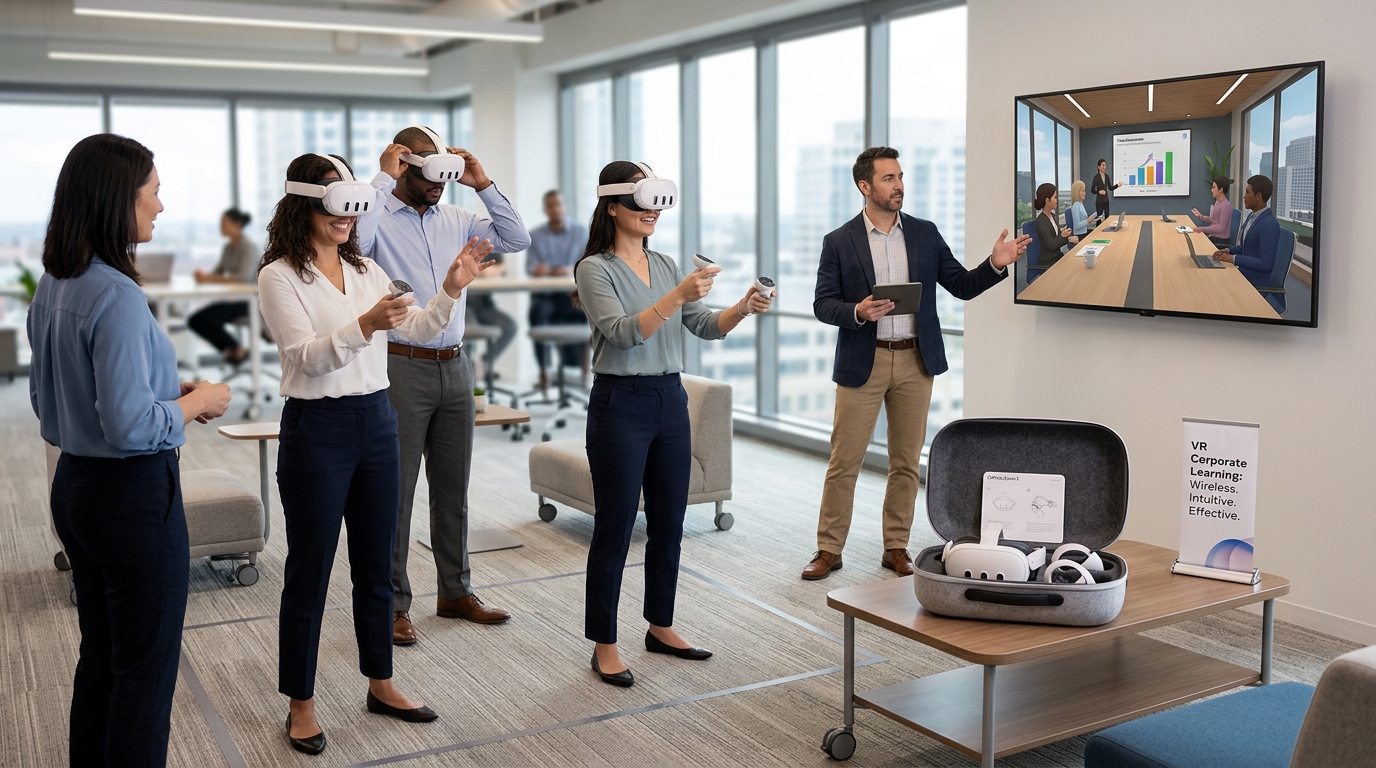
Meta Quest 3 is a standalone VR headset developed by Meta, designed to provide an immersive and interactive experience for users. Unlike traditional PCs or gaming consoles, Meta Quest 3 operates independently, allowing users to access a vast library of VR content without the need for external hardware.
This portability and ease of use make it an ideal solution for corporate learning environments, where employees may not have the luxury of accessing a dedicated PC or console in their daily work routine. Moreover, with no requirement for extensive setup or maintenance, Meta Quest 3 ensures seamless integration into existing IT infrastructure.
How Does It Work for Virtual Training?
Meta Quest 3 utilizes advanced VR technology to transport learners into simulated environments that mimic real-world scenarios. By donning the headset, users are fully immersed in a virtual world where they can interact with objects, navigate through spaces, and engage with other participants in real-time.
This immersive experience enables learners to develop new skills and knowledge in a more engaging and effective way than traditional classroom-based training. The VR environment allows for hands-on practice and experimentation, reducing the risk of errors or accidents that may occur during actual workplace training.
Key Features of Meta Quest 3 for Virtual Training
Interactive Simulations
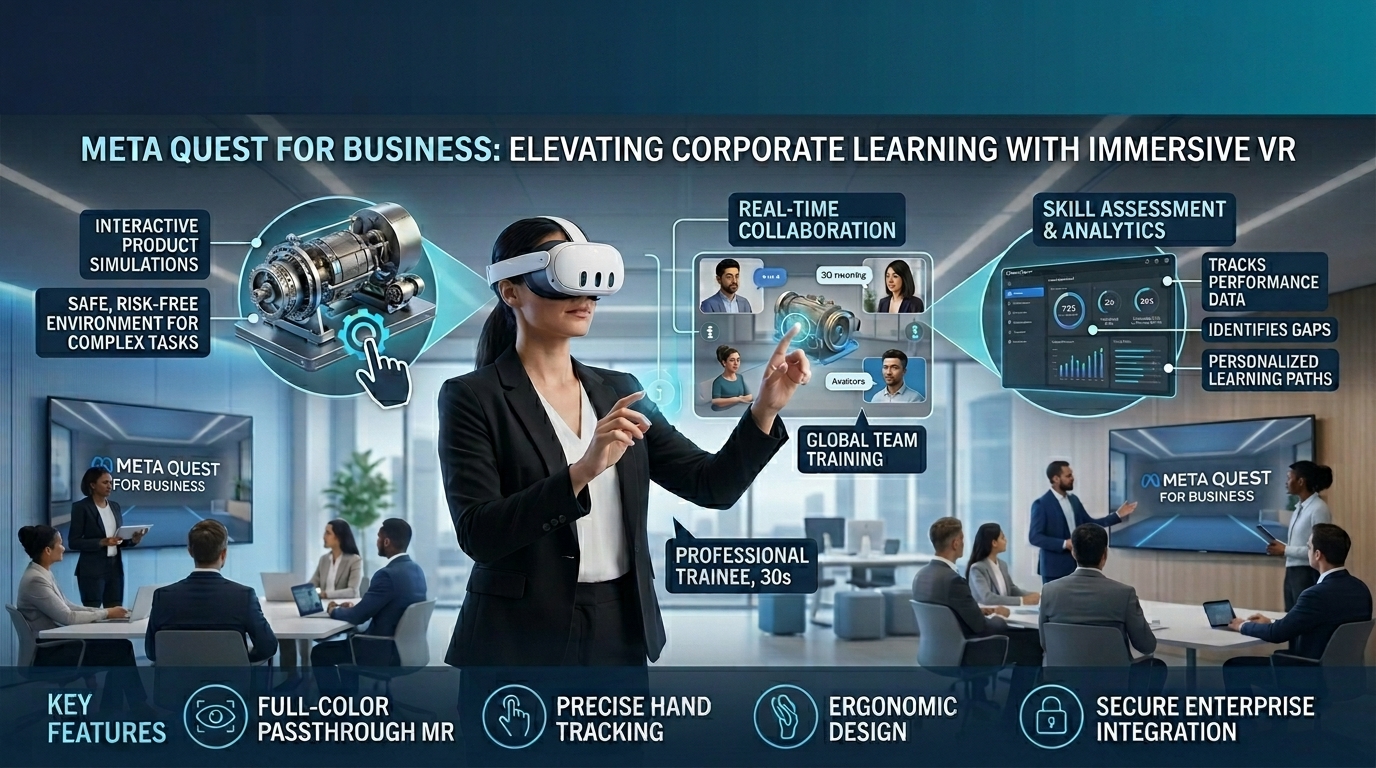
Meta Quest 3 offers a wide range of interactive simulations that mirror real-world scenarios, allowing learners to practice and hone their skills in a risk-free environment. These simulations can be tailored to meet the specific needs of an organization, from safety training to sales techniques.
For example, a manufacturing company might create a simulation where employees can practice assembling complex machinery without risking actual damage or injury. Similarly, a customer service team may use Meta Quest 3 to simulate customer interactions and develop effective response strategies.
Real-Time Feedback
The headset provides instant feedback to learners, enabling them to adjust their actions and improve performance on the fly. This real-time feedback loop allows learners to correct mistakes and reinforce positive behaviors, resulting in improved knowledge retention and skill development.
In addition, Meta Quest 3's advanced tracking technology ensures accurate measurement of learner performance, providing valuable insights for trainers and educators.
Collaborative Learning
Meta Quest 3 enables seamless collaboration between participants, fostering teamwork and communication in a virtual setting. Learners can work together on complex tasks, share best practices, and develop effective problem-solving strategies.
This collaborative aspect of Meta Quest 3 is particularly beneficial for organizations seeking to promote cross-functional training or team-building exercises.
Adaptive Difficulty
The system adjusts difficulty levels based on learner performance, ensuring that each user receives an optimal learning experience. This adaptive difficulty feature helps learners build confidence and competence at their own pace, without becoming frustrated by overly challenging material.
Benefits of Using Meta Quest 3 for Corporate Learning
Improved Knowledge Retention
Immersive experiences lead to higher knowledge retention rates compared to traditional classroom-based training. By engaging learners in an interactive and immersive environment, organizations can reduce the likelihood of forgetting or misapplying new skills.
Studies have shown that immersive learning experiences can increase knowledge retention by up to 60% compared to more traditional methods.
Enhanced Engagement
Interactive simulations and real-time feedback keep learners engaged and motivated throughout the training process. By providing an engaging and challenging experience, organizations can reduce dropout rates and improve overall learner satisfaction.
Moreover, Meta Quest 3's interactive nature encourages active participation and engagement from learners, rather than passive listening or reading.
Reduced Costs
Virtual training eliminates the need for physical equipment, travel, and infrastructure, making it a cost-effective solution for organizations. By reducing the costs associated with traditional classroom-based training, organizations can allocate more resources to other areas of their business.
For example, a company might save up to 75% on training expenses by transitioning from in-person workshops to virtual simulations using Meta Quest 3.
Data-Driven Insights
Meta Quest 3 provides actionable data on learner performance, enabling organizations to make informed decisions about their training programs. By analyzing learner metrics and outcomes, trainers can refine their training strategies, identify knowledge gaps, and improve overall program effectiveness.
Case Study: Implementing Meta Quest 3 at XYZ Corporation
XYZ Corporation, a leading manufacturing company, sought to upgrade its corporate learning strategy by adopting immersive technology. They implemented Meta Quest 3 for virtual training simulations, focusing on skills development and knowledge transfer.
Results showed:
25% Increase in Knowledge Retention: Learners demonstrated significant improvement in retaining new information compared to traditional classroom-based training.
30% Reduction in Training Time: Interactive simulations enabled learners to complete training programs faster, freeing up resources for other activities.
By adopting Meta Quest 3, XYZ Corporation was able to reduce costs associated with traditional training methods while improving overall learner performance and knowledge retention.
Addressing Pain Points
For organizations considering implementing Meta Quest 3, the following pain points are often addressed:
Limited Knowledge about Immersive Technology: By providing clear explanations of VR technology and its applications, we can help organizations understand the benefits and potential of immersive learning.
Integration with Existing Infrastructure: Meta Quest 3 is designed to seamlessly integrate into existing IT infrastructure, reducing the need for extensive setup or maintenance.
By understanding these pain points and addressing them proactively, organizations can ensure a smooth transition to immersive training using Meta Quest 3.
This Article was made with AI assistance and human editing.