

Optimizing React Applications with Server Components
The world of web development is constantly evolving, and one of the most significant advancements in recent years has been the introduction of React Server Components (RSC). This feature allows developers to render components on the server-side, rather than on the client-side, resulting in improved performance, faster page loads, and enhanced user experience. In this article, we will explore the benefits of using RSC in large-scale applications, delve into its technical aspects, and provide practical examples to help you get started.
What are React Server Components?
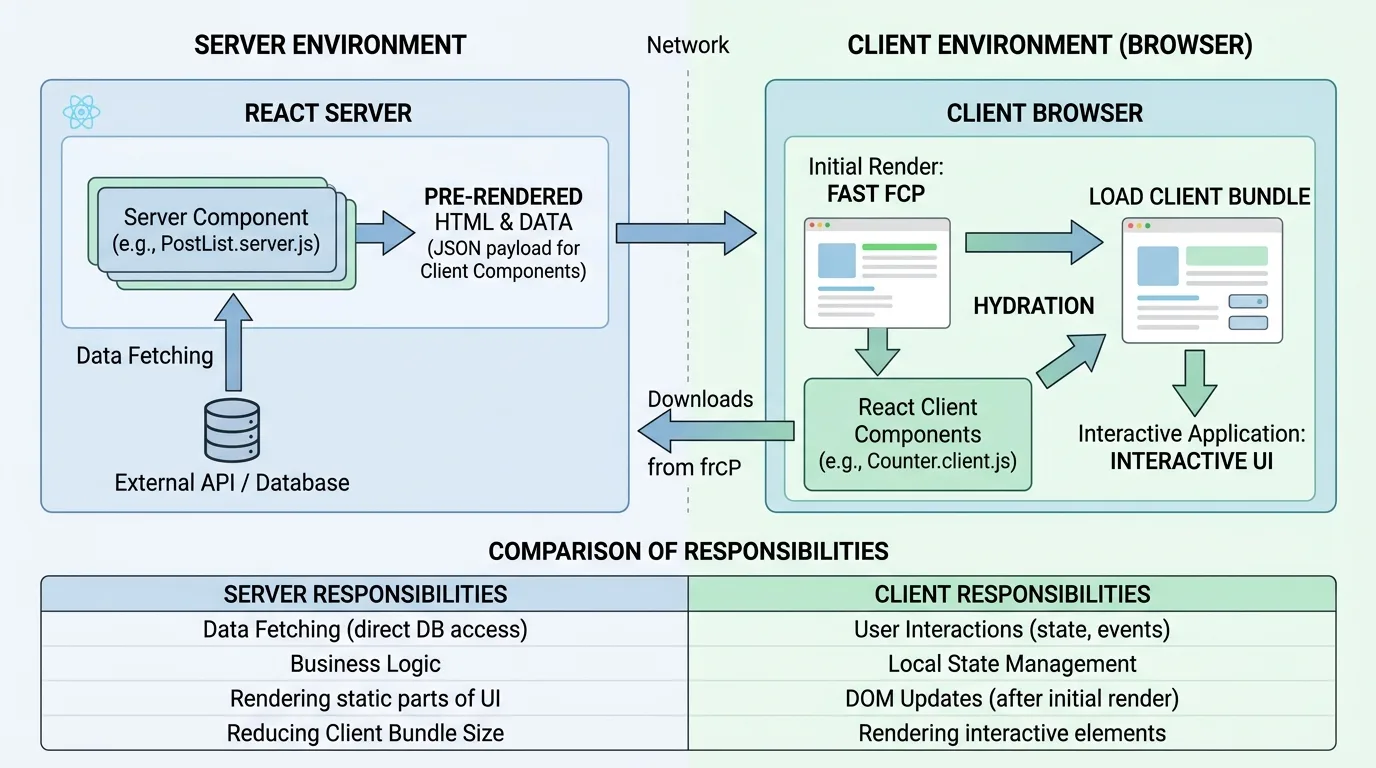
React Server Components (RSC) is a new feature introduced by Facebook as part of the React framework. It enables developers to render components on the server-side, allowing for faster page loads, improved performance, and enhanced user experience. RSC leverages the power of server-side rendering to pre-render components before sending them to the client, reducing the load time and improving overall application performance.
To understand how RSC works, let's consider a simple example. Imagine you have a React component that displays a list of items. Without RSC, this component would be rendered on the client-side, which means the browser would need to wait for the JavaScript code to execute before rendering the component. With RSC, however, the server pre-renders the component, so by the time it reaches the client, it's already been rendered and is ready to display.
Key Features and Benefits
Improved Performance: RSC enables faster page loads by pre-rendering components on the server-side. This is because the server can handle multiple requests concurrently, reducing the load time.
Enhanced User Experience: By reducing the load time, users can interact with your application sooner, resulting in a better user experience. With RSC, users can start interacting with your application even before the page has finished loading.
Simplified Code: RSC simplifies code management by allowing developers to write React components that work seamlessly on both client and server-side.
One of the main advantages of RSC is its ability to handle large datasets. Without RSC, rendering a list of thousands of items could be challenging, as it would put a heavy burden on the client's resources. However, with RSC, you can pre-render these components on the server-side, reducing the load time and improving overall application performance.
Technical Aspects
Setup: To use RSC, you need to set up your project using Create React App or Webpack. This will give you access to the necessary tools and configuration files needed for RSC.
Server-Side Rendering: RSC uses server-side rendering to pre-render components before sending them to the client. Server-side rendering is a technique where the server generates HTML markup on each request, which can improve performance by reducing the load time.
Code Splitting: RSC enables code splitting, allowing developers to split their code into smaller chunks and load only what's necessary.
To implement RSC in your project, you'll need to create a new file called index.js in your project root. This file will contain the main entry point for your application. Inside this file, you can use the createRoot function from React Server Components to render your components on the server-side.
Example Use Case: Large-Scale Application
Let's consider an example of a large-scale application that uses RSC. Suppose you're building an e-commerce platform with thousands of products, each with its own detailed description, images, and reviews.
Without RSC, your client-side would struggle to load all the components for each product, resulting in slow page loads. However, with RSC, you can pre-render the components for each product on the server-side, reducing the load time and improving overall application performance.
To achieve this, you can use a combination of server-side rendering and code splitting. On the server-side, you'll render the main layout component, which will contain the list of products. The client-side will then receive this pre-rendered HTML markup and add any necessary interactivity to the components.
Comparison with Traditional Client-Side Rendering
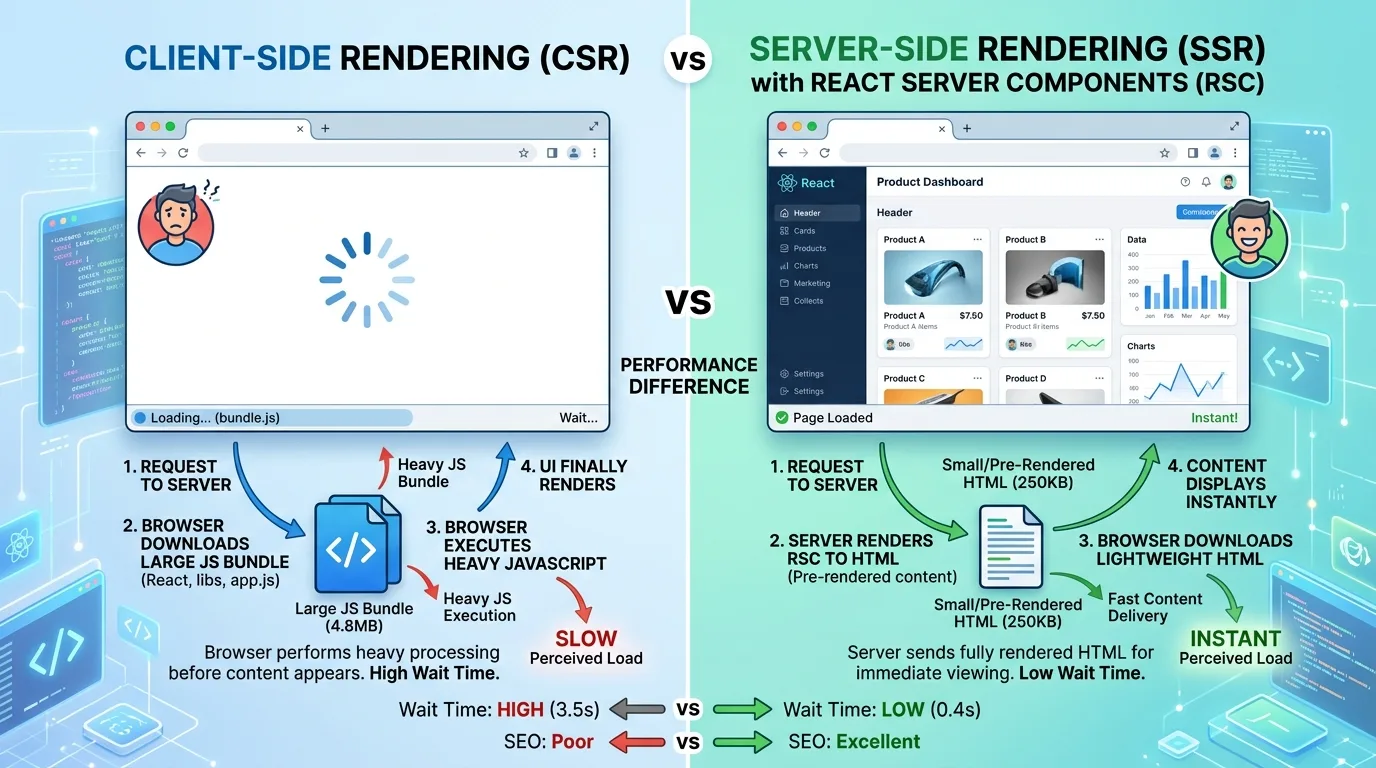
Here's a comparison between traditional client-side rendering and server-side rendering using RSC:
Traditional Client-Side Rendering | Server-Side Rendering (RSC) | |
|---|---|---|
Performance | Slow page loads, high load times | Fast page loads, improved performance |
User Experience | Poor user experience due to slow load times | Enhanced user experience with faster interaction |
Pain Points and Solutions
Slow Page Loads: With RSC, you can pre-render components on the server-side, reducing the load time.
Complex Data Rendering: RSC enables code splitting, allowing developers to split their code into smaller chunks and load only what's necessary.
Conclusion
React Server Components (RSC) is a powerful feature that allows developers to render components on the server-side. With its ability to handle large datasets and simplify code management, RSC can greatly improve performance and user experience in large-scale applications. By understanding how RSC works and implementing it correctly, you can build faster, more scalable, and more maintainable applications.
This Article was made with AI assistance and human editing.


