

Streamlining AutoML Model Deployment with H2O.ai
As data professionals, we've all been there – struggling to deploy machine learning models efficiently and effectively. The process can be cumbersome, involving multiple steps, tedious iterations, and a significant amount of manual effort. However, what if we told you that there's a way to streamline this process using AutoML (Automated Machine Learning) platforms like H2O.ai? In this article, we'll delve into the world of AutoML, explore how H2O.ai can simplify model deployment, and provide practical tips for implementation.
What are AutoML Platforms?
AutoML platforms aim to automate the machine learning process by providing a simple, user-friendly interface that enables data professionals to build, train, and deploy models with minimal effort. These platforms use algorithms and techniques to optimize the model-building process, reducing the need for manual intervention and expertise in complex machine learning concepts.
Definition of AutoML: Automated Machine Learning (AutoML) refers to a set of technologies designed to automate the process of selecting and configuring machine learning algorithms.
Goals of AutoML: The primary goal of AutoML is to reduce the complexity and time required for building, training, and deploying machine learning models.
H2O.ai is one such AutoML platform that has gained significant traction in recent years due to its ease of use, scalability, and flexibility. With H2O.ai, data professionals can build, deploy, and manage AI models at scale, across various industries and applications.
Streamlining Model Deployment with H2O.ai
So, how does H2O.ai help streamline model deployment? Let's take a closer look:
Model Building
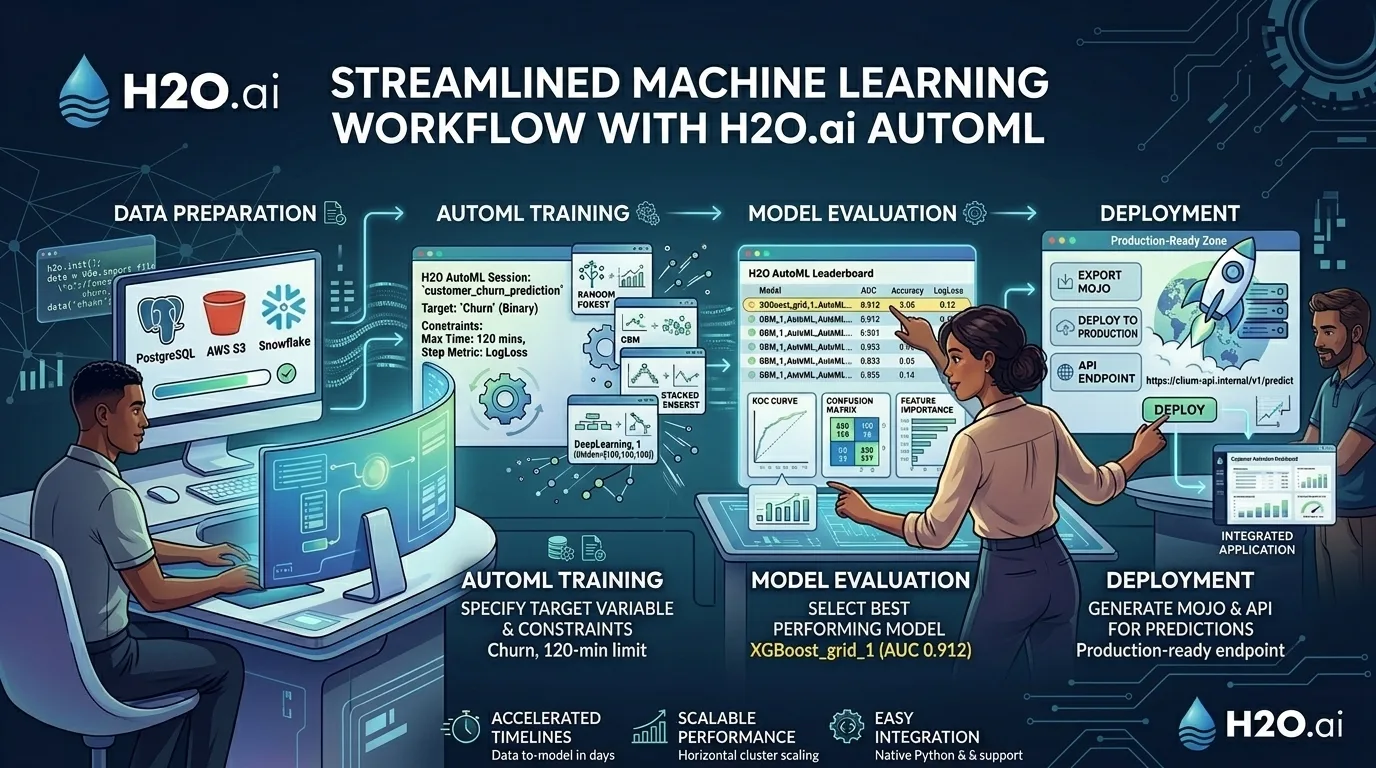
H2O.ai allows users to build models using a simple, web-based interface or through API calls. This eliminates the need for extensive coding knowledge and enables data professionals to focus on data analysis and interpretation.
Step-by-Step Process: To build a model in H2O.ai, follow these steps:
1. Upload your dataset. 2. Select the target variable (dependent variable). 3. Choose the algorithm you want to use. 4. Train the model using a suitable configuration.
Hyperparameter Tuning
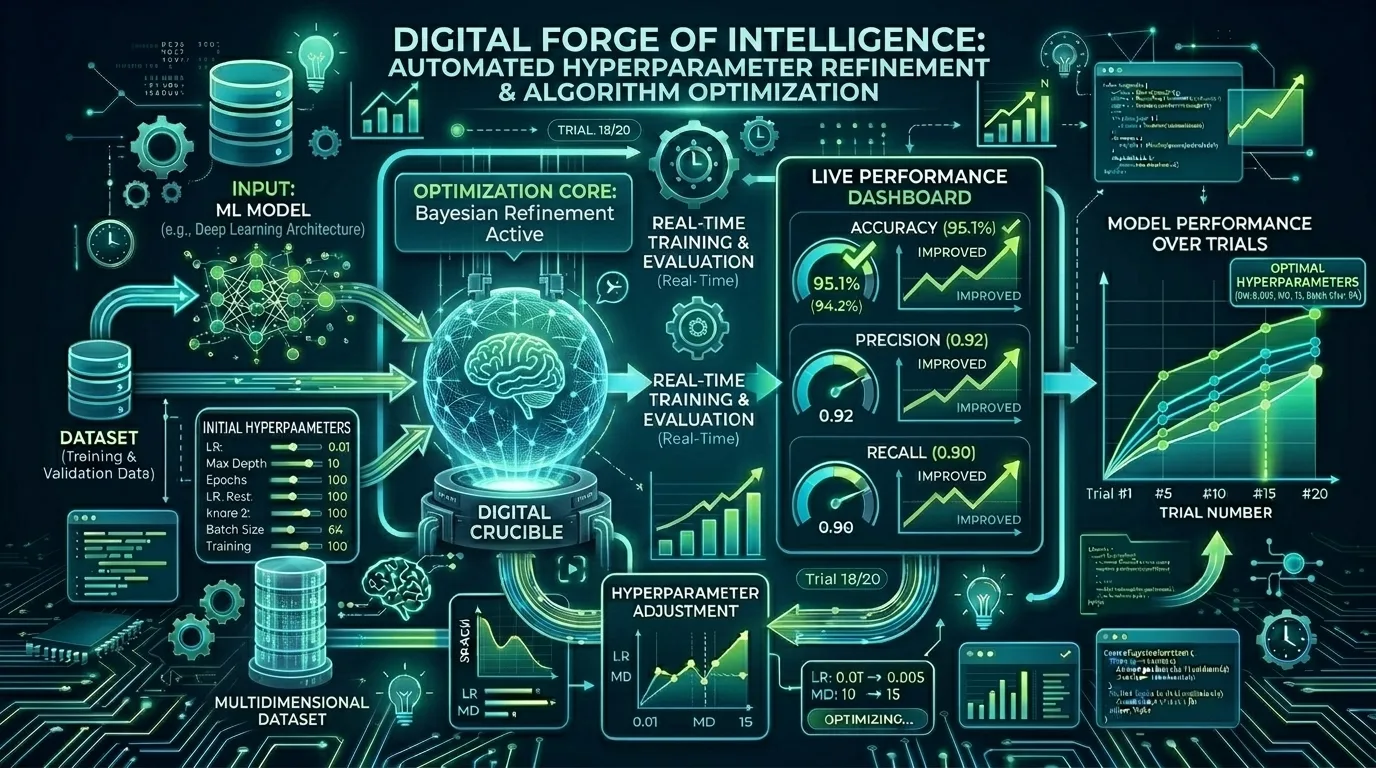
AutoML platforms like H2O.ai use algorithms to optimize hyperparameters, reducing the need for manual tuning and experimentation.
Hyperparameter Tuning Process: The process of hyperparameter tuning involves adjusting the parameters that control the behavior of an algorithm.
Automated Hyperparameter Tuning: Automated hyperparameter tuning is a process where a machine learning model automatically adjusts its hyperparameters based on performance metrics such as accuracy, precision, and recall.
Model Deployment
Once a model is built and trained, H2O.ai provides a range of deployment options, including real-time scoring, batch scoring, and model serving.
Model Serving: Model serving is the process of making machine learning models available for use in production.
Real-Time Scoring: Real-time scoring involves using a machine learning model to make predictions on new data as it arrives.
Batch Scoring: Batch scoring involves using a machine learning model to make predictions on batches of data.
Here are some key features and benefits of using H2O.ai for AutoML:
Key Features and Benefits
H2O.ai offers a range of AutoML algorithms, including decision trees, random forests, and gradient boosting machines. Additionally, it provides collaboration tools that enable multiple users to work together on model development, reducing the need for version control and manual coordination.
AutoML Capabilities: H2O.ai offers a variety of AutoML algorithms, each with its own strengths and weaknesses.
Collaboration Tools: Collaboration tools in H2O.ai enable teams to work together more efficiently, reducing errors and improving productivity.
Scalability: H2O.ai is designed to handle large datasets and complex models, making it an ideal choice for organizations with big data needs.
Real-World Applications of AutoML with H2O.ai
To illustrate the potential of AutoML with H2O.ai, let's consider a real-world example:
Case Study: Predicting Customer Churn
A telecommunications company wanted to predict customer churn using historical data on customer demographics, usage patterns, and service plans. Using H2O.ai, the team built an AutoML model that accurately predicted churn rates and identified key drivers of customer behavior.
The results were impressive:
Improved Accuracy: The AutoML model achieved a 20% improvement in prediction accuracy compared to traditional machine learning models.
Reduced Deployment Time: The team was able to deploy the model in just a few hours, reducing the deployment time from weeks to minutes.
Addressing Reader Pain Points
As we've discussed, one of the primary pain points for data professionals is difficulty in model deployment. H2O.ai addresses this issue by providing an intuitive interface and automation capabilities that simplify the process.
Another common pain point is the need for efficient pipeline management. H2O.ai provides tools to streamline data pipelines and improve collaboration among team members.
Conclusion
AutoML platforms like H2O.ai have revolutionized the way machine learning models are built, trained, and deployed. With its ease of use, scalability, and flexibility, H2O.ai is an ideal choice for organizations looking to streamline their model deployment process. By automating tasks such as hyperparameter tuning and model serving, H2O.ai enables data professionals to focus on higher-level tasks that drive business value.
Future Directions
As the field of AutoML continues to evolve, we can expect to see new features and capabilities emerge in platforms like H2O.ai. Some potential future directions include:
Explainability: Developing techniques for explaining the decisions made by machine learning models.
Fairness: Ensuring that machine learning models are fair and unbiased.
Transfer Learning: Enabling machine learning models to transfer knowledge from one domain to another.
By staying ahead of the curve in these emerging areas, data professionals can unlock new insights and drive business value with their machine learning models.
This Article was made with AI assistance and human editing.