

Deep in the ocean, where the darkness is only illuminated by the faint glow of bioluminescent creatures, lies a unique and fascinating world – the hydrothermal vent ecosystem. These underwater springs, found near volcanic activity on the seafloor, support an incredible array of life that thrives in one of the most inhospitable environments on Earth.
What are Hydrothermal Vents?
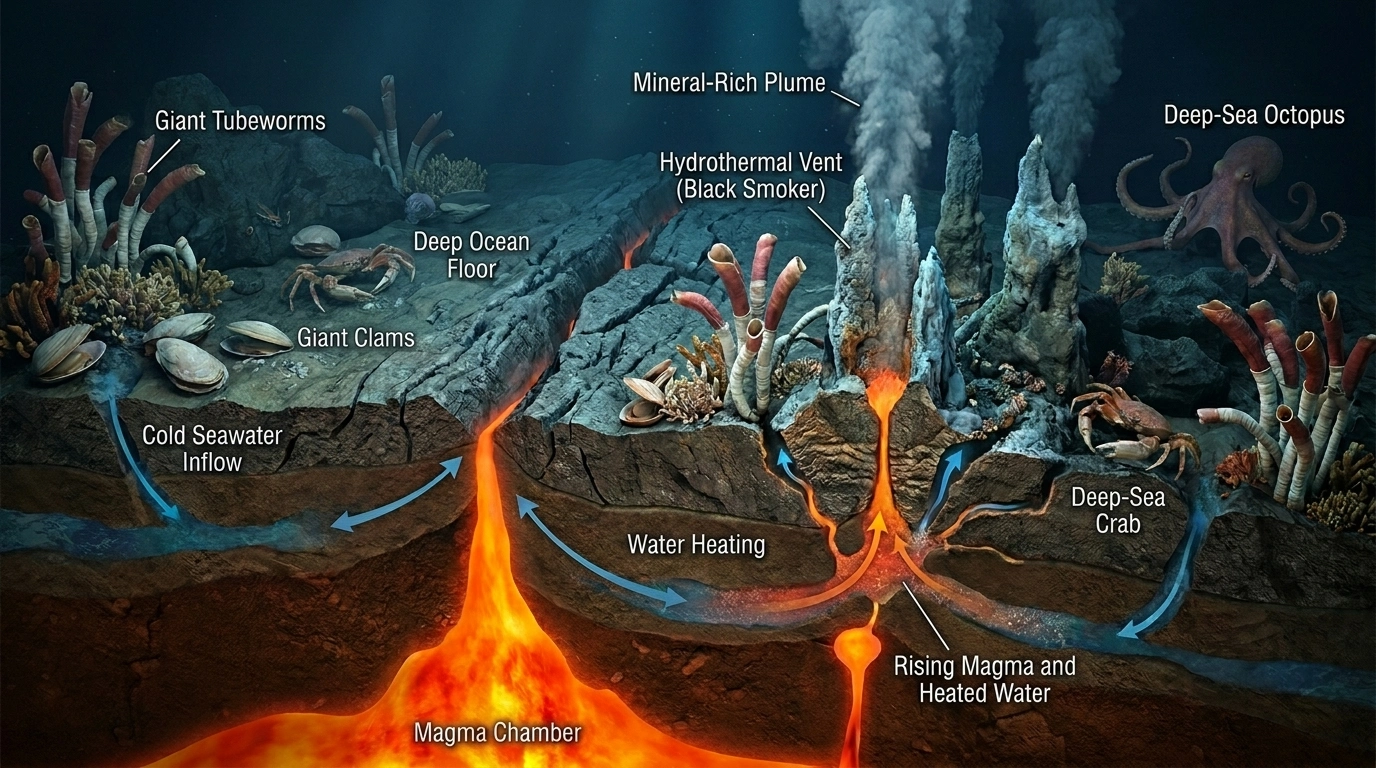
Hydrothermal vents are underwater springs that release hot water and minerals from the Earth's crust into the surrounding seawater. These vents can be found near mid-ocean ridges, where tectonic plates are moving apart, or at the edges of continents, where volcanic activity is common. The unique combination of heat, chemicals, and darkness creates a challenging environment that requires specialized organisms to survive.
To better understand this phenomenon, it's essential to grasp the concept of plate tectonics. Tectonic plates are large, rigid slabs of the Earth's lithosphere (the outermost solid layer) that move relative to each other due to convection currents in the Earth's mantle (the semi-fluid layer beneath the lithosphere). This movement can lead to volcanic activity and the formation of hydrothermal vents.
Supporting Life in the Deep Sea
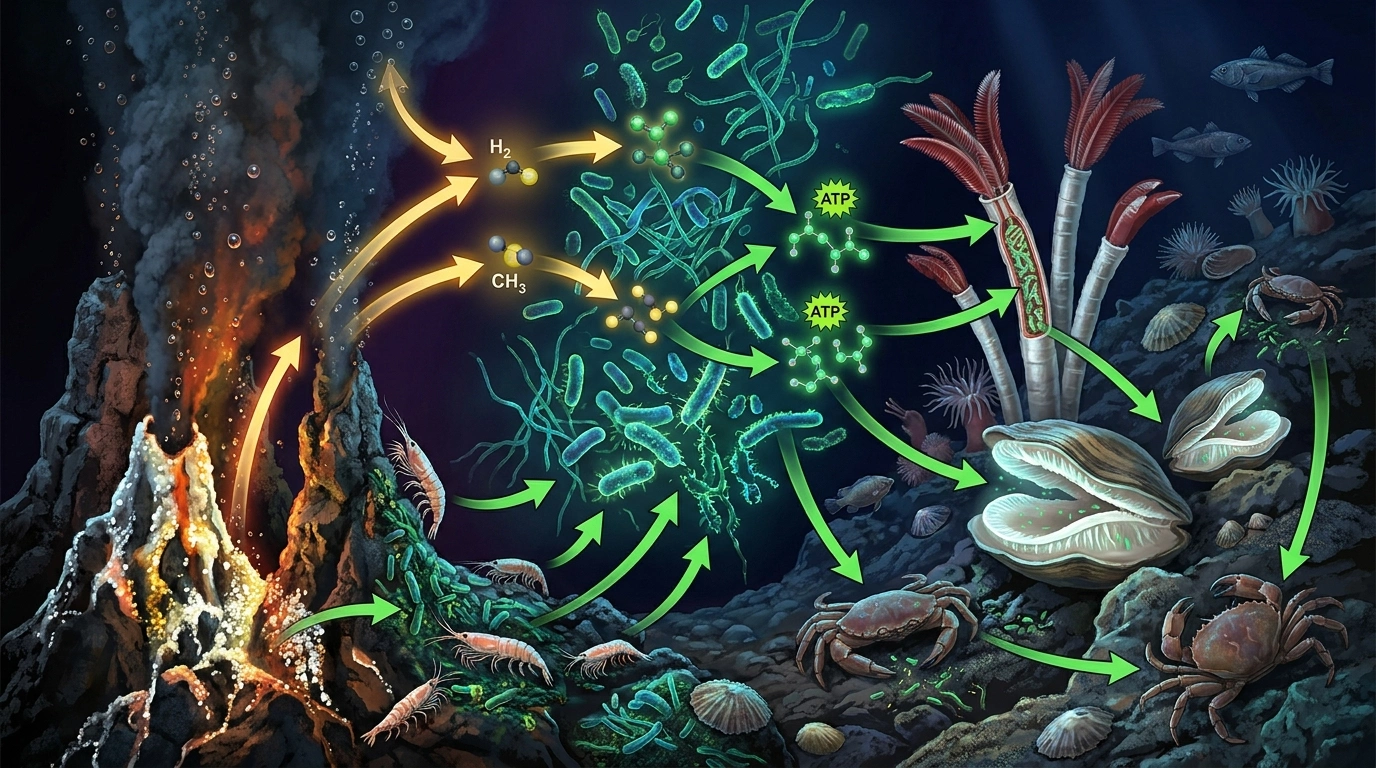
Despite the harsh conditions, hydrothermal vents support an astonishing variety of life. Giant tube worms (Riftia pachyptila), for example, have no mouth or digestive system but can still thrive on bacteria that live inside their tissues. These bacteria convert chemicals from the vent into energy, providing sustenance for the worm.
To illustrate this symbiotic relationship, consider the example of a giant tube worm's "garden." The worm's body is home to a community of chemosynthetic bacteria that thrive in the harsh conditions surrounding the vent. The bacteria convert chemical energy into organic compounds, which are then used by the worm and other organisms in the ecosystem.
Other organisms, such as clams and mussels, attach themselves to rocks near the vents and filter-feed on plankton. These animals have adapted to survive in this unique environment, where food is scarce and competition for resources is high.
Key Features of Hydrothermal Vent Ecosystems:
‣ Unique combination of heat, chemicals, and darkness: The vent's environment is characterized by extreme temperatures (hot water) and a lack of light.
‣ Support an incredible array of life: Despite the harsh conditions, hydrothermal vents harbor a diverse range of organisms that have adapted to this unique ecosystem.
‣ Require specialized organisms to survive: Only specific species can thrive in these environments due to their ability to exploit chemical energy from the vent.
Role in Global Climate and Food Systems
Hydrothermal vents play a critical role in the Earth's climate system. The minerals released from the vents can affect ocean chemistry and influence global nutrient cycles. Additionally, these ecosystems support a significant portion of deep-sea biodiversity, which is essential for maintaining healthy marine ecosystems.
To grasp the significance of hydrothermal vent ecosystems, consider their contribution to the global carbon cycle. These ecosystems are responsible for sequestering carbon dioxide from the atmosphere through the process of mineralization, where minerals such as calcium carbonate and iron oxides are precipitated out of solution.
Benefits of Hydrothermal Vent Ecosystems:
‣ Support marine biodiversity: Hydrothermal vents harbor a unique array of organisms that contribute to the overall diversity of life in the ocean.
‣ Influence global nutrient cycles: The release of minerals from the vent affects the availability of nutrients for other organisms in the ecosystem.
‣ Contribute to our understanding of the Earth's climate system: Studying these ecosystems provides valuable insights into the complex interactions between the Earth's geology and its oceans.
Microbial Communities and Vent Ecosystems
Hydrothermal vents are not just unique environments; they also harbor complex microbial communities. These microorganisms, often referred to as "chemosynthetic bacteria," play a crucial role in supporting life near the vents. They convert chemicals from the vent into energy, which is then used by other organisms.
The relationship between chemosynthetic bacteria and their hosts can be described using the concept of mutualism. This type of symbiosis occurs when two or more species benefit from each other's presence, often leading to a reciprocal exchange of resources.
Exploring Hydrothermal Vent Ecosystems
Studying hydrothermal vent ecosystems is challenging due to their remote location and harsh environment. However, advances in technology have enabled scientists to explore these environments more effectively. Remotely operated vehicles (ROVs) and autonomous underwater vehicles (AUVs) allow researchers to collect samples and data from the vents without risking human lives.
To facilitate exploration of hydrothermal vent ecosystems, consider the following steps:
1. Plan and prepare: Research teams must carefully plan their expedition, taking into account factors such as funding, logistics, and environmental conditions.
2. Use ROVs or AUVs to collect samples and data: These unmanned vehicles enable researchers to collect valuable information about the ecosystem without putting human lives at risk.
3. Conduct research on microbial communities and their role in supporting life near the vents: Scientists must analyze the complex relationships between chemosynthetic bacteria and other organisms in the ecosystem.
Conservation Efforts and Challenges
As we continue to explore and learn about hydrothermal vent ecosystems, it's essential to address the challenges facing these unique environments. Climate change, pollution, and overfishing threaten the delicate balance of these ecosystems. Conservation efforts are necessary to protect these areas and ensure their continued health.
To mitigate the impact of human activities on hydrothermal vent ecosystems, consider implementing measures such as:
1. Establishing protected areas: Designate specific regions around vents as marine reserves or sanctuaries to safeguard biodiversity.
2. Reducing pollution: Implement policies to minimize plastic waste, oil spills, and other pollutants that harm these ecosystems.
3. Promoting sustainable fishing practices: Encourage responsible fishing methods to prevent overfishing and protect vulnerable species.
Challenges Facing Hydrothermal Vent Ecosystems:
‣ Climate change: Rising temperatures can alter the delicate balance of these ecosystems and disrupt the relationships between organisms.
‣ Pollution: Human activities such as oil spills, mining, and plastic waste can harm or destroy hydrothermal vent ecosystems.
‣ Overfishing: Excessive fishing can lead to the depletion of species that rely on vents for survival.
Conclusion
Hydrothermal vents are a fascinating example of the complexity and diversity of life on Earth. These underwater springs support an incredible array of organisms that thrive in one of the most inhospitable environments on our planet. As we continue to explore and learn about these ecosystems, it's essential to address the challenges facing them and work towards their conservation.
By understanding hydrothermal vent ecosystems, we can gain valuable insights into the Earth's climate system and the importance of preserving marine biodiversity. Whether studying the microbial communities that support life near the vents or exploring the unique organisms that call these environments home, there is still much to discover about this remarkable world.
This Article was made with AI assistance and human editing.


