

The Keystone Effect: How Sea Otters Maintain Coastal Balance
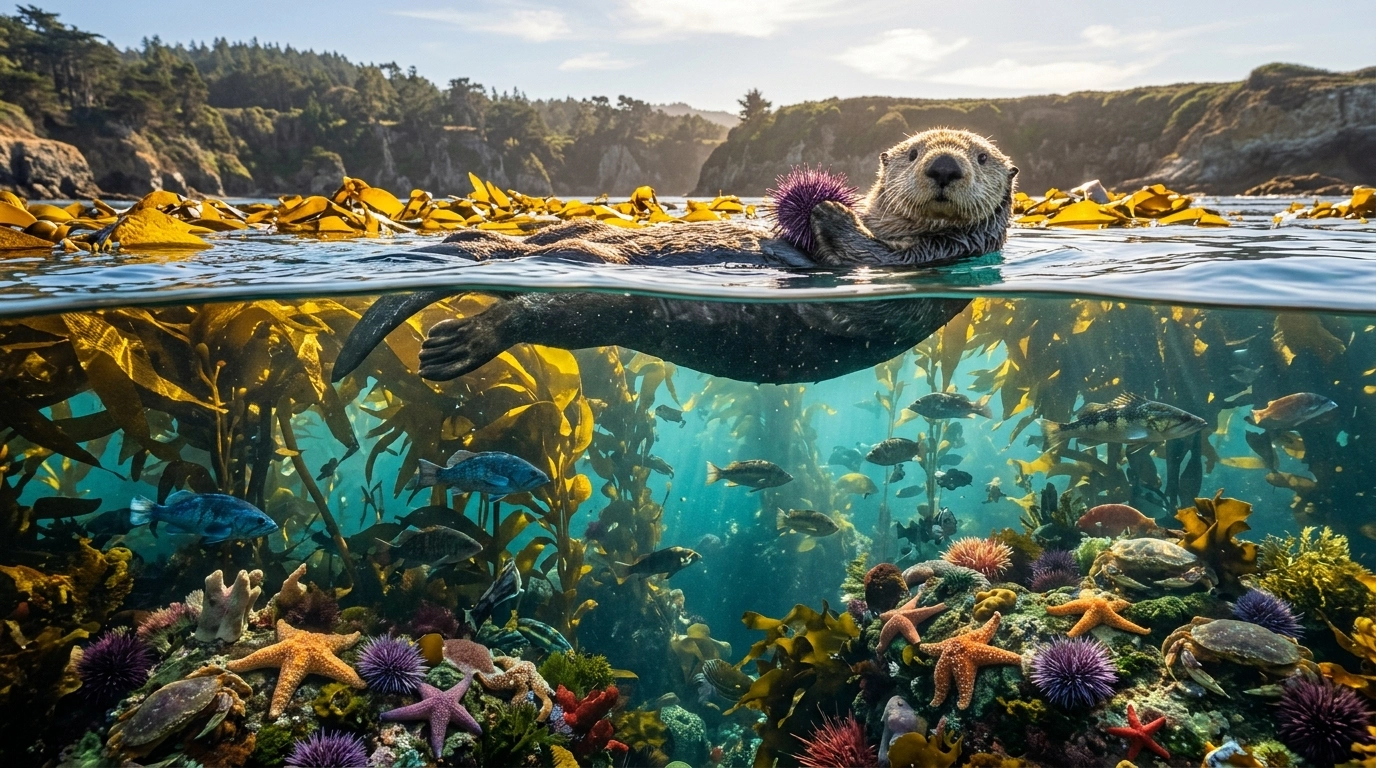
In the intricate web of coastal ecosystems, one species plays a crucial role in maintaining balance and diversity. Meet the sea otter, a keystone species that has been dubbed "nature's gardeners" due to its profound impact on its environment. These furry, carnivorous mammals may seem like an unlikely candidate for ecological heroism, but their influence is undeniable. In this article, we'll delve into the world of keystone species and explore how sea otters contribute to the health and resilience of coastal ecosystems.
What are Keystone Species?
Keystone species are organisms that have a disproportionate impact on their environment relative to their abundance. They play a unique role in maintaining ecosystem balance and often determine the presence or absence of other species. The term "keystone" was coined by ecologist Robert Paine, who used it to describe the key role these species play in shaping their ecosystems.
To better understand keystone species, let's consider an analogy. Imagine a stone archway that supports a bridge. If one keystone is removed, the entire structure may collapse. Similarly, if a keystone species disappears from an ecosystem, the delicate balance can be disrupted, leading to cascading effects throughout the environment.
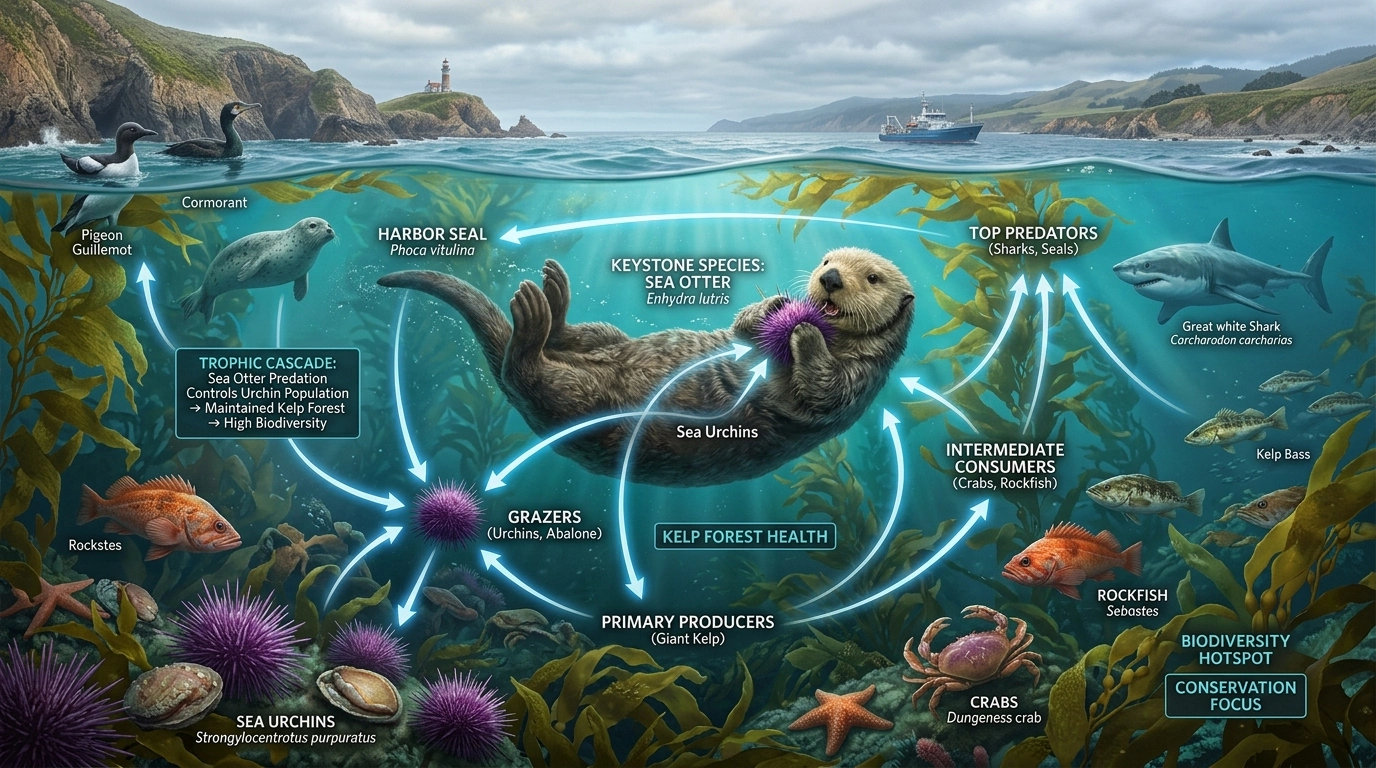
Keystone species can be predators, prey, pollinators, or decomposers, but they all share one common trait: they have a significant influence on the structure and function of their ecosystem. In coastal ecosystems, keystone species like sea otters, sea stars, and kelp forests play critical roles in maintaining balance.
The Role of Sea Otters in Coastal Ecosystems
Sea otters (Enhydra lutris) are one of the most iconic keystone species on the planet. These small mammals have a profound impact on their coastal ecosystems through various mechanisms:
Predation
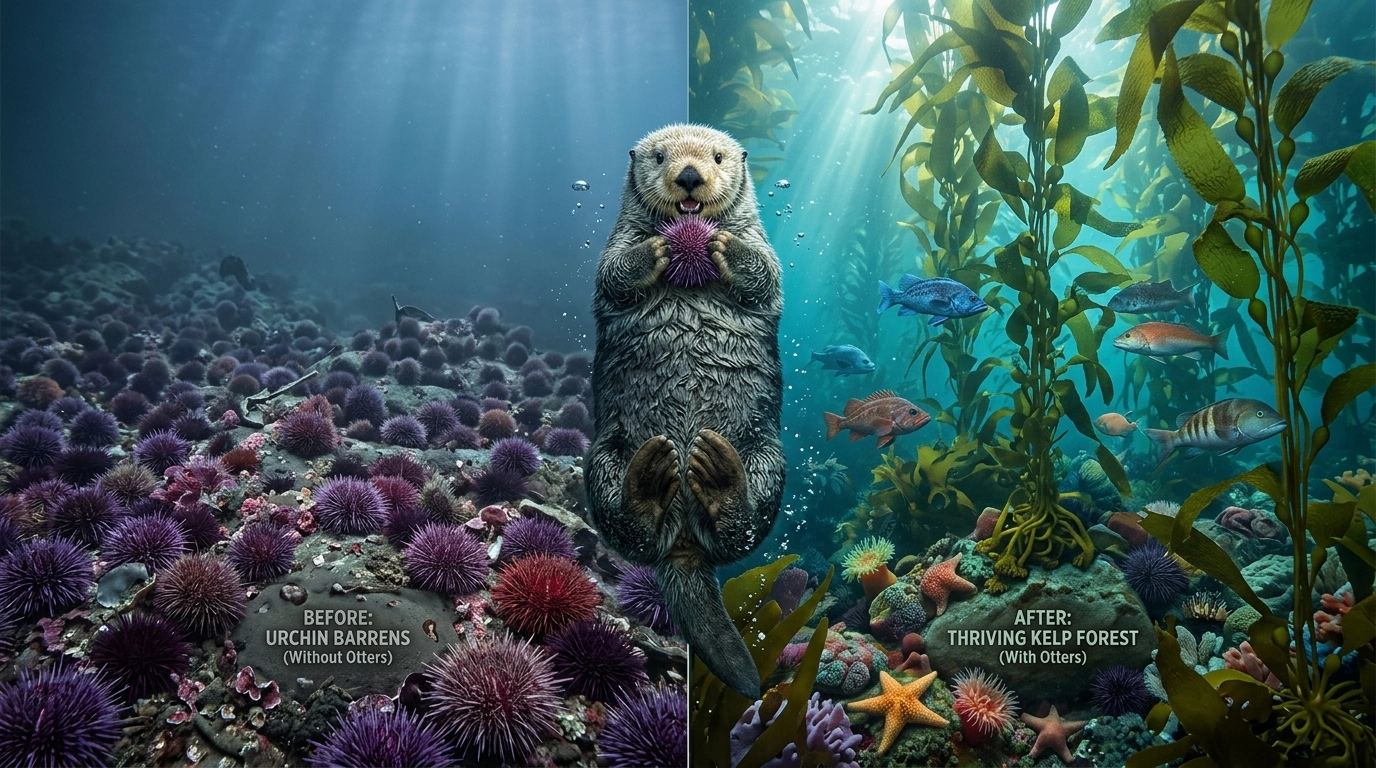
Sea otters prey on sea urchins, which if left unchecked, can overgraze kelp forests and cause them to disappear. By controlling urchin populations, sea otters maintain the balance between urchins and kelp.
To understand why sea urchin control is crucial, let's look at the process of overgrazing. Sea urchins feed on kelp, consuming entire stalks in a matter of weeks. Without predation pressure from sea otters, sea urchin populations can explode, leaving no room for kelp to grow.
Ecological Engineering
Sea otters also affect their environment through their digging activities, creating burrows that provide habitat for other species like fish, crustaceans, and invertebrates. These burrows serve as shelters from predators and harsh weather conditions, allowing these species to thrive.
The creation of burrows is an example of ecological engineering, where a species modifies its environment to create new habitats or resources. In this case, sea otters are creating complex networks of tunnels and dens that support a diverse array of species.
Nutrient Cycling
Sea otter waste contributes to nutrient cycling, enriching the soil and promoting plant growth. This process is essential for maintaining the health of coastal ecosystems, as it ensures that nutrients are distributed throughout the environment in a balanced manner.
The Ripple Effect of Sea Otter Loss
In 1913, sea otters were hunted to near extinction, leading to a dramatic shift in coastal ecosystems. Kelp forests began to disappear as sea urchin populations exploded without their primary predator. The consequences of this loss were far-reaching:
Loss of Biodiversity
The decline of kelp forests led to a decrease in species diversity, as many animals dependent on these ecosystems disappeared. This is because kelp forests provide habitat for a wide range of species, from fish and invertebrates to birds and mammals.
When kelp forests disappear, the loss of biodiversity can be catastrophic. Many species that rely on these ecosystems are unable to adapt or migrate to new habitats, leading to their decline or even extinction.
Increased Risk of Erosion
Without the stabilizing effect of kelp forests, coastal areas became more susceptible to erosion and damage from storms. Kelp roots help hold soil in place, preventing landslides and protecting against wave action.
The loss of sea otters has also led to increased sedimentation in coastal waters. Without the filtering effect of kelp forests, sediments can cloud the water, reducing light penetration and affecting photosynthesis.
Decreased Fisheries
The loss of sea otters also affected fish populations, which rely on kelp forests for food and shelter. The disappearance of kelp forests has reduced fish habitats, leading to a decline in fish populations.
Restoring Balance with Sea Otter Conservation
Conservation efforts have led to the recovery of sea otter populations in some areas. As their numbers increase, so does their impact on coastal ecosystems:
Re-growth of Kelp Forests
With sea urchin populations under control, kelp forests are beginning to re-grow, providing habitat for a variety of species.
This process is an example of ecosystem recovery, where the removal of a keystone species leads to a cascade of effects. In this case, the decline of sea otters led to the loss of kelp forests, but conservation efforts have allowed these ecosystems to recover.
Increased Biodiversity
The return of sea otters has led to an increase in species diversity, as other animals begin to recolonize areas where they had previously disappeared. This is because kelp forests provide a complex array of habitats, from shallow tide pools to deep-sea canyons.
Improved Fisheries
Fish populations are also recovering, thanks to the stabilizing effect of kelp forests and the overall health of coastal ecosystems.
Conclusion
The keystone effect is a powerful reminder of the intricate relationships within ecosystems. Sea otters play a vital role in maintaining balance and diversity in coastal ecosystems, and their loss can have far-reaching consequences. As we strive to conserve and protect these incredible creatures, we must also acknowledge the critical role they play in maintaining the health and resilience of our planet.
By understanding the keystone effect and the importance of species like sea otters, we can work towards preserving biodiversity and promoting ecological balance. Whether you're a scientist or simply someone who cares about the natural world, there's much to learn from these incredible animals and their role in shaping our planet's ecosystems.
This Article was made with AI assistance and human editing.


