

Unveiling Fibonacci's Hidden Patterns in Nature
Leonardo da Vinci once said, "The secret of our nature lies in its mathematical structure." Few mathematical concepts embody this idea as beautifully as the Fibonacci sequence. This seemingly simple series of numbers has captivated mathematicians and scientists for centuries with its intricate patterns and appearances in the natural world.
In this article, we'll delve into the fascinating realm of Fibonacci's hidden patterns in nature. We'll explore how this mathematical concept manifests itself in various aspects of our environment, from the arrangement of leaves on stems to the branching of trees. By the end of this journey, you'll understand why Fibonacci's sequence is more than just a mathematical curiosity – it's a key to unlocking the secrets of nature.
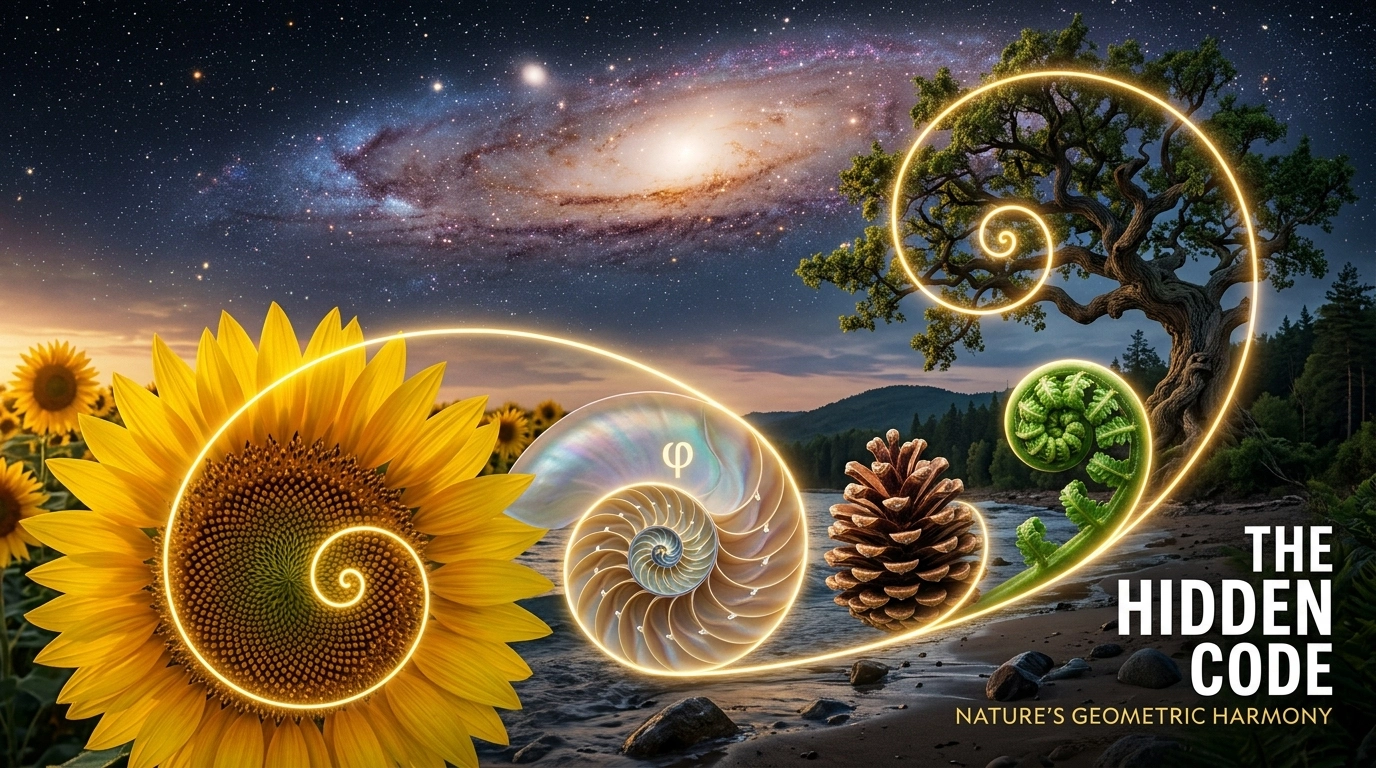
What is the Fibonacci Sequence?
Before we dive into its natural occurrences, let's briefly explain what the Fibonacci sequence is. This series of numbers is named after Leonardo Fibonacci, an Italian mathematician who introduced it in the 13th century. It's a simple yet powerful concept that has far-reaching implications in mathematics and science.
The Fibonacci sequence starts with two numbers: 0 and 1. Each subsequent number is the sum of the previous two:
0, 1, 1, 2, 3, 5, 8, 13, 21, 34, 55, ...
To understand why this sequence is so significant, let's break down its key properties. The Fibonacci sequence has several unique characteristics that make it a fundamental concept in mathematics:
The ratio between any two adjacent numbers in the sequence approaches the golden ratio (approximately 1.618) as the sequence progresses. This means that the ratio of any two consecutive numbers in the sequence gets closer and closer to the golden ratio.
The Fibonacci sequence appears in various mathematical contexts, such as algebra, geometry, and number theory.
Fibonacci's Hidden Patterns in Nature
The Fibonacci sequence is ubiquitous in nature, from the smallest scales to the largest. However, it's essential to note that not all leaf arrangements follow a Fibonacci pattern. Here are a few examples of how it manifests itself:
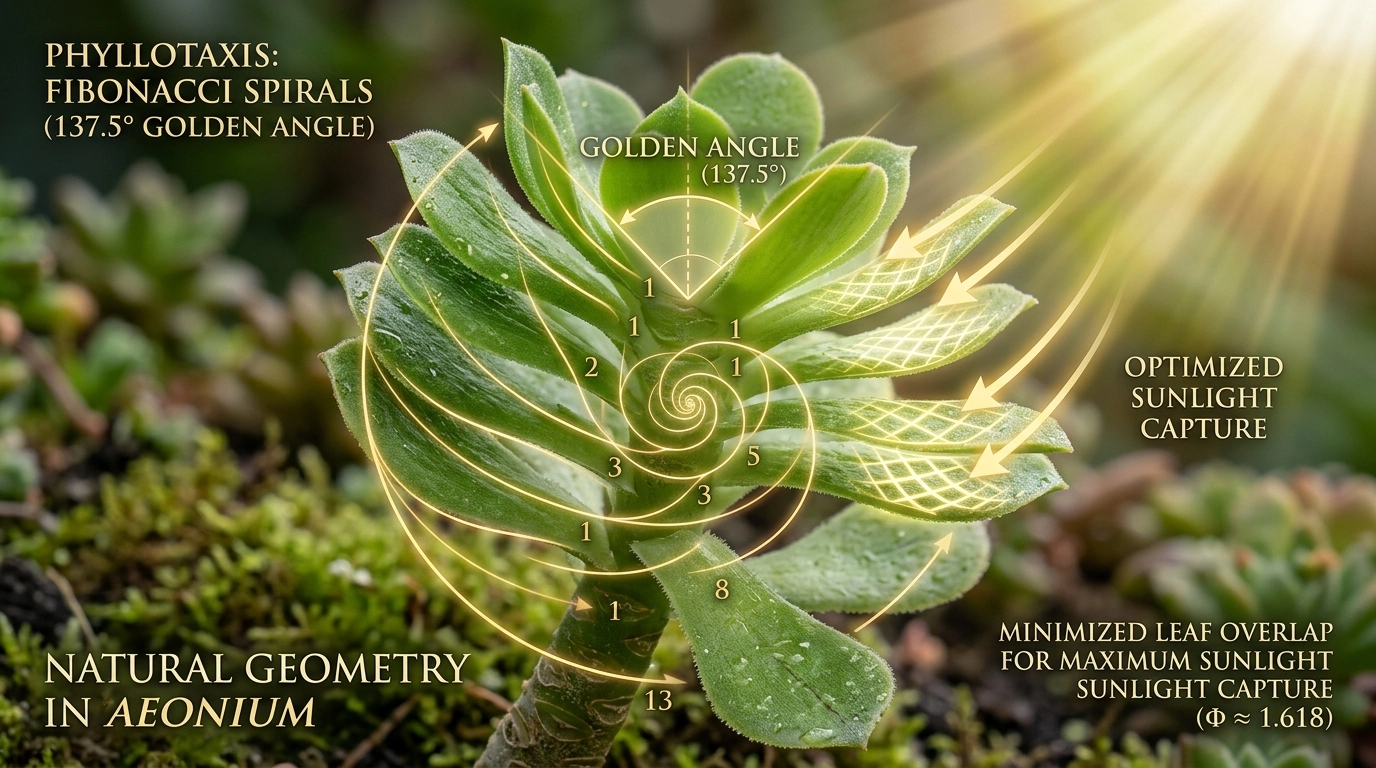
Leaf Arrangement
Some plants exhibit Fibonacci patterns in their leaf arrangement, which allows for maximum exposure to sunlight and space efficiency.
Spiral angles: The leaves spiral around the stem at an angle related to the golden ratio.
Space efficiency: By arranging leaves in a Fibonacci pattern, plants can optimize their use of space while minimizing energy expenditure.
Branching Trees
Trees often branch out in a Fibonacci pattern, with smaller branches splitting off from larger ones at angles approaching the golden angle.
Oak and beech trees: The branching patterns of oak and beech trees have been found to follow Fibonacci's sequence.
Efficient growth: Fibonacci's sequence allows for efficient growth patterns, enabling trees to maximize their exposure to sunlight while minimizing energy expenditure.
Flowers and Petals
Many flowers exhibit Fibonacci patterns in their petal arrangement. The number of petals on a flower often follows a Fibonacci number:
Roses: Roses typically have 5 petals (Fibonacci sequence: 0, 1, 1, 2, 3, 5).
Daisies: Daisies usually have 13 petals (Fibonacci sequence: 0, 1, 1, 2, 3, 5, 8, 13).
Other Examples of Fibonacci in Nature
The Fibonacci sequence appears in many more aspects of nature:
Shells
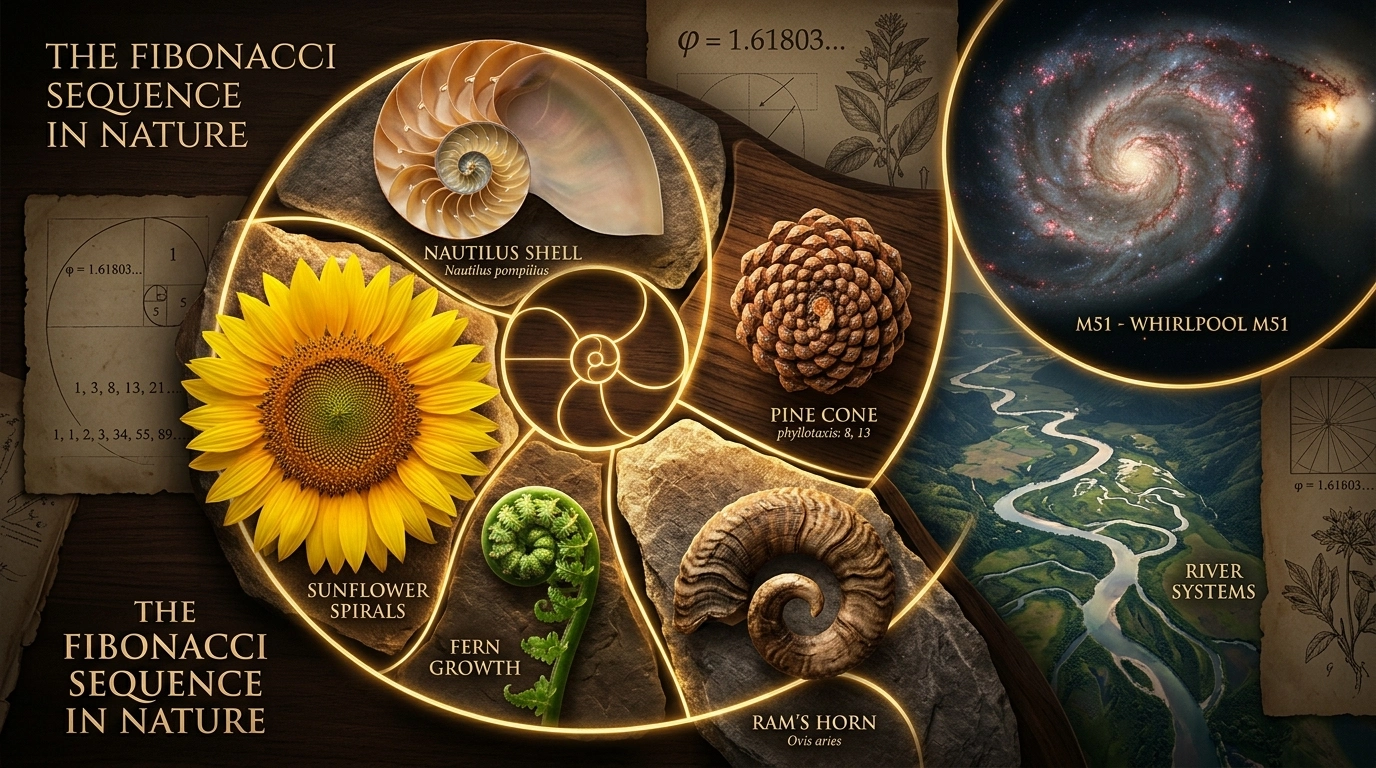
The spiral patterns on seashells, such as the nautilus shell, follow a Fibonacci sequence.
Efficient growth: The Fibonacci sequence allows for efficient growth patterns, enabling shells to grow and develop without wasting resources.
Aesthetics: The Fibonacci sequence is also responsible for the aesthetic appeal of seashells, with their intricate spiral patterns creating visually striking designs.
River Networks
River systems often exhibit Fibonacci patterns in their branching and tributary arrangements.
Efficient flow: Fibonacci's sequence allows for efficient flow patterns, enabling rivers to carry water and nutrients while minimizing energy expenditure.
Aesthetics: The Fibonacci sequence is also responsible for the aesthetic appeal of river networks, with their intricate branching patterns creating visually striking landscapes.
Animal Horns and Antlers
Many animals' horns and antlers grow according to a Fibonacci pattern.
Efficient growth: The Fibonacci sequence allows for efficient growth patterns, enabling animals to develop strong, durable horns and antlers while minimizing energy expenditure.
Aesthetics: The Fibonacci sequence is also responsible for the aesthetic appeal of animal horns and antlers, with their intricate branching patterns creating visually striking designs.
The Significance of Fibonacci's Hidden Patterns
Why do these patterns appear so frequently in nature? There are several theories:
Efficiency
The Fibonacci sequence allows for maximum space efficiency, as seen in the arrangement of leaves on stems.
Space optimization: By arranging objects in a Fibonacci pattern, living organisms can optimize their use of space while minimizing energy expenditure.
Resource allocation: The Fibonacci sequence also enables efficient resource allocation, allowing living organisms to allocate resources effectively and maximize growth.
Growth Patterns
Fibonacci's sequence may be an optimal way for living organisms to grow and branch out.
Efficient growth: The Fibonacci sequence allows for efficient growth patterns, enabling living organisms to develop strong, durable structures while minimizing energy expenditure.
Aesthetics: The Fibonacci sequence is also responsible for the aesthetic appeal of living organisms, with their intricate branching patterns creating visually striking designs.
Evolutionary Advantages
These patterns could have provided a selective advantage to species that exhibited them.
Survival and reproduction: Living organisms that exhibit Fibonacci patterns may have had an advantage in terms of survival and reproduction, enabling them to thrive in their environments.
Adaptation: The Fibonacci sequence also enables living organisms to adapt effectively to changing environments, allowing them to survive and reproduce in a wide range of conditions.
Practical Applications of Fibonacci
Fibonacci's hidden patterns in nature have inspired various applications:
Architecture
The golden ratio is used in architecture, art, and design to create aesthetically pleasing and harmonious compositions.
Aesthetics: The golden ratio creates visually striking designs that are both functional and beautiful.
Functionality: The golden ratio also enables efficient use of space, allowing architects to design buildings that maximize functionality while minimizing energy expenditure.
Biology
Understanding the Fibonacci sequence can help us better grasp biological processes, such as plant growth and animal development.
Efficient growth: The Fibonacci sequence allows for efficient growth patterns, enabling living organisms to develop strong, durable structures while minimizing energy expenditure.
Aesthetics: The Fibonacci sequence is also responsible for the aesthetic appeal of living organisms, with their intricate branching patterns creating visually striking designs.
Finance
Fibonacci levels are used in technical analysis of financial markets to predict price movements.
Efficient prediction: The Fibonacci sequence enables efficient prediction of price movements, allowing investors to make informed decisions and maximize returns.
Risk management: The Fibonacci sequence also enables effective risk management, enabling investors to minimize losses while maximizing gains.
Conclusion
Fibonacci's hidden patterns in nature reveal a fascinating world where mathematics meets biology. From leaf arrangement to branching trees, this simple yet powerful sequence is an integral part of our environment. By embracing the beauty and significance of Fibonacci's sequence, we can gain a deeper understanding of the intricate relationships between living organisms and their surroundings.
As you continue to explore this captivating topic, remember that the secrets of nature lie not only in its mathematical structure but also in its hidden patterns and relationships.
This Article was made with AI assistance and human editing.


