

Best tools to start a blog is one of the most searched queries by beginners and for a good reason. Starting a blog today isn’t just about writing; it’s about using the right tools that work together. In this guide, you’ll learn exactly which tools you need, how to set them up, and how to build your blog on a strong foundation using reliable platforms.
If you want a quick answer: The best tools to start a blog include a domain name, web hosting, WordPress CMS, SEO tools, analytics tools, and email marketing software. Start with a reliable provider like Namecheap to secure your domain and hosting, then layer tools based on your needs.
Let’s break everything down step-by-step so you don’t waste time or money.
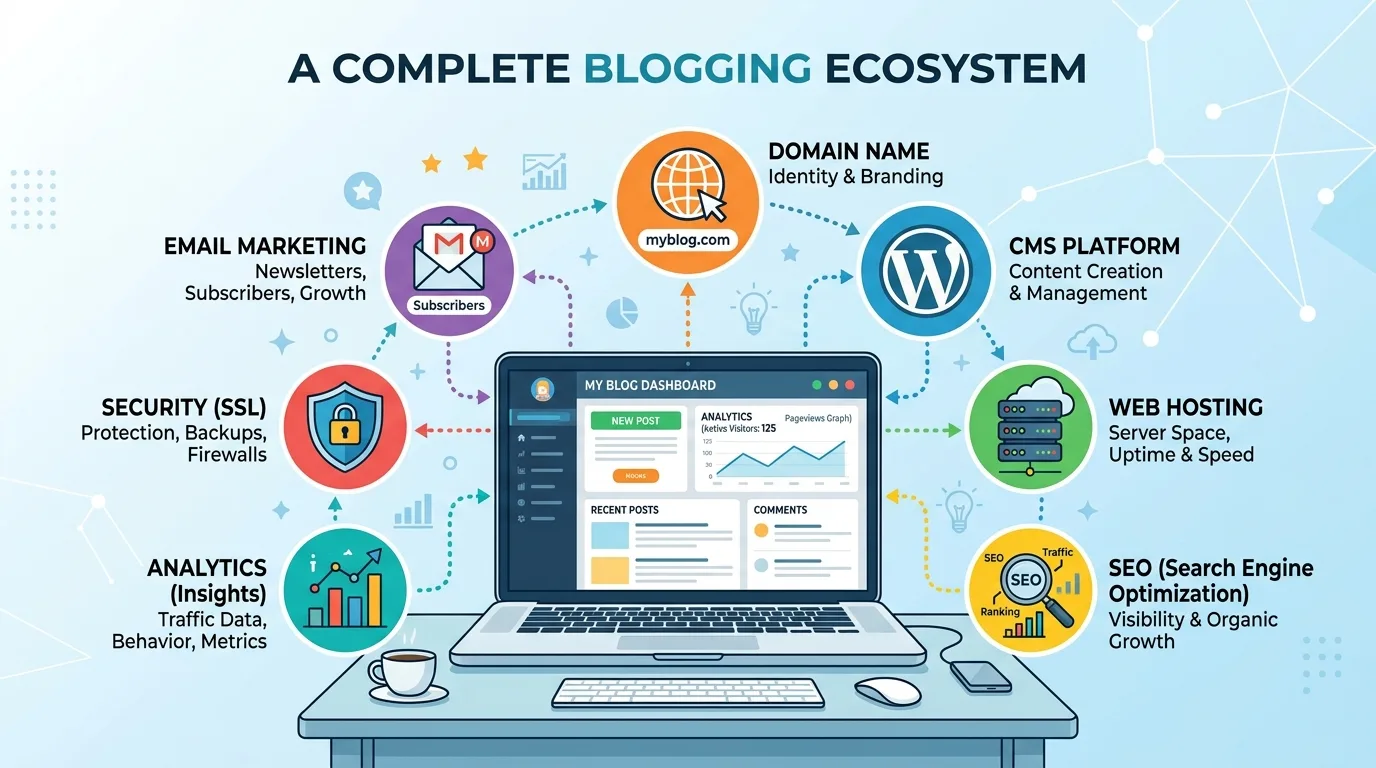
1. Domain Name – Your Blog’s Identity
Your domain name is your blog’s address on the internet. It’s what people type into their browser to find you. Choosing a good domain is critical because it impacts branding, SEO, and trust.
A strong domain should be short, easy to remember, and relevant to your niche. For example, if you're starting a tech blog, your domain should reflect that.
To get started, you can register a domain in minutes. If you're on a budget, you can also explore cheap domain deals that still give you full ownership.
Setup Steps:
Search for your desired domain name
Choose a .com or relevant extension
Complete purchase and enable domain privacy
Save login details securely
2. Web Hosting – Where Your Blog Lives
Web hosting is the backbone of your blog. It stores your content, images, and files so visitors can access them anytime.
Many beginners make the mistake of choosing cheap but unreliable hosting. That leads to slow websites and lost traffic.
A better approach is to get affordable hosting that balances speed, uptime, and cost.
Setup Steps:
Choose a hosting plan (shared is best for beginners)
Connect your domain to hosting
Access your hosting dashboard (cPanel)
Prepare for CMS installation
3. WordPress – Your Content Management System
WordPress powers over 40% of websites globally and for good reason. It’s flexible, beginner-friendly, and SEO-ready.
Instead of building from scratch, you can install WordPress in one click. For better performance, you can use managed WordPress hosting that handles updates and security automatically.
Setup Steps:
Install WordPress via hosting dashboard
Choose a lightweight theme
Install essential plugins
Customize basic settings (title, permalink structure)
4. SEO Tools – Get Traffic from Google
Without SEO tools, your blog is invisible. These tools help you find keywords, optimize content, and rank higher in search engines.
Popular options include keyword research tools, on-page SEO plugins, and backlink trackers.
Setup Steps:
Install an SEO plugin like RankMath or Yoast
Set up meta titles and descriptions
Submit your site to Google Search Console
Start targeting low-competition keywords
5. Analytics Tools – Track Your Growth
You can’t grow what you don’t measure. Analytics tools show how visitors interact with your blog.
They help answer questions like:
Where is your traffic coming from?
Which posts perform best?
How long do users stay?
Setup Steps:
Create a Google Analytics account
Connect it to your website
Monitor traffic weekly
Adjust content strategy based on data
6. Email Marketing Tools – Build an Audience
Email is still one of the highest-converting channels. It allows you to build a direct relationship with your audience.
You’ll need a professional email setup to build trust. You can get business email hosting to create branded emails like yourname@yourdomain.com.
Setup Steps:
Create an email account with your domain
Integrate an email marketing platform
Add opt-in forms to your blog
Start building your email list
7. Security Tools – Protect Your Blog
Security is often ignored—until something goes wrong. A hacked site can destroy your work overnight.
To stay safe, you should install an SSL certificate so your site shows as secure (HTTPS).
Setup Steps:
Enable SSL certificate
Use strong passwords
Install a security plugin
Schedule regular backups
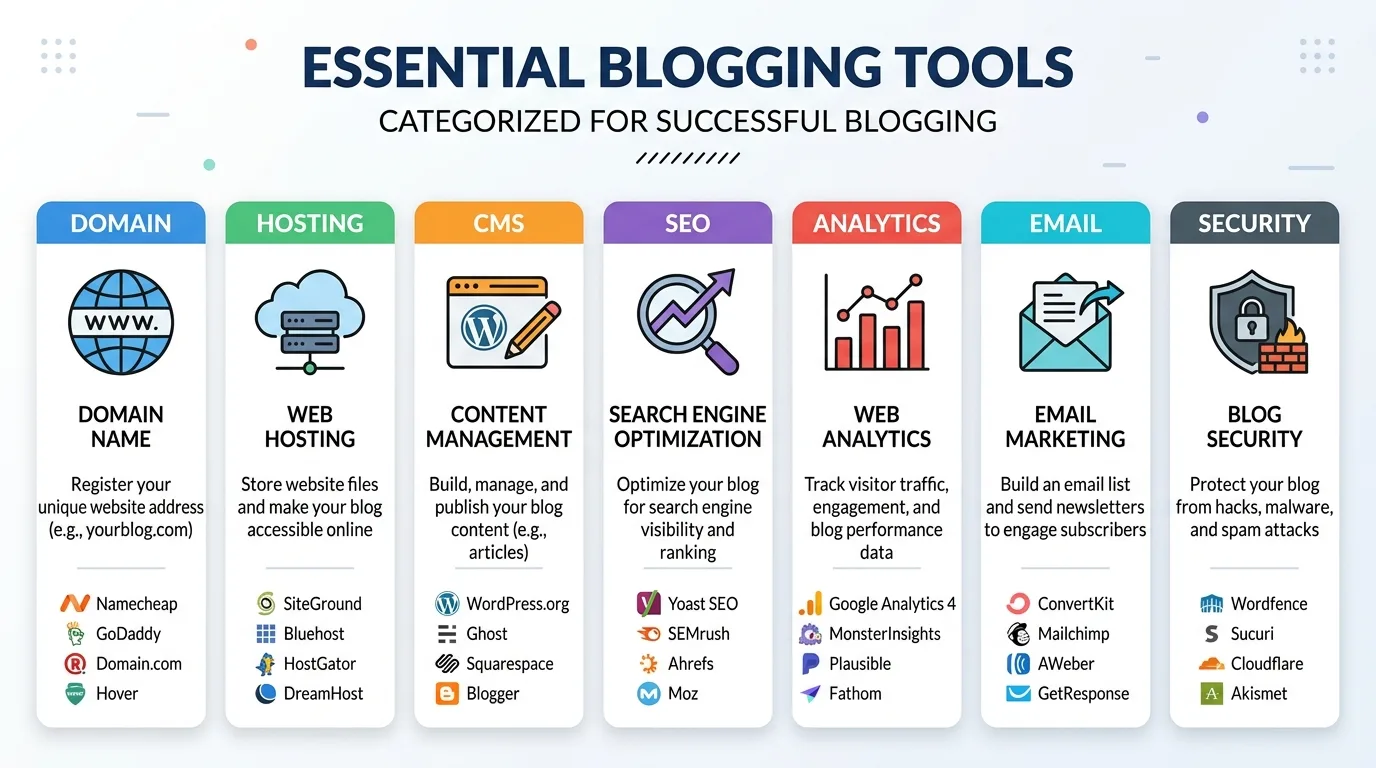
Comparison Table of Essential Blogging Tools
Tool | Purpose | Best For |
Domain Name | Website identity | Branding |
Hosting | Stores website data | Performance |
WordPress | Content management | Publishing |
SEO Tools | Search ranking | Traffic growth |
Analytics | User tracking | Optimization |
Email Tools | Audience building | Conversions |
Security Tools | Protection | Trust & safety |
Practical Tips for Beginners
Start simple—don’t overload your blog with tools
Focus on speed and usability first
Write consistently before worrying about design
Invest in tools that scale with you
Many beginners try to piece together random tools. The smarter approach is to build everything on a strong base using a reliable platform that supports your growth.
FAQ Section
What are the essential tools to start a blog?
The essential tools include a domain name, hosting, WordPress, SEO tools, analytics tools, and email marketing software. These tools help you build, grow, and monetize your blog effectively without technical complexity.
Can I start a blog without paying?
Yes, but free platforms limit customization, branding, and monetization. Investing in your own domain and hosting gives you full control and long-term growth potential.
How much does it cost to start a blog?
You can start a blog for as low as $20–$50 per year with a domain and basic hosting. Additional tools can be added later as your blog grows.
Which platform is best for blogging?
WordPress is the best platform due to flexibility, scalability, and SEO capabilities. It works well for beginners and advanced users alike.
Do I need coding skills to start a blog?
No, modern tools like WordPress allow you to build a blog without coding. Everything can be done using simple interfaces and plugins.
How long does it take to set up a blog?
You can set up a basic blog in under 30 minutes. However, optimizing it for performance and SEO may take a few hours.
Conclusion
Starting a blog is easier than ever but only if you use the right tools from the beginning. Instead of jumping between platforms, build your blog on a solid foundation.
From domain to hosting to security, everything works better when integrated properly. If you're serious about blogging, your first step should be to start with a reliable setup that supports long-term growth.
Take action today. Secure your domain, set up your hosting, and launch your blog the right way.
This Article was made with AI assistance and human editing.


