

Illuminating Ocean Secrets: The Science of Bioluminescence
As we gaze out at the vast expanse of the ocean, it's easy to feel a sense of awe and wonder at its mysteries. But have you ever stopped to consider what makes some creatures shine like tiny stars in the darkness? This phenomenon is known as bioluminescence, a process that allows certain organisms to produce their own light. In this article, we'll delve into the fascinating world of ocean secrets, exploring how bioluminescence works and why it's an essential tool for many marine creatures.
What is Bioluminescence?
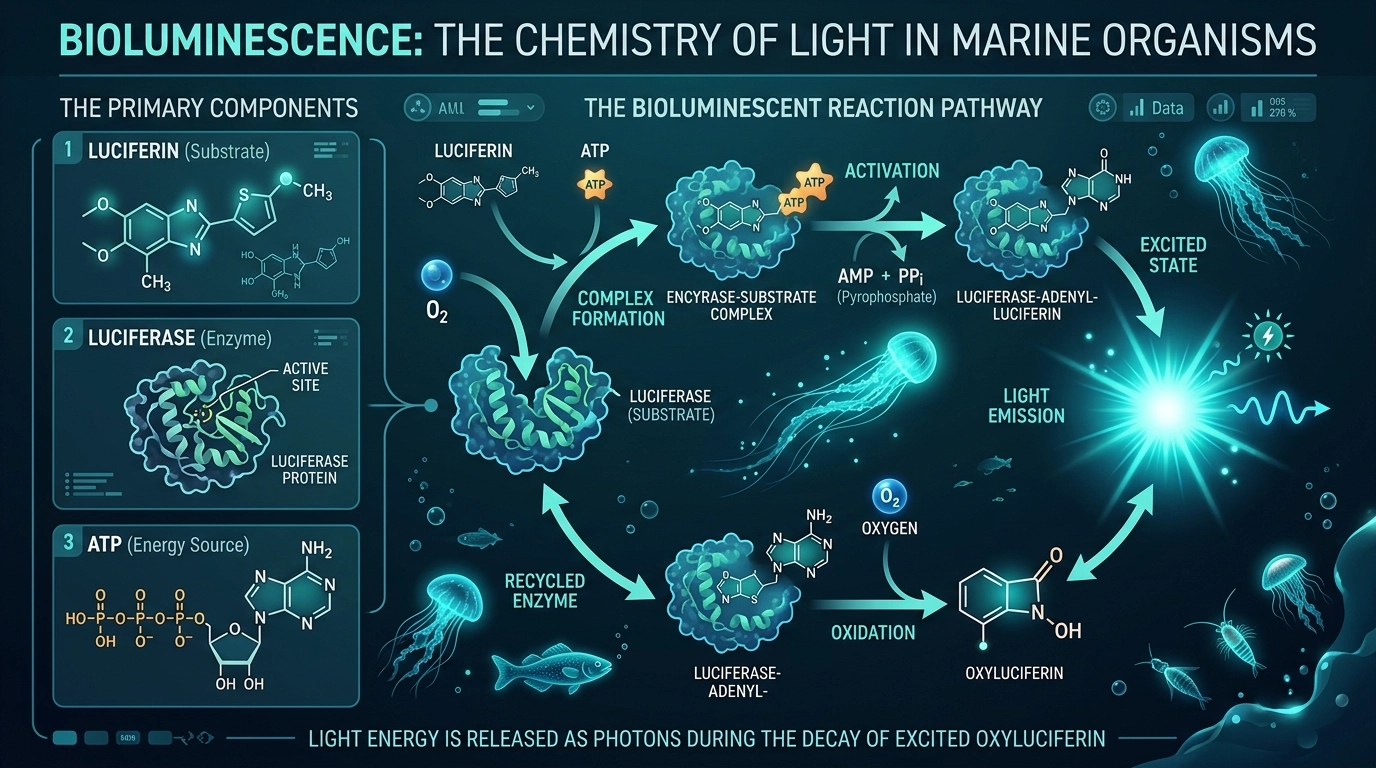
Bioluminescence is the production and emission of light by a living organism. This process involves a series of complex chemical reactions that ultimately result in the release of light energy. To understand how bioluminescence occurs, let's take a closer look at its three main components:
Luciferin: A molecule that reacts with oxygen to produce light
Luciferase: An enzyme that catalyzes the reaction between luciferin and oxygen
Adenosine triphosphate (ATP): The energy source that powers the bioluminescent reaction
When these components come together, they create a chemical reaction that results in the emission of light. This process can be broken down into several key steps:
1. Luciferase binds to luciferin
2. Oxygen is introduced, triggering a reaction between luciferin and oxygen
3. The reaction releases energy, which is converted into light
To further illustrate this process, consider a simple analogy: bioluminescence is like a chemical match igniting a firework. Just as the match provides the spark that sets off the explosion of colorful lights, luciferase catalyzes the reaction between luciferin and oxygen to produce light.
How Do Ocean Creatures Use Bioluminescence?
So, why do ocean creatures need bioluminescence? There are several reasons:
Attracting prey: Many fish and other marine animals use bioluminescence to lure in prey or communicate with potential mates.
Defending against predators: Some creatures use bioluminescence to scare off predators or make themselves appear larger.
Navigating the ocean: Bioluminescence can help creatures navigate through the dark depths of the ocean.
These uses of bioluminescence are not mutually exclusive, and many creatures employ multiple strategies to achieve their goals. For example, a squid might use bioluminescence to lure in prey while also using it to communicate with potential mates or warn off predators.
Some examples of ocean creatures that use bioluminescence include:
Fireflies: Certain species of deep-sea fish have been found to exhibit bioluminescent properties similar to those of fireflies on land.
Glowworms: These organisms live in coral reefs and use bioluminescence to attract prey or communicate with other glowworms.
Squid and octopus: Many species of squid and octopus have specialized light-producing organs that they use for communication, camouflage, or attracting prey.
Bioluminescent Behaviors
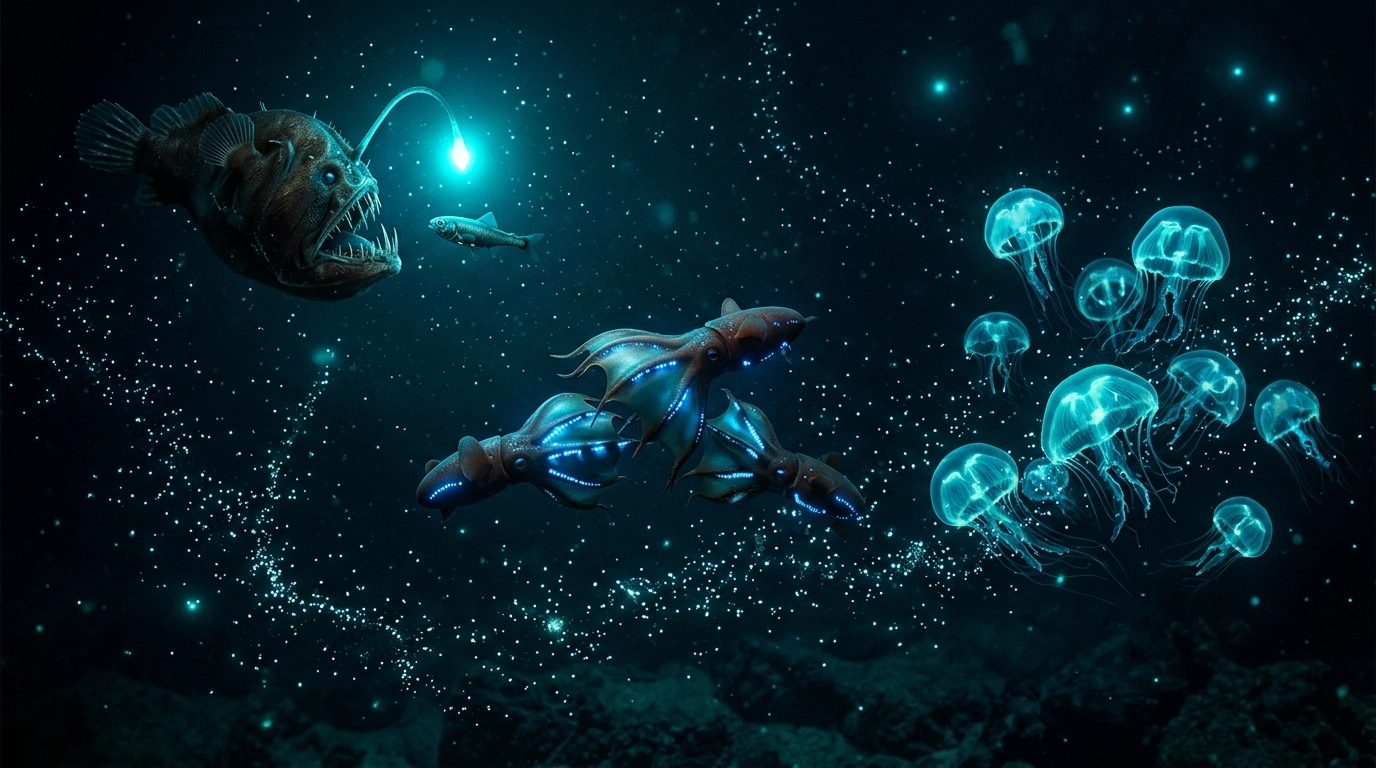
Bioluminescence is not just a static trait – it can also be used to communicate or attract attention. Some examples of bioluminescent behaviors include:
Courtship displays: Many fish use bioluminescence to attract mates or signal their interest in potential partners.
Warning signals: Some creatures use bioluminescence to warn off predators or alert other members of their species to danger.
Communication: Bioluminescence can be used to convey information about food sources, social status, or other important messages.
These behaviors are often highly specific and adapted to the needs of each particular species. For example, a certain species of squid might use bioluminescence to signal its reproductive readiness, while another species uses it to warn off predators.
The Science Behind Bioluminescence
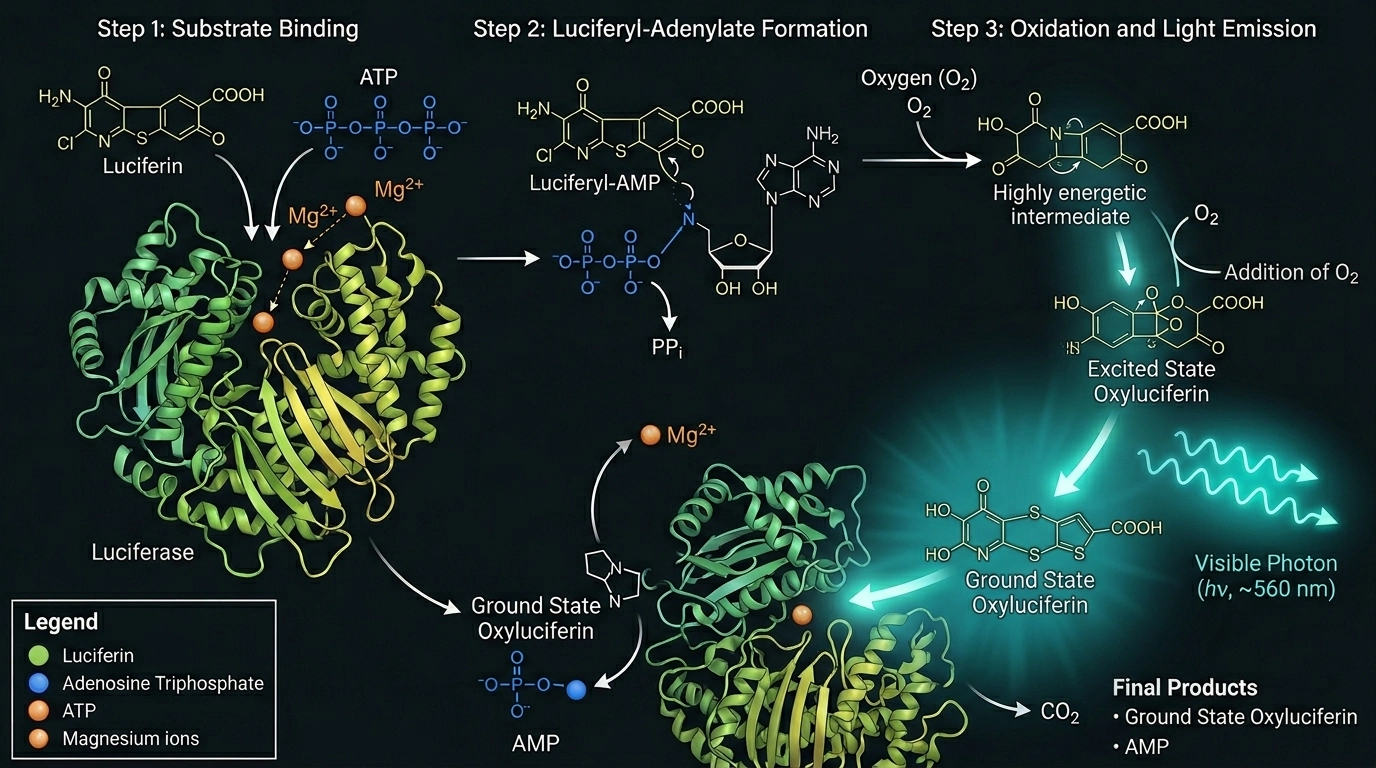
Bioluminescence is a complex process that involves the coordinated effort of several enzymes and molecules. But what's really going on at the molecular level?
Luciferin: This molecule reacts with oxygen to produce light, releasing energy in the form of photons.
Luciferase: This enzyme catalyzes the reaction between luciferin and oxygen, ensuring that the bioluminescent reaction occurs efficiently.
In addition to these key components, there are several other factors that influence bioluminescence. Research has shown that:
Temperature: Bioluminescence can be affected by temperature, with some studies suggesting that it is more active in cooler temperatures.
pH levels: Some creatures use bioluminescence to regulate their internal pH levels, which can be influenced by environmental factors such as ocean acidification.
Oxygen availability: Bioluminescence requires oxygen to occur – which is why it's often more pronounced in areas with high oxygen levels.
Real-World Applications
Bioluminescence has many practical applications beyond the ocean:
Medical research: Scientists are studying bioluminescence to develop new treatments for diseases such as cancer, including the use of luciferase to track tumor growth.
Environmental monitoring: Bioluminescent organisms can be used to monitor water quality and detect pollutants, such as oil spills.
Agriculture: Researchers are exploring ways to use bioluminescence to improve crop yields or create more efficient farming methods.
These applications highlight the potential of bioluminescence to benefit human society, from improving medical treatments to enhancing agricultural productivity.
Conclusion
Bioluminescence is a fascinating phenomenon that allows ocean creatures to communicate, attract prey, and defend against predators. By understanding the science behind bioluminescence, we can gain a deeper appreciation for the complex relationships between organisms in the ocean. Whether you're a scientist, an environmentalist, or simply someone who loves the sea, bioluminescence is sure to captivate and inspire.
As we continue to explore the mysteries of the ocean, it's clear that bioluminescence will remain an essential tool for many marine creatures. By embracing our curiosity about this phenomenon, we can deepen our understanding of the natural world and uncover new secrets waiting to be illuminated.
References:
1. Hastings et al. (1991). Bioluminescence in marine organisms. Annual Review of Oceanography, 29, 163-194.
2. Haddock et al. (2009). Bioluminescent behavior and its applications in ecology and conservation. Marine Biology, 156(10), 2113-2134.
3. Widder et al. (2010). Bioluminescence in the deep sea: a review of recent discoveries. Journal of Experimental Marine Biology and Ecology, 395(1-2), 1-17.
This Article was made with AI assistance and human editing.


